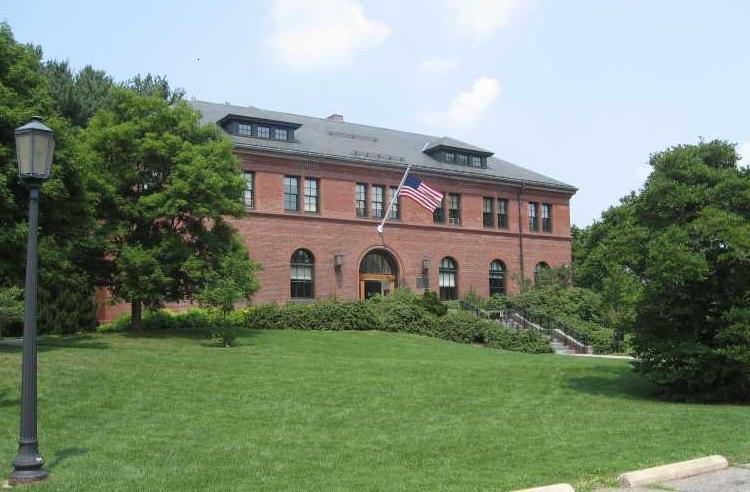
Arnold Arboretum
42.2978° N · 71.1228° W · Botanical Garden
Photo: MarkinBoston at English Wikipedia · Public domain · Wikimedia Commons
Arnold Arboretum is a botanical garden of the Harvard University. It is in Boston, United States. Founded in the 1870s through merchant James Arnold's bequest. The free Lokali audio guide runs 7 minutes.
✓ Published October 2026 · how we write these guides
Visitor facts
| Lokali audio guide | 7 min · free |
|---|---|
| Type | Botanical Garden |
| Location | Boston, United States |
| Coordinates | 42.2978, -71.1228 |
| Official website | arboretum.harvard.edu |
| Languages | 50+, in the Lokali app |
The story
Listen for a moment. The traffic of Boston fades behind you, and in its place there is gravel under your shoes, the dry rustle of leaves overhead, and somewhere a woodpecker tapping at bark. The air smells of cut grass and damp soil. You are still inside the city limits. Yet the paths ahead curve away under trees from many parts of the world. Welcome to the Arnold Arboretum.
An arboretum is a living museum of trees. Instead of paintings on walls, the collection is planted in the ground, labelled, and studied. This one belongs to Harvard University, and it has been growing since the 1870s. It began with a bequest from James Arnold, a merchant from the whaling town of New Bedford. His money was meant for agriculture and horticulture. Harvard used it to create a research garden that is still active today.
Here is the first surprise. Harvard does not fully own the ground you are standing on. In the 1880s, the university and the City of Boston made an unusual agreement. The city took ownership of the land and leased it back to Harvard for a thousand years, for a symbolic one dollar a year. In return, the grounds stay open to the public. So this is both a university laboratory and a city park.
That partnership pulled the arboretum into a larger plan. Frederick Law Olmsted, the landscape architect famous for New York's Central Park, helped shape these grounds. He also designed a chain of linked parks across Boston, known as the Emerald Necklace. The arboretum is one of its green beads. Notice how the roads rise and fall with the land. They were laid out to be walked slowly, with views that open up gradually as you move.
The man who guided the collection for its first half century was Charles Sprague Sargent, the arboretum's first director. He arranged the trees by family, so related species grow near one another. Walk along the main road and you can compare oaks with oaks, maples with maples. For botanists, this layout works like a library shelf. For the rest of us, it is a quiet way to see how one family of trees can look so different.
Now look closely at the trees themselves. Many carry small metal tags, often fixed to a low branch or a stake nearby. Each tag shows a scientific name and an accession number. That number links the plant to records that track where it came from, who collected it, and how it has grown. Some trees here have records going back more than a century. Every tree is a data point as well as a shade.
The second surprise is how far many of these plants travelled. In the early twentieth century, the arboretum sent the collector Ernest Henry Wilson on expeditions into China and Japan. Locals and colleagues gave him the nickname Chinese Wilson. He brought back seeds and cuttings of trees and shrubs almost unknown in the West. Some of his introductions still grow on these slopes, and their descendants now fill gardens across North America.
Another story involves a tree once known only from fossils. The dawn redwood was thought to be extinct until living trees were identified in China in the 1940s. Soon after, the arboretum helped bring its seeds to the West. Look for its soft, feathery needles. Unlike most conifers, it drops them every autumn, turning a warm rusty brown before the branches go bare. It is a living link to a very ancient forest.
If you visit in spring, you will meet the arboretum's most famous collection. The lilacs bloom along the slopes in purple, white, and pale pink, and the scent carries on the wind. Each May, the arboretum holds Lilac Sunday, a tradition that draws large crowds with picnic blankets. In autumn, the maples and the sweetgums take over, and the whole hillside shifts from green to red and gold.
For the best view, climb. Peters Hill is the highest point in the arboretum, and from the top you can see the Boston skyline over the treetops. Bussey Hill is closer to the main paths and offers its own wide view across the grounds. The name Bussey comes from Benjamin Bussey, an earlier landowner whose estate became part of the property. The walk up is steady but gentle.
Near the main entrance stands the Hunnewell Visitor Center, a good place to find maps and learn what is in bloom. Not far away is one of the arboretum's quieter treasures. It is a collection of bonsai, the Japanese art of growing small trees in shallow pots. Some of these little trees are very old. Look at their twisted trunks and carefully shaped branches. Each one is the result of decades of patient pruning.
As you walk, pay attention to the people around you. You will see joggers, dog walkers with their dogs on leashes, students with notebooks, and grandparents moving slowly beside small children. Some visitors come every week and know individual trees like old friends. This mix of research and everyday life is the arboretum's real character. It is a serious scientific collection that people use as their neighbourhood backyard.
One more detail is easy to miss. The arboretum is not frozen in the past. Staff still collect seeds on expeditions, plant young trees, and remove old ones that fail. Some trees here are tested for how they cope with cold winters and a changing climate. So the landscape around you is slowly changing. If you come back in ten years, some of these young saplings will be tall enough to cast real shade.
Before you move on, stop for a moment wherever you are standing. Look at the nearest tree and find its tag. Read the name, and think about the long journey that brought it to this hillside. Then listen again... the leaves, the birds, the distant hum of the city. As you walk back toward the gate, notice how the sounds of Boston return, one step at a time.
Key facts
What to look for
Practical tips
Common questions
Is there a free audio guide to Arnold Arboretum?
Yes — the Lokali app narrates Arnold Arboretum free of charge in 50+ languages. The guide runs about 7 minutes, covers the history, what to look for on site and practical tips, and works offline once downloaded.
Where is Arnold Arboretum?
Arnold Arboretum is in Boston, United States, at 42.2978, -71.1228. Tap the map link on this page for directions from where you are.
What is Arnold Arboretum known for?
Founded in the 1870s through merchant James Arnold's bequest. Harvard leases the land from Boston for one thousand years.
What should you look for at Arnold Arboretum?
Metal accession tags hanging from low branches. Feathery needles of the dawn redwood turning rusty brown. Twisted trunks in the small bonsai collection.
What should you know before visiting Arnold Arboretum?
Climb Peters Hill for a view of the Boston skyline. Visit in May to see the lilacs in full bloom.
When is the best time to visit Arnold Arboretum?
Come in autumn for the brightest maple and sweetgum colours.
On the map
Opens directions to Arnold Arboretum from your location.
More to see in Boston



Hear Arnold Arboretum in your language
The full story, narrated, in 50+ languages. Download it before you go and it plays offline, at your own pace, with no ticket and no tour group.