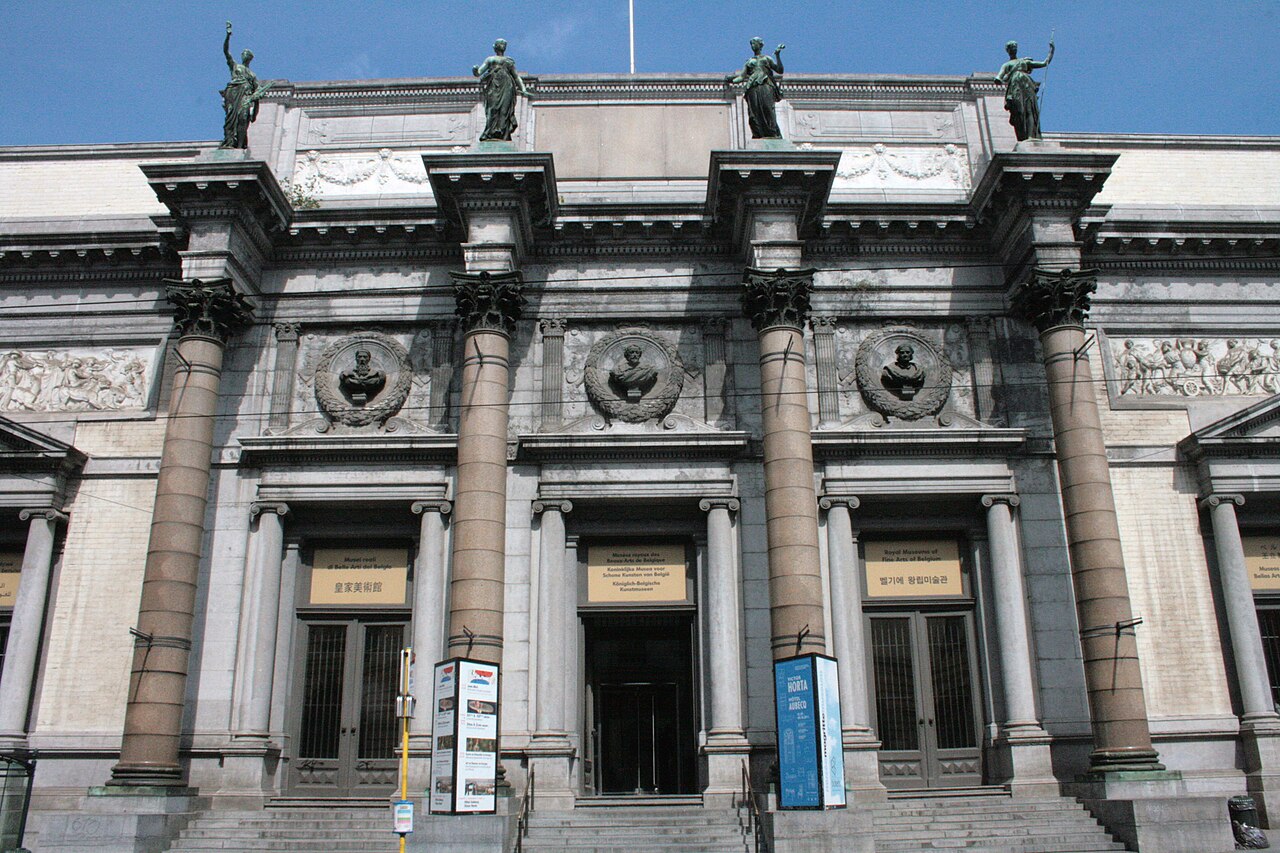
Royal Museums of Fine Arts of Belgium
50.8423° N · 4.3774° E · Museum
Royal Museums of Fine Arts of Belgium is a complex of four museums housing Flemish Old Masters, modern Belgian art, and surrealist works. It is in Brussels, Belgium. Most visitors spend 2–3 hours here. The free Lokali audio guide runs 5 minutes.
✓ Verified August 2026 · how we write these guides
Visitor facts
| Time needed | 2–3 hours |
|---|---|
| Lokali audio guide | 5 min · free |
| Type | Museum |
| Best for | Editors' pick |
| Location | Brussels, Belgium |
| Coordinates | 50.8423, 4.3774 |
| Languages | 45, in the Lokali app |
The story
On the hill of the arts above the old town, a grand museum holds centuries of painting, from the meticulous masters of the late Middle Ages to the dreamlike images of a modern surrealist. This is the Royal Museums of Fine Arts of Belgium, the country's great art collection and one of the finest in the region.
The museums are really a group under one name, sharing the collection across linked buildings, covering the old masters of the Low Countries and later art, so a visit moves across several centuries of one of Europe's richest painting traditions.
The old-master galleries are the heart of it, hung with the work of the great Flemish and Netherlandish painters, the sharp-eyed portraits and crowded scenes of artists whose names define the art of their age. For lovers of that tradition, it is essential.
Among the most famous holdings are works by a great sixteenth-century painter known for crowded peasant scenes and snowy landscapes, whose busy, human pictures reward long, close looking.
Joined to the collection is a museum devoted to a single modern artist, the country's most famous surrealist, whose paintings of bowler-hatted men, floating objects, and visual riddles have become some of the best-known images of the twentieth century.
That surrealist museum, with its dim galleries and dreamlike pictures, is a highlight in its own right, and for many visitors the main reason to come, a deep dive into one strange and brilliant imagination.
Between the old masters and the surrealist lie galleries of later painting and sculpture, so the collection traces the long line from the medieval Low Countries to the modern age under one roof.
The museum sits on the Mont des Arts, the cultural hill between the upper and lower town, among other museums, gardens, and grand buildings, with fine views down over the old city from the terraces nearby.
As with any great collection, it rewards choosing a focus, the old masters or the surrealist, rather than trying to see every gallery, and the layout across linked buildings takes a little navigating.
The surrounding hill is one of the most pleasant parts of the city to walk, with its gardens, viewpoints, and clustered museums, so the gallery folds into a wider cultural afternoon.
A few practical notes. Entry is ticketed, sometimes with separate or combined tickets for the surrealist museum; book ahead for big exhibitions, and allow a couple of hours. It is a fine refuge on a grey Brussels day.
Stand before a crowded sixteenth-century scene, then among the riddles of the surrealist's dreamworld, and the long reach of the country's painting comes together on the hill. When you step out onto the terrace, the old town spreads below, and the museums of the hill wait all around.
Key facts
What to look for
Practical tips
Common questions
How long do you need at Royal Museums of Fine Arts of Belgium?
Plan 2–3 hours. That is the time most visitors spend at Royal Museums of Fine Arts of Belgium. The free Lokali audio guide adds about 5 minutes of narration you can listen to as you walk, so it fits inside your visit rather than adding to it.
Is there a free audio guide to Royal Museums of Fine Arts of Belgium?
Yes — the Lokali app narrates Royal Museums of Fine Arts of Belgium free of charge in 50+ languages. It covers the history, what to look for on site and practical tips, and it works offline once downloaded.
Where is Royal Museums of Fine Arts of Belgium?
Royal Museums of Fine Arts of Belgium is in Brussels, Belgium, at 50.8423, 4.3774. Tap the map link on this page for directions from where you are.
What should you know before visiting Royal Museums of Fine Arts of Belgium?
Choose the old masters or the surrealist.
What is Royal Museums of Fine Arts of Belgium known for?
Belgium's great national fine-art collection.
What is the best time to visit Royal Museums of Fine Arts of Belgium?
The Magritte Museum occupies a renovated Art Deco building.
On the map
Opens directions to Royal Museums of Fine Arts of Belgium from your location.
More to see in Brussels


Hear Royal Museums of Fine Arts of Belgium in your language
The full story, narrated, in 50+ languages. Download it before you go and it plays offline, at your own pace, with no ticket and no tour group.