
Photo: Troya Müzesi from Çanakkale, Türkiye · CC BY-SA 2.0 · Wikimedia Commons
Troy Museum is an archaeological museum in northwestern Turkey. It is in Canakkale, Türkiye. The museum opened in 2018, the Year of Troy. The free Lokali audio guide runs 6 minutes.
✓ Published October 2026 · how we write these guides
Visitor facts
| Lokali audio guide | 6 min · free |
|---|---|
| Type | Museum |
| Location | Canakkale, Türkiye |
| Coordinates | 39.9553, 26.2492 |
| Official website | muze.gov.tr |
| Languages | 50+, in the Lokali app |
The story
Stand for a moment before you go inside. The walls in front of you are not painted. They are steel, left to rust on purpose, and the surface has turned the colour of dry earth after rain. Run your eyes along it and you will see streaks of orange, brown and deep red. The wind here comes off the plain and the sea beyond. It carries dust, the smell of olive groves, and sometimes the faint salt of the strait.
This is the Troy Museum. It sits in the countryside south of Çanakkale, close to the village of Tevfikiye and a short walk from the ancient mound of Hisarlık. That mound is where most archaeologists place the city of Troy. The museum opened in 2018, a year Turkey marked as the Year of Troy. It came twenty years after the ancient site joined the UNESCO World Heritage list in 1998.
The building is a simple cube, and that simplicity is deliberate. The design came from an architectural competition held several years before the opening. The idea behind the rusted steel is easy to understand once you see the mound itself. Troy is not one city. It is many cities built on top of each other. The museum looks like a block of excavated soil, lifted out of the ground and set down on the plain.
Here is something many visitors miss at first. Archaeologists usually describe Troy in layers, numbered from Troy One at the bottom to Troy Nine near the top. Those layers cover thousands of years, from the Early Bronze Age to the Roman period. Each settlement grew, burned, collapsed or was rebuilt. The next one rose on its ruins. The museum asks you to read time the same way. You move through it as you would move through those layers.
Inside, the route follows long ramps rather than separate rooms. You walk slowly, almost without noticing that you are climbing. The light is low in some sections and bright in others. Around you are cases of pottery, tools, weapons, figurines and jewellery. Many come from Troy itself. Others come from mounds, tombs and towns across this whole region, which the ancient Greeks called the Troad.
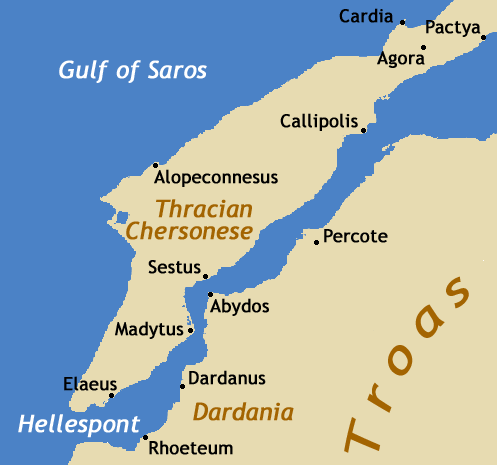
That wider view matters. The story of Troy is usually told as one war and one city. But this corner of Anatolia was busy for millennia. It sat at the mouth of the Dardanelles, the narrow strait between the Aegean Sea and the Sea of Marmara. Ships, traders and armies passed here again and again. The museum shows farmers, potters and craftsmen, not only heroes from a poem.
Of course, the poem is never far away. Homer's Iliad, composed in the eighth or seventh century before Christ, tells of a long Greek siege of Troy. The famous wooden horse does not actually appear in the Iliad. That story comes from other ancient sources. Whether a real war matches Homer's account is still debated. Scholars agree that Troy was real. The details of the legend are much harder to prove.
The modern search for Troy is its own drama. In the 1870s, the German businessman Heinrich Schliemann dug into Hisarlık, guided partly by the British local resident Frank Calvert. Schliemann's methods were rough. He cut a huge trench through the mound and destroyed parts of the very layers he wanted. He also found a hoard of gold and silver, which he called the Treasure of Priam, and took it out of the Ottoman Empire.
That treasure travelled far. It went to Berlin, disappeared at the end of the Second World War, and later surfaced in Moscow, where much of it remains. This is a second surprise for many visitors. The most famous objects from Troy are not here at all. The museum is partly about what was found, and partly about what was lost, taken, or brought home again.
Some pieces did come home. In 2012, a collection of gold jewellery linked to Troy returned to Turkey from a museum in the United States. Look for the small ornaments, delicate and finely worked, and imagine them in the hands of their makers more than four thousand years ago. The museum displays returned objects with clear pride. Each one is a small part of a much longer argument about who owns the past.
One of the most powerful objects here is the Polyxena Sarcophagus. It is a marble coffin, carved in the archaic period, found in this region in the 1990s. Its reliefs show the sacrifice of Polyxena, a daughter of King Priam in the Trojan legend. The scene is calm and cruel at the same time. Take your time with it. The figures are worn, but their gestures are still easy to follow.
When you reach the top of the ramps, step out onto the roof terrace if it is open. From here the land opens in every direction. You can look across the low plain toward the mound of Troy, and on clear days toward the water. Notice how flat the ground is. In ancient times, the coastline was closer, and parts of this plain were a bay. Silt from the rivers slowly filled it in.
Now look back down at the steel walls below you. The rust will keep changing with rain and sun, year after year, just as the soil around the mound keeps settling. When you walk out toward the ancient site, carry that picture with you. The broken walls on Hisarlık are only a few layers of a very deep story. And the ground under your feet... is part of it too.
Key facts
What to look for
Practical tips
Common questions
Is there a free audio guide to Troy Museum?
Yes — the Lokali app narrates Troy Museum free of charge in 50+ languages. The guide runs about 6 minutes, covers the history, what to look for on site and practical tips, and works offline once downloaded.
Where is Troy Museum?
Troy Museum is in Canakkale, Türkiye, at 39.9553, 26.2492. Tap the map link on this page for directions from where you are.
What is Troy Museum known for?
The museum opened in 2018, the Year of Troy. Troy joined the UNESCO World Heritage list in 1998.
What should you look for at Troy Museum?
Rust-coloured weathering steel covering the cube-shaped building. Marble reliefs on the Polyxena Sarcophagus. Small gold ornaments returned to Turkey in 2012.
What should you know before visiting Troy Museum?
Visit the museum before walking to the ancient mound. Allow extra time for the long, gently climbing ramps.
On the map
Opens directions to Troy Museum from your location.
More to see in Canakkale



Hear Troy Museum in your language
The full story, narrated, in 50+ languages. Download it before you go and it plays offline, at your own pace, with no ticket and no tour group.