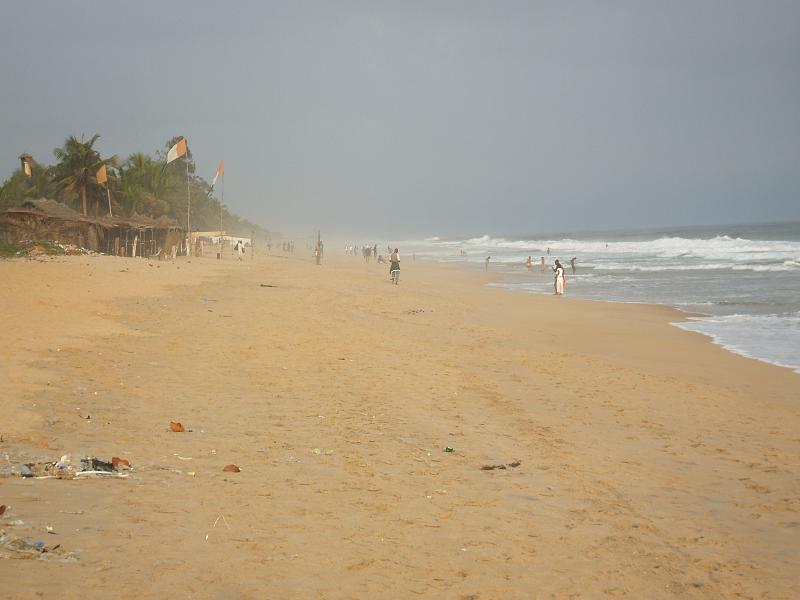
Grand-Bassam Beach is a long sandy Atlantic shore backed by the town, popular with swimmers and fishermen. It is in Grand-Bassam, CI. Most visitors spend 1–2 hours here. The free Lokali audio guide runs 5 minutes.
✓ Verified August 2026 · how we write these guides
Visitor facts
| Time needed | 1–2 hours |
|---|---|
| Lokali audio guide | 5 min · free |
| Type | Beach |
| Best for | Local life |
| Location | Grand-Bassam, CI |
| Coordinates | 5.1950, -3.7400 |
| Languages | 45, in the Lokali app |
The story
The sound reaches you first. Waves fall against the sand in a long, steady rhythm. Palm trees lean toward the water, their leaves moving in the wind. The air is warm and thick with salt. This is the beach at Grand-Bassam, where the town meets the open Atlantic Ocean.
Grand-Bassam lies on the southern coast of Cote d'Ivoire, on the Gulf of Guinea. The town sits between the ocean and the Ebrie Lagoon. The beach runs in a long line of pale sand, broken here and there by rows of palms and by simple restaurants built close to the water.
For the people of Abidjan, this shore is an easy escape. The city lies only about forty kilometers to the west. On weekends, families drive out to sit by the water, to eat grilled fish, and to rest under the palms, far from the noise and traffic of the city.
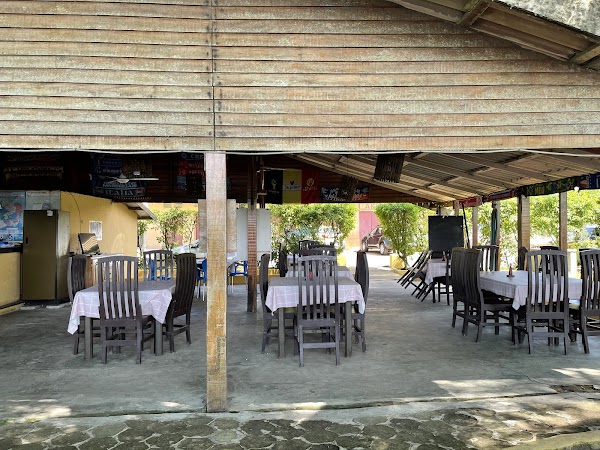
Walk along the sand and you will pass small open-air restaurants, often called maquis. Tables stand under simple roofs of palm leaf and wood. Cooks grill fish caught nearby and serve it with attieke, a dish made from cassava that is eaten across the country.
The ocean here is beautiful, but it deserves respect. The Atlantic along this coast carries strong currents and a powerful undertow. The waves can pull hard at your legs. Many people come to wade and to feel the water, while taking care not to swim out far from the shore.
If you walk to where the lagoon comes close to the sea, you can see the two waters almost meet. On one side lies the open ocean. On the other lies the calm lagoon. The narrow band of land between them is the ground that the whole town is built upon.
This has long been a coast of fishermen. Near the beach, the N'zima people have lived and fished along the lagoon and the sea for generations. You may see narrow wooden boats drawn up on the sand, and nets spread out to dry in the sun. Fishing is still part of daily life here, not only a sight for visitors.
The beach was not always only a place to rest. In the colonial years, this was part of a working port. Because there was no deep harbor, goods were carried out to ships waiting offshore. The sea was a road as much as a view, a way out to the wider world.
The first wharf was built in 1897, and a second followed in 1923. Cocoa, coffee, and timber from the interior passed near this sand on their way to Europe. When a new wharf opened at Abidjan in 1931, the trade moved away, and the shore slowly grew quiet again.
Once a year, the town comes alive for the Abissa, a festival of the N'zima people. Over several days, music and dance fill the streets near the water. It is a time of celebration, and also a time to settle the quarrels of the year, marked with drums, masks, and color.
The beach changes with the week. On quiet weekdays, you may have long stretches of sand almost to yourself, with only a fisherman or two at work. On weekends, the maquis fill with families and music, and the shore stays lively well into the evening.
Come in the late afternoon, when the heat begins to soften. Find a chair in the shade and stay a while. Order a cold drink. Watch the children run at the edge of the waves and the boats move slowly across the water. There is no need to hurry here.
As the light fades, the sun lays a path of gold across the sea. The sound of the ocean stays the same as it has always been, steady and patient. The town behind you has seen wealth and quiet, ships and silence. The sea remembers none of it. It simply keeps arriving, wave after wave, onto the warm sand.
Key facts
What to look for
Practical tips
Common questions
How long do you need at Grand-Bassam Beach?
Plan 1–2 hours. That is the time most visitors spend at Grand-Bassam Beach. The free Lokali audio guide adds about 5 minutes of narration you can listen to as you walk, so it fits inside your visit rather than adding to it.
Is there a free audio guide to Grand-Bassam Beach?
Yes — the Lokali app narrates Grand-Bassam Beach free of charge in 50+ languages. It covers the history, what to look for on site and practical tips, and it works offline once downloaded.
Where is Grand-Bassam Beach?
Grand-Bassam Beach is in Grand-Bassam, CI, at 5.1950, -3.7400. Tap the map link on this page for directions from where you are.
What should you know before visiting Grand-Bassam Beach?
Take care swimming due to strong ocean currents.
What is Grand-Bassam Beach known for?
Located on the Gulf of Guinea in southern Cote d'Ivoire.
What is the best time to visit Grand-Bassam Beach?
Visit at dawn to see fishermen return with the night's catch, or at sunset when families gather and the light turns the water gold.
On the map
Opens directions to Grand-Bassam Beach from your location.
More to see in Grand-Bassam

Hear Grand-Bassam Beach in your language
The full story, narrated, in 50+ languages. Download it before you go and it plays offline, at your own pace, with no ticket and no tour group.