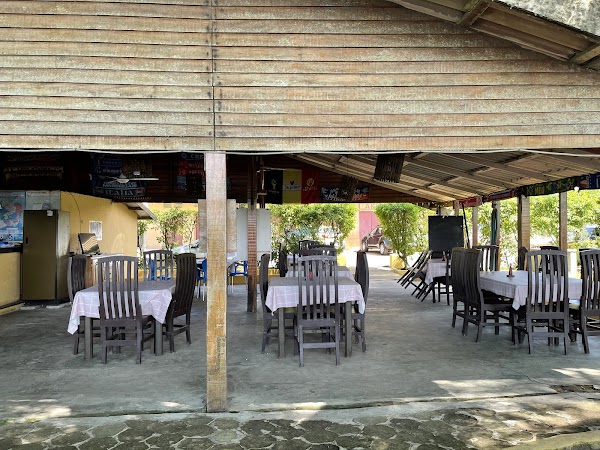
Quai de Grand-Bassam
5.1955° N · 3.7365° W · Street
Quai de Grand-Bassam is the waterfront promenade running along the lagoon edge, lined with colonial-era buildings and offering views across the water. It is in Grand-Bassam, CI. Most visitors spend 30–45 min here. The free Lokali audio guide runs 5 minutes.
✓ Verified August 2026 · how we write these guides
Visitor facts
| Time needed | 30–45 min |
|---|---|
| Lokali audio guide | 5 min · free |
| Type | Street |
| Best for | Photography |
| Location | Grand-Bassam, CI |
| Coordinates | 5.1955, -3.7365 |
| Languages | 45, in the Lokali app |
The story
Stand at the water's edge where the town meets the lagoon. The surface is calm here, very different from the ocean on the far side of the sand. A few small boats rest against the bank. The light lies soft on the water. This quiet waterfront was once the busiest place in the whole colony.
Grand-Bassam is built on a narrow band of land between the Atlantic Ocean and the Ebrie Lagoon. The ocean side is open and rough. The lagoon side is sheltered and still. For a town that lived by shipping, the difference between the two waters mattered a great deal.
The open ocean here has no natural deep harbor. Ships could not simply pull up to the shore. The waves and the shifting sandbar made the coast dangerous for loading and unloading. So instead of bringing the ships in, the town reached out toward them. It was a problem of geography that shaped everything else.
In 1897, the French built a wharf at Grand-Bassam, a long loading platform reaching out over the water. Goods and people were carried along it and lifted out to the ships waiting offshore. For the colony, this was the main link between the land and the sea.
Across this waterfront passed the wealth of the colony. Cocoa and coffee, timber, and palm oil came down from the interior. They were gathered here, then sent out across the wharf and on to Europe. Each crate that crossed here carried the work of distant farms. For a time, much of the whole territory's trade moved through this single point.
As the trade grew, one wharf was not enough. In 1923, a second wharf was built to handle the rising flow of goods. The waterfront was a place of hard labor, of carts and cargo and constant movement, worked under the heavy heat of the coast.
Then the center shifted. In 1931, the French opened a new wharf at Abidjan, to the west, where ships could reach a deeper and safer harbor. The vessels went there instead. The wharves at Grand-Bassam fell silent and, in time, were closed for good.
What remains today is the quiet. The long platforms that once reached over the water are gone, but the waterfront itself stays, the same lagoon and the same wide sky. Where cranes once swung their loads, fishermen now tend their boats and mend their nets. The silence here is the silence that followed the trade.
The old town rises just behind the waterfront. Many of the colonial buildings were placed to face the lagoon, because that was where the business of the day arrived and departed. Their tall windows still look out over the water, watching a harbor that no longer works.
Walk along the bank and watch the lagoon at its slower work. A narrow boat crosses with a single passenger. A heron stands still in the shallows, waiting. The water holds the reflection of the old town behind you, its faded walls doubled on the calm surface. There is time, on the lagoon, to simply watch.
It is worth remembering what this trade was built upon. The wealth that crossed this water came from the labor of many people, under a colonial system that served distant powers first. The calm of the place today should not erase the weight of the work that once happened here.
From the quay you can see how the whole town is shaped by water. The lagoon behind, the ocean ahead, and the thin strip of land holding the streets between them. This edge, where the land gives way to the lagoon, is where the town first reached out to the wider world.
Stay a moment as the light moves across the water. The port that made this town has been gone for almost a hundred years. The lagoon does not seem to miss it. It lies flat and patient, holding the reflection of the old houses, keeping the quiet that came after the last ships sailed away.
Key facts
What to look for
Practical tips
Common questions
How long do you need at Quai de Grand-Bassam?
Plan 30–45 min. That is the time most visitors spend at Quai de Grand-Bassam. The free Lokali audio guide adds about 5 minutes of narration you can listen to as you walk, so it fits inside your visit rather than adding to it.
Is there a free audio guide to Quai de Grand-Bassam?
Yes — the Lokali app narrates Quai de Grand-Bassam free of charge in 50+ languages. It covers the history, what to look for on site and practical tips, and it works offline once downloaded.
Where is Quai de Grand-Bassam?
Quai de Grand-Bassam is in Grand-Bassam, CI, at 5.1955, -3.7365. Tap the map link on this page for directions from where you are.
What should you know before visiting Quai de Grand-Bassam?
Visit at sunrise or sunset for calm light.
What is Quai de Grand-Bassam known for?
The town sits between the Atlantic Ocean and Ebrie Lagoon.
What is the best time to visit Quai de Grand-Bassam?
The breeze off the water is constant and cooling.
On the map
Opens directions to Quai de Grand-Bassam from your location.
More to see in Grand-Bassam


Hear Quai de Grand-Bassam in your language
The full story, narrated, in 50+ languages. Download it before you go and it plays offline, at your own pace, with no ticket and no tour group.