
Photo: Indrajit Das · CC BY-SA 4.0 · Wikimedia Commons
Fatehpuri Mosque is a mosque in India. It is in Delhi, India. Completed around 1650 under Mughal emperor Shah Jahan. The free Lokali audio guide runs 6 minutes.
✓ Published October 2026 · how we write these guides
Visitor facts
| Lokali audio guide | 6 min · free |
|---|---|
| Type | Mosque |
| Location | Delhi, India |
| Coordinates | 28.6567, 77.2225 |
| Languages | 50+, in the Lokali app |
The story
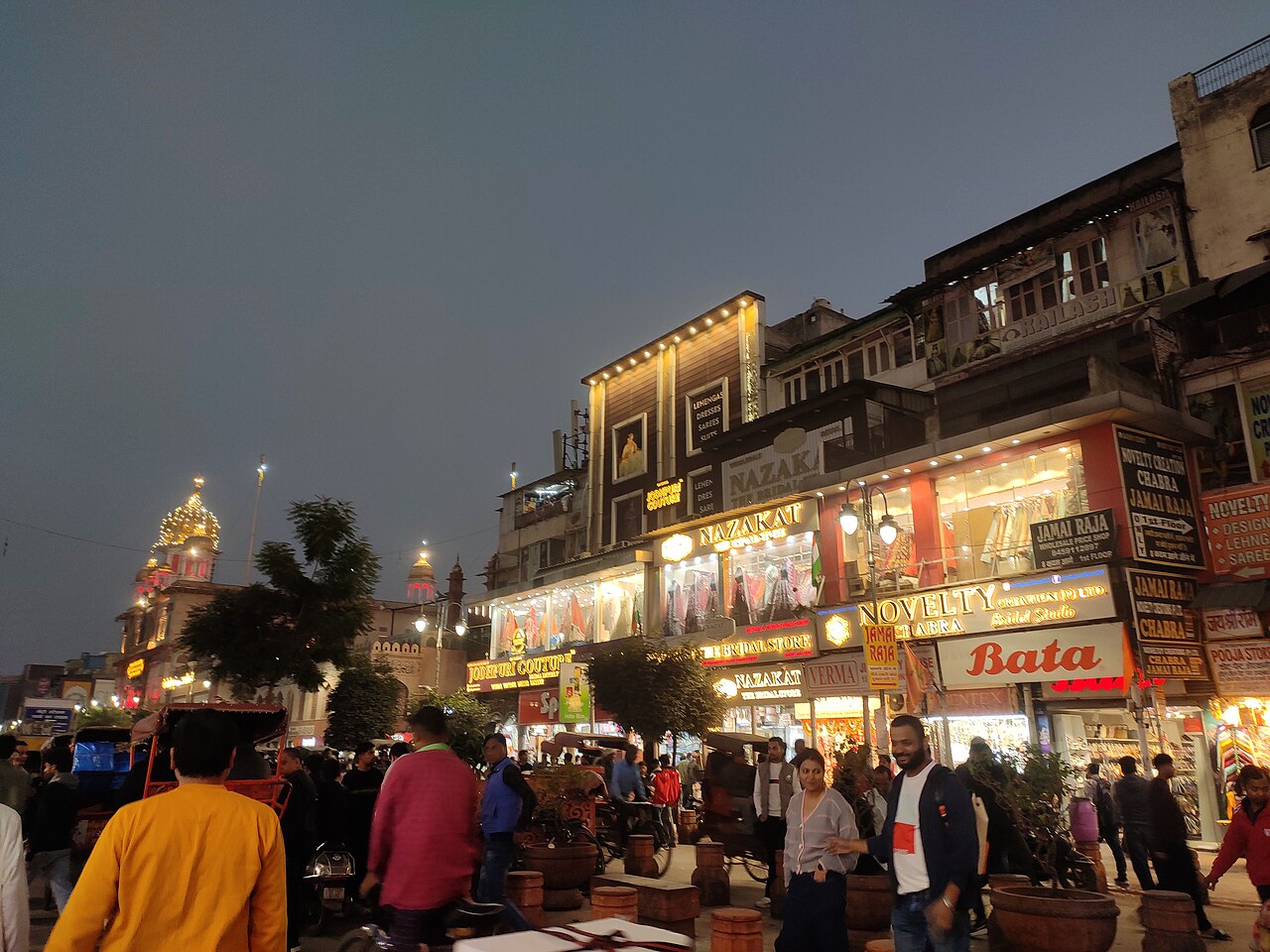
Listen first. Behind you, Chandni Chowk roars with horns, bicycle bells, and the shouts of porters pushing loaded carts. Then you pass through the gateway, and the noise drops away. Ahead lies an open courtyard of pale stone, warm under your bare feet. The air near the old spice lanes carries a faint sharpness, dried chilli and something earthy, drifting in over the walls. Pigeons lift off the paving all at once. This is Fatehpuri Mosque, at the far western end of Old Delhi's great market street.
To understand why the mosque stands here, picture the city in the mid seventeenth century. The Mughal emperor Shah Jahan was building a new capital called Shahjahanabad. The Mughals were the Central Asian dynasty that ruled much of northern India for over two centuries. At one end of the main avenue rose the emperor's fortress, the Red Fort. At the other end, almost exactly where you stand, his court placed this mosque. The long street between them became Chandni Chowk, the Moonlit Square.
The mosque was completed around 1650. Its patron was a woman, which surprises many visitors. She was one of Shah Jahan's wives, and she is remembered as Fatehpuri Begum. Historians generally connect her name to Fatehpur, the town she is said to have come from. Royal women in the Mughal court often funded mosques, gardens, and rest houses. In this way, a queen left her name on one of the busiest corners of the city.
Now look across the courtyard to the prayer hall. The building is made mostly of red sandstone, with a single wide dome rising above the centre. Slim minarets stand at its sides. The front is divided into a row of arched openings, with the tallest arch in the middle. This central arch frames the way towards the wall that faces Mecca. The design follows a classic Mughal pattern: balanced, symmetrical, and calm.
Compare this to the Jama Masjid, a short ride away. That great mosque was built in the same decade, on a raised platform with huge gateways and two tall minarets. Fatehpuri is smaller and closer to street level. It feels less like a royal statement and more like a neighbourhood mosque. That suits its position. For centuries, merchants, porters, and travellers coming off the western roads would stop here to pray before entering the market.
In the middle of the courtyard you will see a pool of water. This is the ablution tank. Before prayer, worshippers wash their hands, faces, and feet here. Watch for a few minutes and you may see the ritual unfold quietly: a man rolling up his sleeves, cupping water, rinsing carefully in a set order. Around the edges of the courtyard run lines of small rooms. Many of these have long served as space for students and teachers.
Here is the first part of the story most visitors miss. In 1857, much of northern India rose against the British East India Company. Delhi was at the centre of the uprising. When British forces retook the city, they punished it hard. Many buildings were seized or destroyed. Large areas around the Red Fort were cleared. Mosques that had sheltered rebels came under special suspicion, and Fatehpuri was taken out of Muslim hands.
Then came something stranger. The British authorities sold the mosque at auction. The buyer was a wealthy Hindu merchant of Delhi, remembered as Lala Chunnamal. According to accounts of the period, he treated the building with care and did not damage it. For some two decades, one of the city's main mosques belonged to a private businessman. Prayer here was interrupted, and the courtyard fell silent in a way it rarely has since.
In the late 1870s, the mosque was finally returned to the Muslim community. Accounts say the government gave the merchant land elsewhere in exchange for it. Worship resumed, and the building took up its old role again. Today, when you see families praying side by side here, remember that this ordinary scene was once not allowed. The calm of this courtyard was not guaranteed. It was won back.
The mosque is not only a place of prayer. For a long time it has also been linked to a madrasa, a school for religious learning. Generations of students have studied the Quran and Islamic law within these walls. In the late afternoon you may hear young voices reciting together from one of the side rooms. The sound rises and falls in a steady rhythm, very different from the shouting of the market just outside.
Step back towards the gate and think about the streets around you. To the west and south lies Khari Baoli, one of the largest spice markets in Asia. Sacks of turmeric, cardamom, dried fruit, and nuts are carried through lanes so narrow that two carts can barely pass. Chandni Chowk itself runs east towards the Red Fort. Fatehpuri sits at the hinge between these two worlds of trade, as it has for centuries.
The second surprise is about time. Many old buildings in Delhi are now monuments, roped off and quiet. Fatehpuri is not. It is still a working mosque, used every day by the people who live and work around it. Shopkeepers come in between sales. Porters rest in the shade of the arcades. When you visit, you are a guest in a living space, not a museum. That is why the place feels so grounded.
Before you leave, stand once more in the centre of the courtyard. Look up at the dome against the Delhi sky, often hazy, sometimes washed blue after rain. Feel the stone under your feet, cool in the morning, hot by midday. Listen for the pigeons, the splash at the tank, the low murmur of prayer. Then walk back through the gate, and let the market noise rush in again. You are standing at the end of the street Shah Jahan designed.
Key facts
What to look for
Practical tips
Common questions
Is there a free audio guide to Fatehpuri Mosque?
Yes — the Lokali app narrates Fatehpuri Mosque free of charge in 50+ languages. The guide runs about 6 minutes, covers the history, what to look for on site and practical tips, and works offline once downloaded.
Where is Fatehpuri Mosque?
Fatehpuri Mosque is in Delhi, India, at 28.6567, 77.2225. Tap the map link on this page for directions from where you are.
What is Fatehpuri Mosque known for?
Completed around 1650 under Mughal emperor Shah Jahan. Commissioned by Fatehpuri Begum, one of Shah Jahan's wives.
What should you look for at Fatehpuri Mosque?
The single broad dome rising above the prayer hall. Red sandstone arches with the tallest one in the centre. The ablution pool in the middle of the courtyard.
What should you know before visiting Fatehpuri Mosque?
Dress modestly, covering shoulders and knees before entering. Remove your shoes at the gate and carry them.
On the map
Opens directions to Fatehpuri Mosque from your location.
More to see in Delhi


Hear Fatehpuri Mosque in your language
The full story, narrated, in 50+ languages. Download it before you go and it plays offline, at your own pace, with no ticket and no tour group.