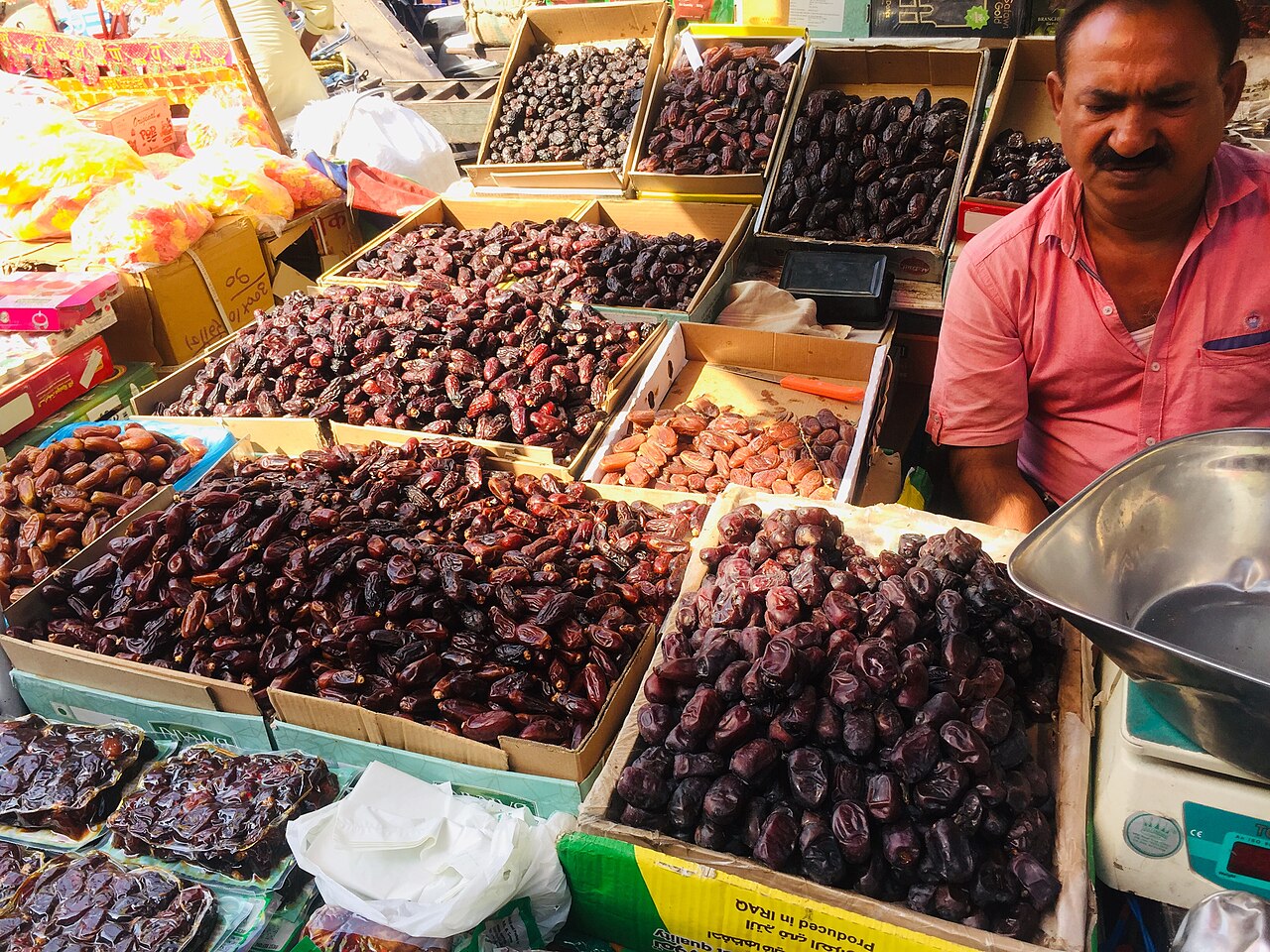
Khari Baoli is a market in Delhi, India. Asia's largest wholesale spice market. Trading since the sixteen-sixties under Mughal rule. Most visitors spend 45-90 min here. The free Lokali audio guide runs 5 minutes.
✓ Verified October 2026 · how we write these guides
Visitor facts
| Time needed | 45-90 min |
|---|---|
| Lokali audio guide | 5 min · free |
| Type | Market |
| Best for | Authentic finds |
| Location | Delhi, India |
| Coordinates | 28.6512, 77.2289 |
| Languages | 45, in the Lokali app |
The story
The air hits you first — a dense, layered wall of scent that shifts with every step. Cardamom, cumin, turmeric, dried chili, clove, all mingling with the faint sweetness of fennel and the sharp tang of asafoetida. Khari Baoli is Asia's largest wholesale spice market, a narrow lane in Old Delhi where the city's appetite has been traded for more than three centuries.
The name means "salty step-well", a reference to a long-vanished reservoir that once stood near this spot. The market took root in the sixteen-sixties, during the reign of the Mughal emperor Shah Jahan, who built the nearby Red Fort and laid out the walled city of Shahjahanabad. Merchants set up shop along this artery to supply the imperial kitchens and the households of nobles. Over time, the trade expanded — spices, dried fruits, nuts, herbs, medicinal roots, tea — until Khari Baoli became the beating heart of Delhi's food economy.
Walk the lane and you pass shopfronts stacked floor to ceiling with jute sacks, each one bulging with a different commodity. Red chili powder in coarse pyramids. Black peppercorns glossy as river stones. Saffron sold by the gram from small glass vials. The shops are narrow, often just three metres wide, but they run deep into the buildings, and many families have traded from the same address for five or six generations. The men who work here can grade a batch of turmeric by rubbing it between their fingers, or tell the harvest year of a cardamom pod by its scent.
The architecture is typical of Old Delhi — two and three-storey brick buildings with wooden balconies and shuttered windows, painted in faded ochres and greens. The lane itself is barely wide enough for a handcart. Porters move through the crowd balancing sacks on their heads, shouting warnings as they weave between shoppers and wholesale buyers. Overhead, a tangle of electrical wires casts shadows on the awnings. The ground underfoot is uneven, worn smooth by centuries of foot traffic.
Khari Baoli does not cater to tourists. This is a working market, and most transactions happen in bulk — twenty-kilogram sacks, not small souvenir packets. Restaurateurs, caterers, and smaller retailers come here to buy stock. Prices are negotiated in rapid Hindi or Punjabi, and the rhythm of trade is brisk and unsentimental. But visitors are welcome to wander, and many shopkeepers will offer a pinch of spice to smell or a sample of dried fruit if you show genuine interest.
The market opens early, around seven in the morning, and the busiest hours are before noon. By mid-afternoon, the energy slows, and by evening most shops have shuttered. The best time to visit is mid-morning, when the light slants through the awnings and the air is thick with the smell of roasting spices from nearby grinding mills. Bring a cloth bag if you want to buy — plastic is frowned upon here, and most vendors still wrap purchases in newspaper or paper cones.
One detail worth noticing: the weighing scales. Many shops still use brass balance scales, the kind with two pans and a set of iron weights. Watch a transaction and you will see the merchant add or subtract weights with practiced speed, his fingers never hesitating. It is a small theatre of trust, repeated thousands of times a day.
Khari Baoli sits within the broader fabric of Old Delhi, a neighbourhood dense with history and still very much alive. A few minutes' walk north brings you to the Fatehpuri Masjid, a Mughal-era mosque built in the sixteen-fifties. To the south lies Chandni Chowk, the main artery of the old city, now clogged with cycle rickshaws and street vendors. The Red Fort is a short walk east. The market is not isolated — it is part of a continuous urban tissue that has evolved slowly over centuries.
The spice trade itself has changed. Global supply chains, refrigerated transport, and shifting tastes have all left their mark. But Khari Baoli endures because it occupies a specific niche — high-volume, low-margin wholesale trade where relationships and reputation still matter more than branding. The market is not picturesque in the postcard sense. It is crowded, noisy, and indifferent to comfort. But it is real, and that realness is rare.
As you leave, the smell clings to your clothes and hair — a faint ghost of cumin and clove that lingers for hours. That persistence is part of the experience. Khari Baoli is not a place you visit and forget. It prints itself on the senses, and the memory of it returns every time you open a jar of spice at home.
Key facts
What to look for
Practical tips
Common questions
How long do you need at Khari Baoli?
Plan 45-90 min. That is the time most visitors spend at Khari Baoli. The free Lokali audio guide runs 5 minutes and is made to listen to while you walk.
Is there a free audio guide to Khari Baoli?
Yes — the Lokali app narrates Khari Baoli free of charge in 50+ languages. No ticket, tour group or subscription, and it works offline once downloaded.
Where is Khari Baoli?
Khari Baoli is in Delhi, India, at 28.6512, 77.2289. Tap the map link on this page for directions.
What should you know before visiting Khari Baoli?
Visit mid-morning for best light and energy
What is Khari Baoli known for?
Asia's largest wholesale spice market
What is the best time to visit Khari Baoli?
Visit mid-morning for best light and energy
On the map
Opens directions to Khari Baoli from your location.
More to see in Delhi


Hear Khari Baoli in your language
The full story, narrated, in 50+ languages. Download it before you go and it plays offline, at your own pace, with no ticket and no tour group.