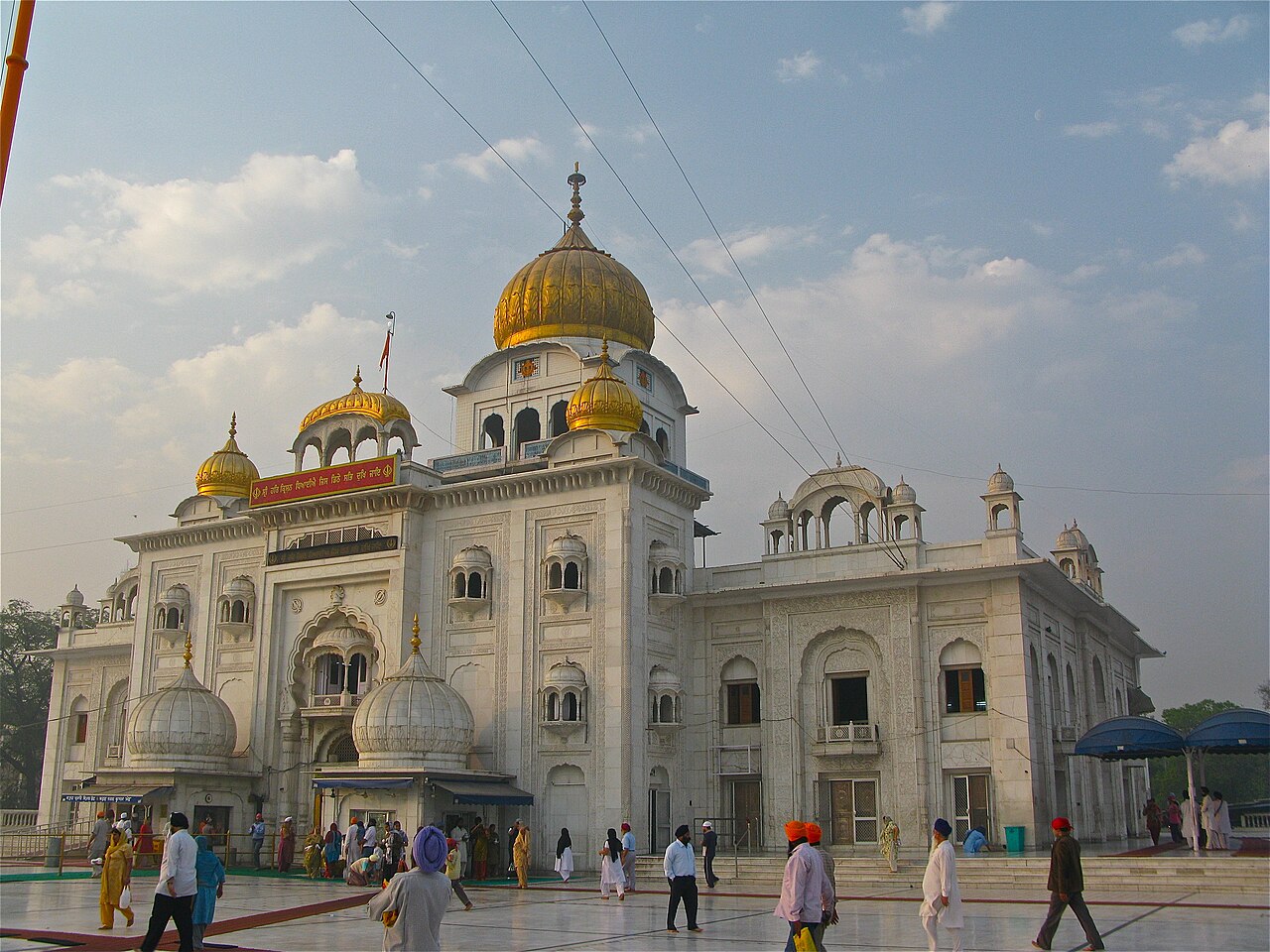
Gurudwara Bangla Sahib
28.6262° N · 77.2082° E · Gurudwara
Gurudwara Bangla Sahib is a gurudwara in Delhi, India. Guru Har Krishan stayed here in 1664 during a smallpox epidemic. The Guru was eight years old when he tended to the sick. Most visitors spend 45-60 min here. The free Lokali audio guide runs 5 minutes.
✓ Verified October 2026 · how we write these guides
Visitor facts
| Time needed | 45-60 min |
|---|---|
| Lokali audio guide | 5 min · free |
| Type | Gurudwara |
| Best for | Authentic finds |
| Location | Delhi, India |
| Coordinates | 28.6262, 77.2082 |
| Languages | 45, in the Lokali app |
The story
The first thing you notice is the stillness. Even as traffic hums beyond the walls, the courtyard opens into a pool of calm — white marble underfoot, the reflection of the golden dome rippling in the sarovar, the sacred pool. The air carries the scent of marigolds and incense, mingling with the faint sweetness of karah prasad, the blessed offering prepared in the community kitchen.
This is Gurudwara Bangla Sahib, one of the most prominent Sikh houses of worship in Delhi. The name itself tells a story — bangla, meaning a bungalow or house, once the residence of Raja Jai Singh, a seventeenth-century nobleman. In 1664, the eighth Sikh Guru, Guru Har Krishan, stayed here during a smallpox epidemic that was sweeping through the city. He was only eight years old at the time, yet he tended to the sick without regard for his own safety, offering water from the well and comfort to those suffering. The Guru himself contracted the disease and died shortly after, but his compassion left a mark that endures.
The well he blessed still stands within the complex. Pilgrims believe its water holds healing properties, and you will see people filling bottles and cupping their hands to drink. Whether or not you share that belief, the gesture itself — thousands of visitors each day pausing to touch the same stone rim — speaks to the pull of ritual and memory.
The main prayer hall rises beneath the golden dome, its interior lined with marble inlaid with floral patterns. The Guru Granth Sahib, the Sikh holy scripture, rests on a raised platform under a canopy. Devotional music, kirtan, fills the space — tabla, harmonium, voices rising and falling in ragas that have been sung for centuries. Non-Sikhs are welcome to sit and listen, as long as heads are covered and shoes are removed. Scarves are provided at the entrance if you need one.
Beyond the prayer hall, the langar operates around the clock. This is the community kitchen, a cornerstone of Sikh practice — free meals served to anyone, regardless of faith, caste, or background. Volunteers roll chapatis, stir vast pots of dal, wash thousands of steel plates. On a busy day, the langar feeds more than ten thousand people. You are welcome to join a meal, or to volunteer for a shift in the kitchen. The work is simple — peeling vegetables, kneading dough, sweeping floors — but the principle behind it is profound. Everyone sits on the floor together, eats the same food, served by the same hands.
The gurudwara was rebuilt in its current form in the nineteen twenties, replacing the earlier structure. The marble cladding, the dome's gold leaf, the intricate jali screens — all are relatively recent, yet they follow centuries-old Sikh architectural principles. The design is open, symmetrical, and oriented around the sarovar. Water and light are central. The dome catches the sun at different hours, glowing pale gold at dawn, blazing at midday, softening to amber as evening falls.
Walk the perimeter of the pool. You will see families, pilgrims, tourists, all moving at their own pace. Some pause to pray, some dip their hands in the water, some simply sit and watch the carp glide beneath the surface. The marble stays cool even in the heat, and the sound of the water lapping against the edge creates a low, steady rhythm.
There is a museum on the upper floor, small but carefully curated, with paintings and relics tracing Sikh history. The exhibits are modest — faded manuscripts, a few swords, portraits of the Gurus — but they offer context if you want to understand the faith's origins in the Punjab, its emphasis on equality, service, and resistance to oppression.
As you prepare to leave, notice the way the light falls through the jali screens, casting geometric shadows across the marble. Notice the steady stream of people arriving, removing their shoes, covering their heads, stepping into the courtyard. This place does not close. The doors stay open, the langar keeps cooking, the kirtan continues. It is a living practice, not a monument. You are standing in the middle of it.
Key facts
What to look for
Practical tips
Common questions
How long do you need at Gurudwara Bangla Sahib?
Plan 45-60 min. That is the time most visitors spend at Gurudwara Bangla Sahib. The free Lokali audio guide runs 5 minutes and is made to listen to while you walk.
Is there a free audio guide to Gurudwara Bangla Sahib?
Yes — the Lokali app narrates Gurudwara Bangla Sahib free of charge in 50+ languages. No ticket, tour group or subscription, and it works offline once downloaded.
Where is Gurudwara Bangla Sahib?
Gurudwara Bangla Sahib is in Delhi, India, at 28.6262, 77.2082. Tap the map link on this page for directions.
What should you know before visiting Gurudwara Bangla Sahib?
Cover your head and remove shoes before entering
What is Gurudwara Bangla Sahib known for?
Guru Har Krishan stayed here in 1664 during a smallpox epidemic
What is the best time to visit Gurudwara Bangla Sahib?
Visit early morning or late evening for quieter moments
On the map
Opens directions to Gurudwara Bangla Sahib from your location.
More to see in Delhi



Hear Gurudwara Bangla Sahib in your language
The full story, narrated, in 50+ languages. Download it before you go and it plays offline, at your own pace, with no ticket and no tour group.