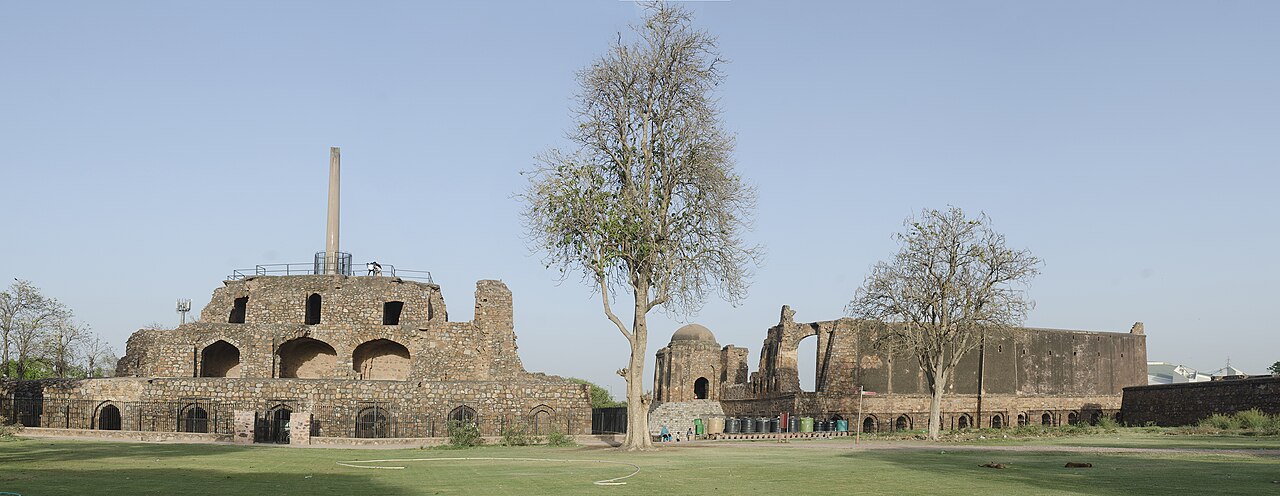
Feroz Shah Kotla is a fort in Delhi, India. Feroz Shah Tughlaq founded Firozabad here in 1354. Ashokan pillar dates to third century before Christ. Most visitors spend 45-90 min here. The free Lokali audio guide runs 5 minutes.
✓ Verified October 2026 · how we write these guides
Visitor facts
| Time needed | 45-90 min |
|---|---|
| Lokali audio guide | 5 min · free |
| Type | Fort |
| Best for | History |
| Location | Delhi, India |
| Coordinates | 28.6399, 77.2445 |
| Languages | 45, in the Lokali app |
The story
Stand at the base of the sandstone pillar and look up. The stone is warm under your hand, polished smooth by centuries of monsoon rain and Delhi's relentless sun. This is not just a cricket ground — beneath the modern stadium lies one of Delhi's forgotten cities, built in the fourteenth century and now half-buried under earth and time.
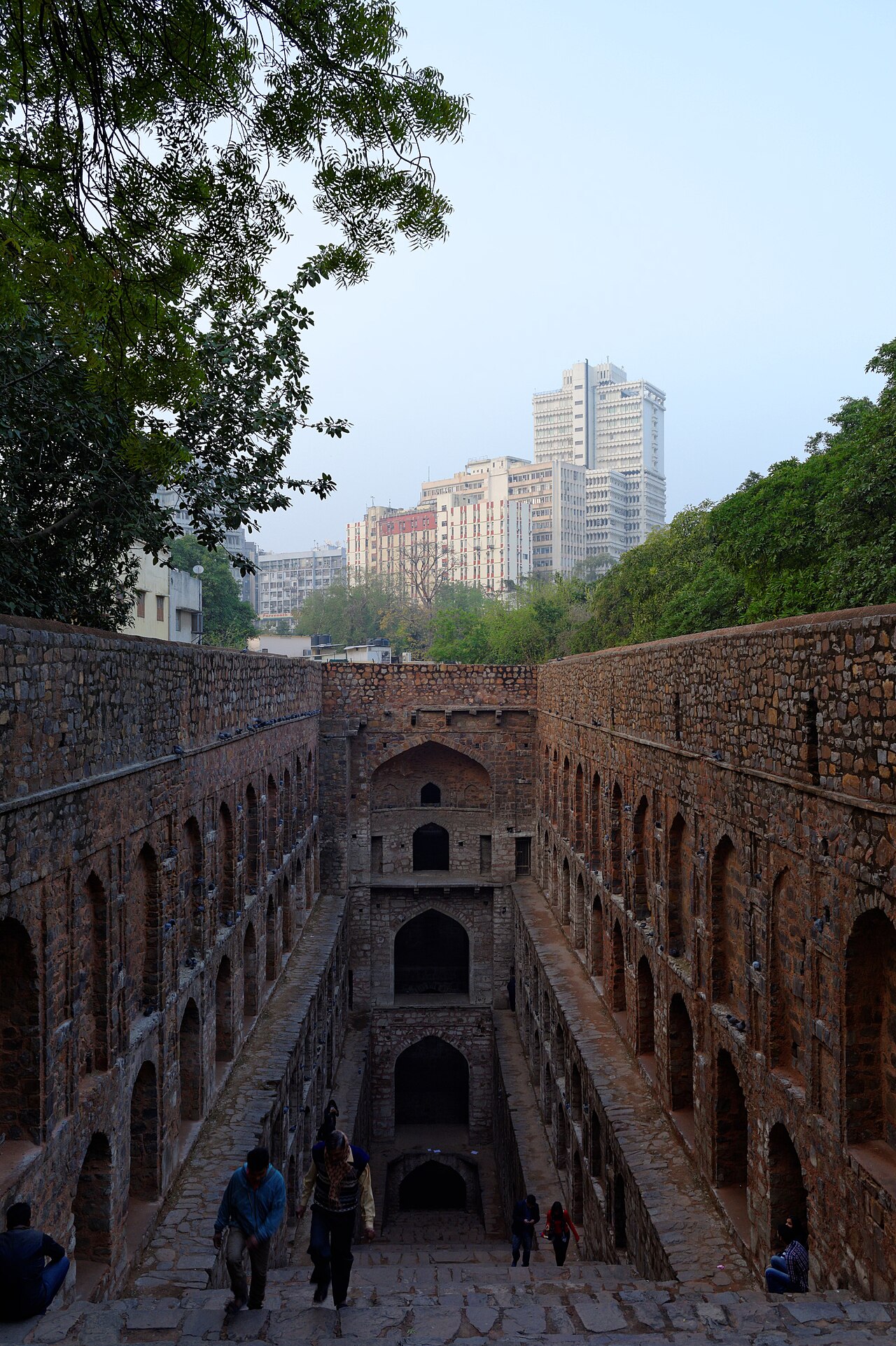
Feroz Shah Tughlaq founded this city in 1354, calling it Firozabad. He ruled the Delhi Sultanate during a rare moment of calm between invasions, and he spent his reign building — mosques, reservoirs, hospitals, entire towns. This was his capital, spread across the banks of the Yamuna River. Today only fragments survive: a mosque with three domed prayer halls, a stepped well called a baoli that plunges into cool darkness, and this pillar — an Ashokan column that Feroz Shah hauled here from Ambala, over two hundred kilometres north, in the 1350s.
The pillar is older than the city around it by sixteen centuries. Ashoka, the Mauryan emperor, erected it in the third century before Christ, carved with edicts promoting Buddhist dharma across his vast empire. Feroz Shah did not read the script — Brahmi had been forgotten by his time — but he recognised the column's power. He built a pyramidal structure around it, three stories of rubble and dressed stone, so the pillar stood at the summit like a relic in a shrine. The structure is gone now, sheared away by earthquakes and looters, but the pillar remains, its surface covered in script no one in medieval Delhi could decipher.
Walk through the mosque. The prayer hall is roofless now, open to the sky, but the mihrab niches still face west toward Mecca. The stone is grey Delhi quartzite, cut in clean blocks and laid without mortar in some sections — a technique that let the walls flex during tremors instead of collapsing. Feroz Shah's architects knew the land moved. You can see their repairs in the patchwork: older blocks next to newer ones, lime plaster filling cracks that opened during the great quake of 1803.
Descend into the baoli. The steps are steep and narrow, slick with moss where groundwater seeps through the joints. At the bottom the air is ten degrees cooler, and the light turns blue-green as it filters down through the shaft. These stepwells were engineering marvels — they reached the water table year-round, even in the dry season, and provided a place to gather, to wash, to escape the heat. Women came here in the afternoons; merchants rested between the bazaar and the river; soldiers filled their skins before marching.
The cricket stadium rose in the twentieth century, built over the ruins. For decades the ancient city was a backdrop to Test matches, its stones half-hidden by advertising hoardings and floodlight towers. Players walked past the Ashokan pillar on their way to the nets. Spectators picnicked on the mosque steps. The site became famous again in the 1990s when devotees began leaving letters and offerings at the base of the ruins, believing djinn — spirits from Islamic tradition — inhabited the old walls. On Thursdays the site still fills with petitioners, lighting candles and whispering requests into the cracks.
Stand at the edge of the baoli and look back toward the pillar. The contrast is jarring: a third-century Buddhist monument, a fourteenth-century Islamic city, a twentieth-century sports complex, and twenty-first-century apartment blocks rising behind the boundary wall. Delhi is a palimpsest, each layer half-erasing the one below, and this site holds four of them in a single glance.
Feroz Shah died in 1388. His city lasted only a few decades before the capital shifted again — Delhi has been rebuilt seven times, each dynasty choosing a new site and leaving the old one to crumble. Firozabad became a quarry. Builders hauled away its dressed stone to construct Mughal tombs and British barracks. The Yamuna shifted its course, and the riverfront palaces collapsed into the floodplain. By the nineteenth century only this core remained, and even that was half-buried under silt and scrub.
The pillar still stands, though. It has survived sixteen centuries of weather, war, and neglect. The Brahmi script is faint now, worn almost smooth, but scholars have translated it from clearer examples elsewhere. Ashoka's edicts speak of non-violence, of tolerance, of the emperor's remorse after the brutal conquest of Kalinga. The words are gentle, almost modern in tone — strange to read them on a column that has watched so much violence pass below.
As you leave, notice the ground underfoot. The earth is higher here than it was in Feroz Shah's time — centuries of dust and debris have raised the surface by several metres. You are walking on the rooftops of the fourteenth century. Somewhere below, still unexcavated, are the streets and courtyards of Firozabad, waiting in the dark.
Key facts
What to look for
Practical tips
Common questions
How long do you need at Feroz Shah Kotla?
Plan 45-90 min. That is the time most visitors spend at Feroz Shah Kotla. The free Lokali audio guide runs 5 minutes and is made to listen to while you walk.
Is there a free audio guide to Feroz Shah Kotla?
Yes — the Lokali app narrates Feroz Shah Kotla free of charge in 50+ languages. No ticket, tour group or subscription, and it works offline once downloaded.
Where is Feroz Shah Kotla?
Feroz Shah Kotla is in Delhi, India, at 28.6399, 77.2445. Tap the map link on this page for directions.
What should you know before visiting Feroz Shah Kotla?
Visit early morning to avoid heat and crowds
What is Feroz Shah Kotla known for?
Feroz Shah Tughlaq founded Firozabad here in 1354
What is the best time to visit Feroz Shah Kotla?
Visit early morning to avoid heat and crowds
On the map
Opens directions to Feroz Shah Kotla from your location.
More to see in Delhi



Hear Feroz Shah Kotla in your language
The full story, narrated, in 50+ languages. Download it before you go and it plays offline, at your own pace, with no ticket and no tour group.