
Photo: Abhatnagar2 · CC BY-SA 3.0 · Wikimedia Commons
Shahjahanabad is a walled city of Delhi, India. Construction of Shahjahanabad began in 1639 under Shah Jahan. The free Lokali audio guide runs 7 minutes.
✓ Published October 2026 · how we write these guides
Visitor facts
| Lokali audio guide | 7 min · free |
|---|---|
| Type | Fortification |
| Location | Delhi, India |
| Coordinates | 28.6600, 77.2300 |
| Official website | shahjahanabad.eheritageproject.in |
| Languages | 50+, in the Lokali app |
The story
Listen first. A cycle rickshaw bell rings somewhere behind you. A scooter horn answers it. A vendor calls out over a pan of hot oil, and the air carries cardamom, frying dough, diesel and marigolds all at once. Overhead, a tangle of electric wires cuts the sky into small pieces. Underfoot, the ground is uneven and worn smooth by countless feet. This is Old Delhi. Its original name is Shahjahanabad, the walled city of the emperor Shah Jahan.
Shah Jahan was the fifth Mughal emperor. The Mughals were a dynasty of Central Asian origin who ruled much of the Indian subcontinent for over three centuries. In the late 1630s, Shah Jahan decided to move his capital from Agra to Delhi. Construction began in 1639. By 1648, the heart of the new city was ready. This is the same emperor who built the Taj Mahal, and you can feel that taste for symmetry and grand gestures in the plan of these streets.
Delhi was not empty land when he arrived. People had already built cities here for centuries, one after another. Ruins of older capitals lie scattered across the wider metropolis. Shahjahanabad was the newest of these cities. It was planned as a complete royal settlement, with a fortified palace, a great mosque, wide processional streets, markets, mansions and gardens. A defensive wall surrounded all of it, with gates facing the roads to other cities.
Some of those gates still stand today. Their names tell you where the roads once led. Kashmiri Gate faced north, toward Kashmir. Ajmeri Gate faced the road to Ajmer. Delhi Gate pointed south, toward the older Delhi settlements. Turkman Gate is another survivor. Much of the wall itself has disappeared, but these heavy stone gateways now stand among traffic and modern buildings. They mark the outline of a city that once closed its doors at night.
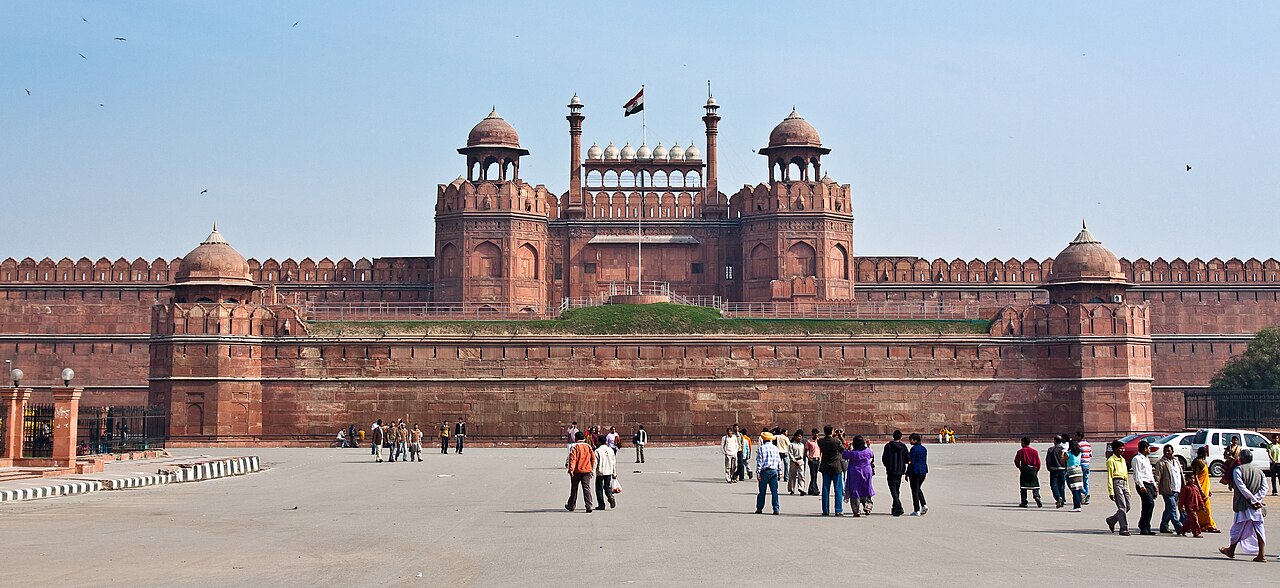
At the eastern edge of the old city rises the Red Fort. Its formal name was Qila-e-Mubarak, which means the Blessed Fortress. The long walls are built of red sandstone, and they glow almost copper in the late afternoon. Inside, the emperor held court, received visitors and lived with his household. The fort was completed in 1648. In 2007, UNESCO listed the Red Fort Complex as a World Heritage Site. Every year, on India's Independence Day, the Prime Minister raises the national flag here.
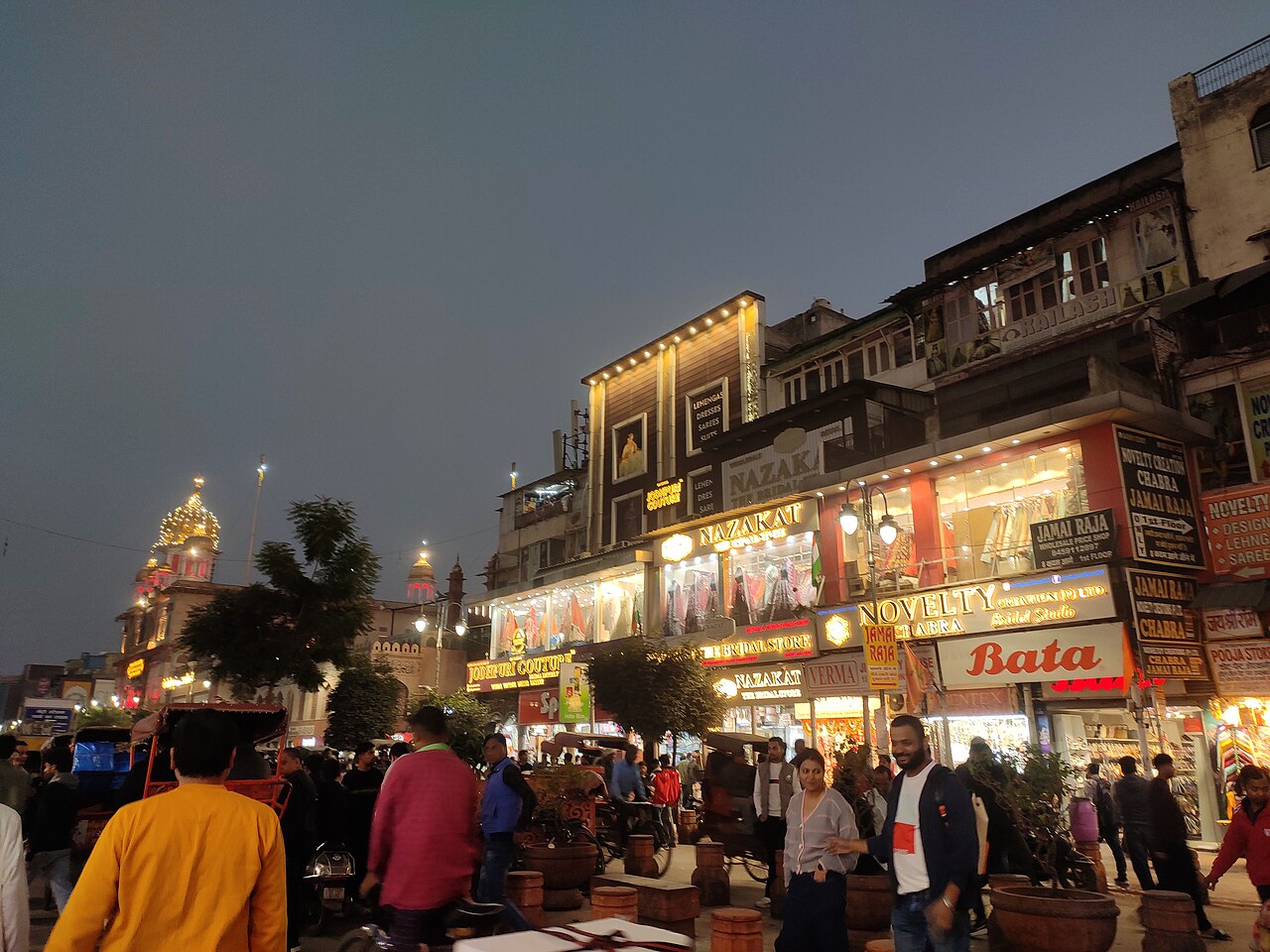
From the fort, the main avenue runs west. This is Chandni Chowk, the city's most famous street. The name is usually translated as Moonlit Square or Moonlight Market. Tradition credits its design to Jahanara Begum, the emperor's favourite daughter. According to a popular explanation, a canal once ran down the middle of the street. On clear nights, its water reflected the moon. That canal is long gone. Today the street holds shops, temples, food stalls and a steady river of people.
Here is something many visitors miss. Chandni Chowk is a street of many faiths, side by side. Near the fort end stands the Digambar Jain Lal Mandir, a red temple of the Jain religion, a faith that stresses non-violence toward all living beings. Farther along stands the Gauri Shankar Temple, dedicated to the Hindu god Shiva. Then comes Gurdwara Sis Ganj Sahib, a Sikh shrine. At the far western end, Fatehpuri Masjid closes the avenue. Four traditions share one street.
The gurdwara has a solemn story. Gurdwara means a Sikh place of worship. It marks the place where Guru Tegh Bahadur, the ninth Sikh Guru, was executed in 1675 on the orders of the emperor Aurangzeb, Shah Jahan's son. Sikhs honour him for defending freedom of belief. Today the gurdwara is calm and welcoming. Visitors cover their heads and remove their shoes. Inside, the sound of hymns often drifts out into the noisy street.
Rising above the lanes south of Chandni Chowk is the Jama Masjid. It is one of the largest mosques in India. Shah Jahan commissioned it, and it was completed in the 1650s. Its domes are white marble, and its tall minarets are striped in red sandstone and marble. Wide steps lead up to its gates. The courtyard is enormous and open to the sky. On festival days, many thousands of people gather here to pray together.
The city did not keep its glory without loss. In 1739, the Persian ruler Nadir Shah invaded and sacked Delhi. His army carried away vast treasures, including the jewelled Peacock Throne of the Mughal emperors. Then came the upheaval of 1857, when Indian soldiers rose against the British East India Company. Delhi became a centre of the uprising. After the British retook the city, they exiled the last Mughal emperor, Bahadur Shah Zafar, to Rangoon in Burma. The dynasty ended there.
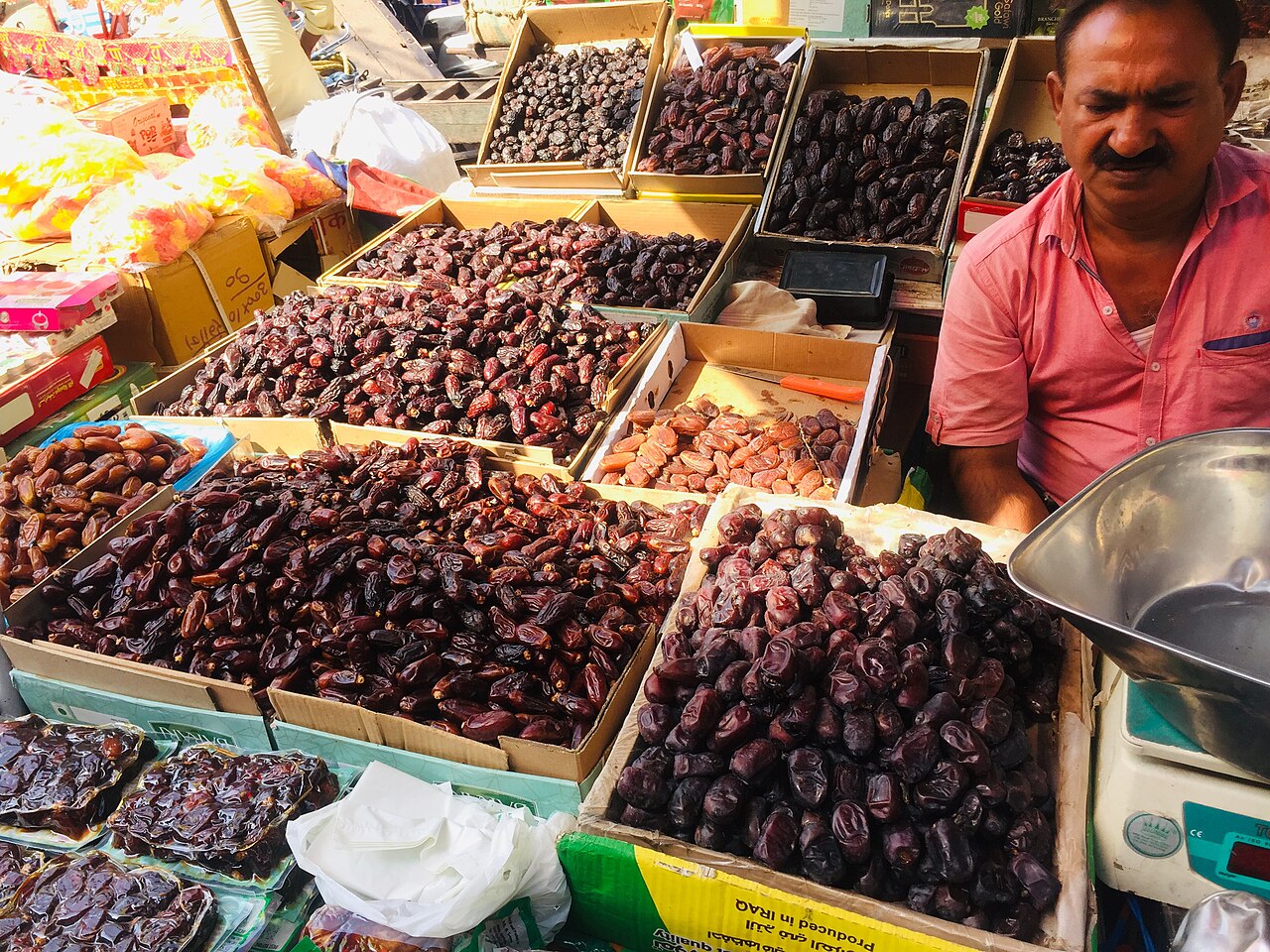
Yet Shahjahanabad never stopped being a living city. Walk west and the smells change. Near Khari Baoli, one of Asia's largest wholesale spice markets, the air can catch in your throat. Porters carry sacks of chillies, turmeric and dried fruit on their heads and shoulders. Some lanes specialise in a single trade, like wedding cards, silver, fabrics or electrical parts. This habit of grouping trades by street is very old. It still shapes how people shop here today.
And then there is the food. Old Delhi is famous across India for its street cooking. One narrow lane is known as Paranthe Wali Gali, the Lane of Paranthas, named for its fried, stuffed flatbreads. Nearby you can find sweets fried in ghee, spiced kebabs and cool glasses of lassi, a yoghurt drink. Many of these family shops have passed through several generations. The cooks often work in open view, so you can watch every step.
Before you move on, stand still for a moment. Look up at the old balconies, some carved, some leaning, some patched with modern brick. Look down at the small shrines tucked into walls and doorways. Notice how the people around you move through this crowd without hurry or fear. The emperor's planned city has changed in a thousand ways. But its streets still lead to the fort, the mosque and the market, just as they did when it was new.
Key facts
What to look for
Practical tips
Common questions
Is there a free audio guide to Shahjahanabad?
Yes — the Lokali app narrates Shahjahanabad free of charge in 50+ languages. The guide runs about 7 minutes, covers the history, what to look for on site and practical tips, and works offline once downloaded.
Where is Shahjahanabad?
Shahjahanabad is in Delhi, India, at 28.6600, 77.2300. Tap the map link on this page for directions from where you are.
What is Shahjahanabad known for?
Construction of Shahjahanabad began in 1639 under Shah Jahan. The Red Fort was completed in 1648.
What should you look for at Shahjahanabad?
Red and white marble stripes on the Jama Masjid minarets. Sacks of red chillies stacked high in Khari Baoli. Carved wooden balconies leaning above the narrow lanes.
What should you know before visiting Shahjahanabad?
Use the Chandni Chowk metro station to avoid road traffic. Hire a cycle rickshaw for the long Chandni Chowk stretch.
On the map
Opens directions to Shahjahanabad from your location.
More to see in Delhi

Hear Shahjahanabad in your language
The full story, narrated, in 50+ languages. Download it before you go and it plays offline, at your own pace, with no ticket and no tour group.