
National Museum of Natural History
28.6268° N · 77.2316° E · Museum
Photo: Craig Dietrich · CC BY 2.0 · Wikimedia Commons
National Museum of Natural History is a museum in New Delhi, India. The museum opened to the public in 1978. The free Lokali audio guide runs 7 minutes.
✓ Published October 2026 · how we write these guides
Visitor facts
| Lokali audio guide | 7 min · free |
|---|---|
| Type | Museum |
| Location | Delhi, India |
| Coordinates | 28.6268, 77.2316 |
| Official website | nmnh.nic.in |
| Languages | 50+, in the Lokali app |
The story
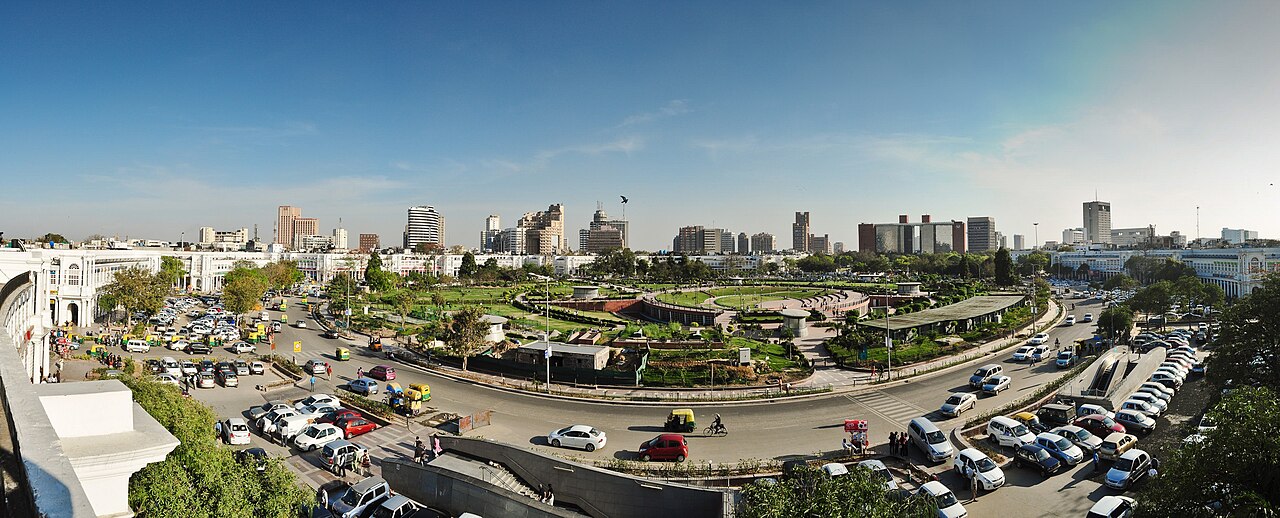
Listen for a moment. Around this corner of Mandi House, traffic swings around the roundabout, horns rise and fall, and somewhere nearby a rehearsal might be spilling out of an open window. The pavement is warm underfoot. Neem trees throw patchy shade across the road. You are standing at the edge of the address where the National Museum of Natural History once welcomed the city's children... and the story here is one of loss as much as discovery.
Let us begin with the honest part. For many years, the museum lived inside the Federation House building of FICCI, the Federation of Indian Chambers of Commerce and Industry, here on Tansen Marg. It was not a grand purpose-built palace of science. It occupied floors in an office block. That detail surprises many visitors. Generations of Delhi schoolchildren met their first stuffed tiger in a building better known for business conferences.
The museum was conceived in the early 1970s and opened to the public in 1978. That timing matters. In those years, India was building its first national institutions for the environment. The idea was simple. A growing city of concrete should still have a place to meet the forests, rivers and mountains of the subcontinent. The museum was run under the central government's environment ministry, rather than as a cultural or art institution.
Inside, the galleries told the story of life in India through dioramas. A diorama is a three-dimensional scene, where preserved animals stand in front of a painted landscape, so the eye reads them as one living view. There were mounted mammals and birds, cases of insects, and fossils that carried the story back to deep time. For a child from a crowded neighbourhood, these glass windows were often the closest view of a leopard or a hornbill they would ever have.
The museum also tried to do more than display. It ran activity rooms for young visitors, nature workshops, and school programmes. Teachers brought classes by the busload. Families came on weekends. The goal was always conservation — not just to show animals, but to make people care whether those animals survived outside the glass. In a city like Delhi, that was a quiet but serious mission.
Then came the night that changed everything. In April 2016, a fire broke out in the building in the early hours of the morning. It spread through the upper floors where the museum's galleries were housed. Firefighters worked for hours to bring it under control. By daylight, the smoke had cleared over Mandi House, and much of the collection was gone.
The losses were heavy. Mounted animals, preserved specimens and fossil material were destroyed or badly damaged. Some of these objects had taken decades to gather, and some could not be replaced at all. A preserved animal can be made again, with time and care. A fossil cannot. The fire also started a wider conversation in India about fire safety in buildings that hold public collections.
Here is the second thing many visitors do not know. The museum in Delhi was never the only one. A family of regional museums of natural history grew from the same national effort. They stand in other parts of the country, including Mysuru in the south, Bhopal in central India, Bhubaneswar in the east, and Sawai Madhopur in Rajasthan, near the Ranthambore tiger reserve. If the Delhi galleries were your reason for coming, those regional museums carry the same spirit forward.
Since the fire, the Delhi museum has not reopened at this address. Plans for a new home have been discussed over the years, but you should check current news before expecting a visit inside. So today, this stop is less a gallery tour and more an act of memory. You are looking at the place where it stood, and thinking about what a city chooses to protect.
Take a look at the neighbourhood around you, because it explains why the museum was here at all. Mandi House is one of Delhi's cultural crossroads. The National School of Drama is close by. So are several auditoriums and the offices of the national academies for literature, music and the visual arts. Actors, dancers, painters and writers pass through these streets every day. A museum of the natural world fitted naturally into this circle of learning.
The area takes its name from a former royal residence, the town house of the rulers of Mandi, a hill state in the Himalayas. That house no longer stands, but the name stayed with the roundabout and the metro station below. It is a small reminder that this part of New Delhi was laid out in the twentieth century as a planned capital, with wide roads, roundabouts and generous trees.
If you have time, walk slowly around the circle. In the evenings, small crowds gather outside the theatres. Tea sellers set up near the bus stops. Students sit on low walls, scripts in hand, practising their lines under their breath. The mood here is creative, unhurried and a little bit shabby in the best way. It is easy to imagine school groups lining up on this same pavement, decades ago, waiting to see the animals upstairs.
So what do you take away from a museum you cannot enter? Perhaps this. Collections feel permanent, but they are fragile. Wood, fur, feathers and paper all need protection, and so do the buildings that hold them. The story of this museum is a reminder that the natural world is also fragile — and that the work of caring for it never really ends.
Before you move on, look up at the building once more. Notice the plain lines of the office block, the windows, the trees along Tansen Marg. Somewhere in those floors, a painted forest once stood behind glass, and children pressed their faces close to see it. Listen to the traffic, the voices, the birds in the neem trees. The city is still full of living things. You only have to stop and notice them.
Key facts
What to look for
Practical tips
Common questions
Is there a free audio guide to National Museum of Natural History?
Yes — the Lokali app narrates National Museum of Natural History free of charge in 50+ languages. The guide runs about 7 minutes, covers the history, what to look for on site and practical tips, and works offline once downloaded.
Where is National Museum of Natural History?
National Museum of Natural History is in Delhi, India, at 28.6268, 77.2316. Tap the map link on this page for directions from where you are.
What is National Museum of Natural History known for?
The museum opened to the public in 1978. It occupied floors of FICCI's Federation House building.
What should you look for at National Museum of Natural History?
The Federation House office block along Tansen Marg. Neem trees shading the pavement around the roundabout. Theatre posters near the National School of Drama.
What should you know before visiting National Museum of Natural History?
Check recent news on any planned reopening before visiting. Use Mandi House metro station for the easiest approach.
When is the best time to visit National Museum of Natural History?
Come in the evening to catch Mandi House theatre crowds.
On the map
Opens directions to National Museum of Natural History from your location.
More to see in Delhi

Hear National Museum of Natural History in your language
The full story, narrated, in 50+ languages. Download it before you go and it plays offline, at your own pace, with no ticket and no tour group.