
De Hoge Veluwe National Park
52.0833° N · 5.7985° E · National Park
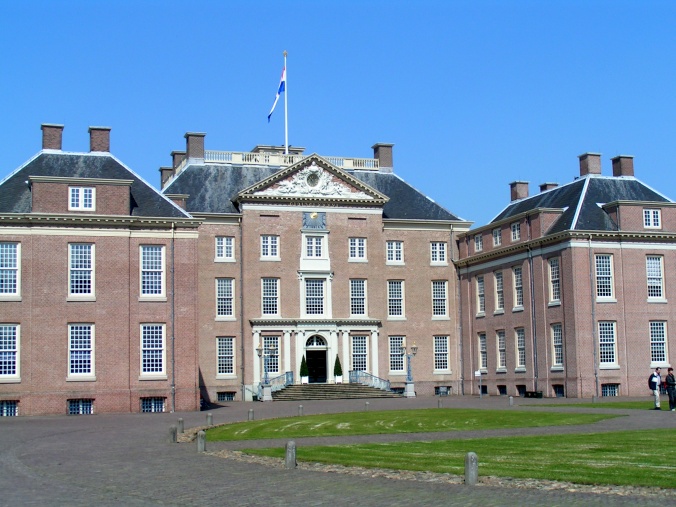
Photo: Deb Collins · CC BY 2.0 · Wikimedia Commons
De Hoge Veluwe National Park is a national park in the Netherlands. Founded as an estate by Anton and Helene Kröller-Müller. The free Lokali audio guide runs 6 minutes.
✓ Published October 2026 · how we write these guides
Visitor facts
| Lokali audio guide | 6 min · free |
|---|---|
| Type | National Park |
| Location | Ede, Netherlands |
| Coordinates | 52.0833, 5.7985 |
| Official website | hogeveluwe.nl |
| Languages | 50+, in the Lokali app |
The story
Listen first. A soft wind moves through the pines, and somewhere a crow calls across open ground. Under your feet the sand is pale and fine, almost like a beach that has wandered far from the sea. The air smells of resin and dry heather. Welcome to De Hoge Veluwe, one of the largest continuous nature reserves in the Netherlands, and one of its strangest stories.
The name means, roughly, the high Veluwe. The Veluwe is a wide ridge of sandy, wooded land in the province of Gelderland. Its hills were pushed up by ice sheets during an ice age long ago. That is why the ground here rolls gently, and why the soil is so poor. Farmers struggled on this land for centuries. Their struggle helped create the open heaths you see today.
Here is the first surprise. This landscape looks wild, but much of it is shaped by people. Over many centuries, people cut trees, grazed sheep, and stripped the heather for fuel and fertiliser. Without its cover, the sand began to move with the wind. These are the drift sands, open patches of bare ground that still shift and ripple today. Some of the most natural-looking corners of the park are, in fact, the marks of human hunger.
The park as a protected place began with one couple. Anton Kröller was a wealthy Dutch businessman, and his wife Helene Kröller-Müller was a passionate art collector. In the early twentieth century, they began buying land here, piece by piece. Anton wanted a private hunting estate. Helene dreamed of something larger, a place where art and nature could stand side by side. Over the years, their two dreams grew into one estate.
The couple fenced the land and brought in animals for the hunt. Today the fence still surrounds the park, and the animals still live inside it. Red deer move through the forest edges, and their roaring can carry far across the heath in autumn. Wild boar dig through the soil under the trees. You may also meet mouflon, a type of wild sheep with curled horns. They are not native here; they were brought in for hunting.
In the 1930s, the economic crisis hit the Kröller-Müller fortune hard. The estate was placed in the care of a foundation, which still runs the park today. Helene's art collection passed to the Dutch state. The agreement came with a condition: the state had to build a museum for it inside the park. That is why one of the great art collections of Europe now sits among the pines, far from any city centre.
That museum is the Kröller-Müller Museum, which opened in the late 1930s. Its first building was designed by the Belgian architect Henry van de Velde. Here is the second surprise. The museum holds one of the largest collections of paintings by Vincent van Gogh in the world. Only the Van Gogh Museum in Amsterdam holds more. Helene bought his work early, when many collectors still ignored him.
Outside the museum, the collection continues into the open air. The sculpture garden spreads across lawns and between the trees. Large modern works stand under the open sky, and the weather changes how they look from hour to hour. One of the best known is a white garden by the French artist Jean Dubuffet. You can walk onto it, across surfaces outlined in thick black lines, like stepping into a drawing.
Further north stands the Jachthuis Sint Hubertus, the hunting lodge. It was designed by the Dutch architect Hendrik Petrus Berlage, a leading figure in modern Dutch architecture. The lodge is named after Saint Hubert, the patron saint of hunters. According to the old Christian legend, Hubert saw a deer with a cross shining between its antlers, and he changed his life. It is often said that the lodge itself is laid out like a pair of antlers.
Look at the lodge from across the pond in front of it. A tall tower rises from the centre. The building is made of brick and stone, with careful, heavy lines. Berlage designed far more than the walls. He also shaped details inside, from furniture to lighting. The whole building works as one idea, a quiet tribute to the hunt and to the saint who gave it up.
The park also has a side you cannot see from the paths. Near the visitor centre is Museonder, an underground museum about life beneath the surface. It explores roots, soil, water, and the small animals that live in the dark. This makes sense on the Veluwe. The sandy ground holds a great store of clean groundwater. What happens under your feet matters as much as what happens above.
One of the best ways to explore is by white bicycle. The park keeps white bikes for visitors at several points, and you can pick one up and ride. The paths are mostly flat, and the distances between the museum, the lodge, and the open heaths are long for walking. Riding lets you feel the change in landscape: dark forest, then sudden open sky, then pale sand under the wheels.
Now take a moment where you are. Notice the colour of the ground, whether it is purple heather, green moss, or pale sand. Listen for birds, for the wind in the pines, maybe for a distant deer. Everything around you exists because two people bought land and refused to let it change too much. As you walk on, look at the edges of the trees. Something may be looking back at you.
Key facts
What to look for
Practical tips
Common questions
Is there a free audio guide to De Hoge Veluwe National Park?
Yes — the Lokali app narrates De Hoge Veluwe National Park free of charge in 50+ languages. The guide runs about 6 minutes, covers the history, what to look for on site and practical tips, and works offline once downloaded.
Where is De Hoge Veluwe National Park?
De Hoge Veluwe National Park is near Ede, Netherlands, at 52.0833, 5.7985. Tap the map link on this page for directions from where you are.
What is De Hoge Veluwe National Park known for?
Founded as an estate by Anton and Helene Kröller-Müller. A foundation has managed the park since the 1930s.
What should you look for at De Hoge Veluwe National Park?
Pale drift sand ripples shaped by the wind. Purple heather blooming across the open heath. The tall central tower of the hunting lodge.
What should you know before visiting De Hoge Veluwe National Park?
Pick up a white bicycle to cover the long distances. Come at dawn or dusk to spot red deer.
When is the best time to visit De Hoge Veluwe National Park?
Visit in autumn to hear the deer rut.
On the map
Opens directions to De Hoge Veluwe National Park from your location.
More to see near De Hoge Veluwe National Park


Hear De Hoge Veluwe National Park in your language
The full story, narrated, in 50+ languages. Download it before you go and it plays offline, at your own pace, with no ticket and no tour group.