Umm El Qa'ab
26.1749° N · 31.9079° E · Archaeological Site
Photo: Markh · Public domain · Wikimedia Commons
Umm El Qa'ab is an ancient Egyptian necropolis. It is near Girga, Egypt. Arabic name Umm El Qa'ab means Mother of Pots. The free Lokali audio guide runs 7 minutes.
✓ Published October 2026 · how we write these guides
Visitor facts
| Lokali audio guide | 7 min · free |
|---|---|
| Type | Archaeological Site |
| Location | Girga, Egypt |
| Coordinates | 26.1749, 31.9079 |
| Languages | 50+, in the Lokali app |
The story
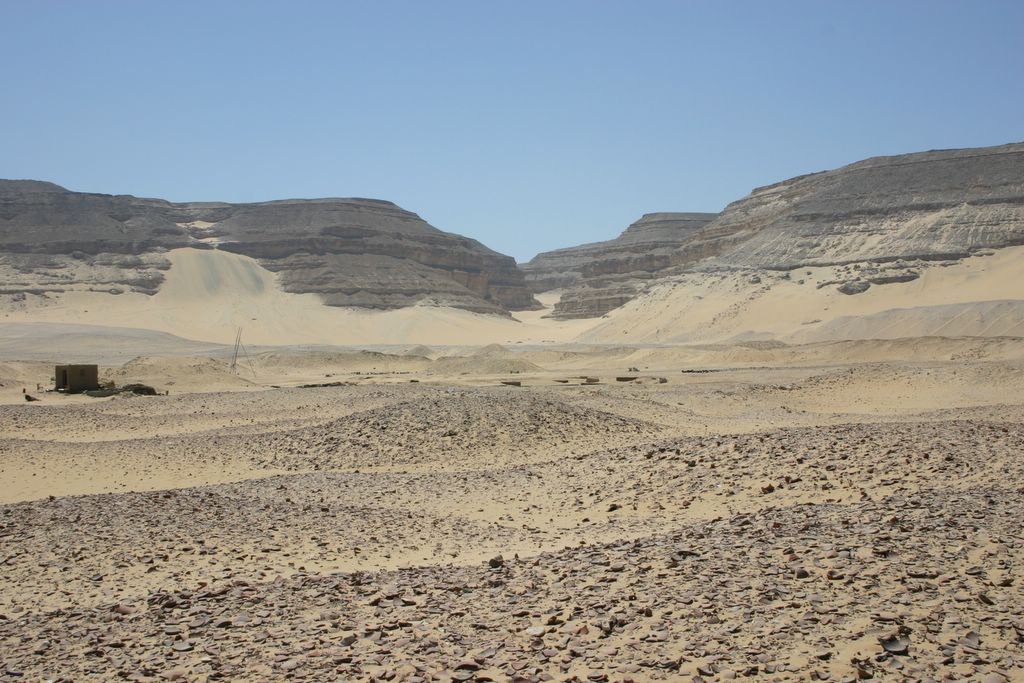
Listen to the ground under your feet. Every step makes a small dry crunch, like walking on broken plates. Look down and you will see why. The sand here is full of pottery sherds, millions of them. They are reddish, pale orange, and dusty brown, and they reach toward the cliffs in every direction. This is Umm El Qa'ab, the royal cemetery of ancient Abydos, in the low desert west of the Nile Valley.
The name is Arabic, and it means "Mother of Pots." Local people gave it that name because of what lies at your feet. Those fragments are not rubbish from a workshop. Most of them are the remains of offering vessels. Over many centuries, pilgrims carried them here and left them behind. Each sherd was once part of a gift, perhaps for food, drink, or incense, offered to the dead. You are standing on the evidence of a very long devotion.
To understand why people came, start with the oldest layer of the story. Here, around five thousand years ago, the earliest kings of Egypt chose to be buried. These are the rulers of the First Dynasty. Their names are among the first royal names in recorded history. The nearby town of Girga sits close to the ancient region of Thinis. Egyptian tradition linked those first kings to that place. Abydos was their sacred burial ground.
Now look at what remains of the tombs. Do not expect pyramids. The pyramids came later, and they were built in the north. These earlier graves were pits dug into the desert. Their builders lined them with mudbrick and roofed them with timber. Above ground, there was probably a low mound or a simple marker. Today you see sunken rectangles, brick walls the colour of dry earth, and chambers open to the sky. It looks modest. But it is the beginning of a tradition that later produced the Great Pyramid.
Here is a detail many visitors miss. Around several of the royal tombs, archaeologists found rows of small graves. These are known as subsidiary burials. Many scholars think these graves held servants, officials, or members of the household. They were buried at the same time as their king. The evidence suggests that some of them may have died to accompany their ruler into the afterlife. This practice appears in the First Dynasty, and then it fades away. Later Egyptians used small figurines instead of people.
One of the tombs belongs to a woman named Merneith. She was buried among the kings, with a tomb of royal scale. This is unusual, and Egyptologists still discuss her exact role. Many believe she ruled, perhaps as a regent for a young son. Either way, her place in this cemetery shows that power in early Egypt was not only held by men. It is a quiet surprise in a landscape of kings.
The story goes back further still. In the southern part of the site is an older cemetery, from the time before the First Dynasty. Experts sometimes call this period Dynasty Zero. In the late twentieth century, a German Archaeological Institute team led by Günter Dreyer excavated a tomb there known as U-j. Inside, they found small labels of bone and ivory. These tags carry carved signs. Many scholars count them among the earliest known examples of Egyptian writing. In this quiet patch of desert, writing in Egypt may have taken one of its first steps.
So why did pilgrims keep coming, long after these kings were forgotten? The answer is Osiris, the god of the dead and of rebirth. Egyptian myth tells that Osiris was killed by his brother Seth and later revived. Abydos became his holy city. By the Middle Kingdom, more than a thousand years after the burials, Egyptians had identified one royal tomb as the grave of Osiris himself. That tomb originally belonged to King Djer of the First Dynasty. A real king's grave became the resting place of a god.
This new identity changed the site completely. Pilgrims from across Egypt travelled here to honour Osiris. Festivals with processions moved between the temples near the river and this desert cemetery. People left offering jars by the thousands, generation after generation. That is how the ground became the Mother of Pots. Each fragment you step over may connect to a person who walked this same route, hoping for a share in Osiris's rebirth.
Now turn and look toward the cliffs to the west. You may notice a gap, a break in the line of rock where a desert valley opens. Many Egyptologists think the ancient Egyptians saw this opening as a path toward the land of the dead. The west was where the sun set, and the dead travelled west. Burying kings here, facing that opening, gave the landscape itself a role in the journey after death.
The modern history of the site is less gentle. In the 1890s, the French excavator Émile Amélineau dug here quickly, and much information was lost. Soon after, the British archaeologist Flinders Petrie returned to the tombs. He worked slowly and recorded carefully, even sifting through what earlier diggers had thrown away. From those leftovers, he recovered names, seals, and fragments that helped rebuild the order of the first kings. Later German teams continued this careful work into our own century.
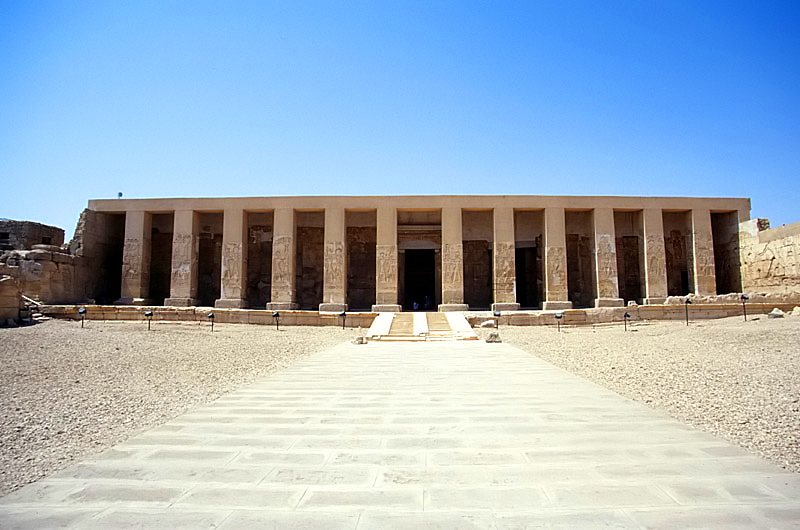
The tombs are only one part of royal Abydos. Closer to the cultivated fields stood large mudbrick enclosures, connected to the kings buried here. One of them, from the end of the Second Dynasty, still stands with tall walls. Near these enclosures, archaeologists found buried wooden boats, among the oldest planked boats known from Egypt. The famous temple of Seti the First, built much later, also stands in this wider landscape. Together they show how sacred this ground stayed for thousands of years.
Before you leave, stand still for a moment. Feel the heat rise from the sand, and notice the wide silence of the low desert. Behind you, the green line of the Nile Valley marks the world of the living. In front of you, the cliffs mark the way the ancients believed the dead would travel. As you walk back, listen again to the crunch of sherds underfoot... a sound made by gifts that people carried here for the kings and for their god.
Key facts
What to look for
Practical tips
Common questions
Is there a free audio guide to Umm El Qa'ab?
Yes — the Lokali app narrates Umm El Qa'ab free of charge in 50+ languages. The guide runs about 7 minutes, covers the history, what to look for on site and practical tips, and works offline once downloaded.
Where is Umm El Qa'ab?
Umm El Qa'ab is near Girga, Egypt, at 26.1749, 31.9079. Tap the map link on this page for directions from where you are.
What is Umm El Qa'ab known for?
Arabic name Umm El Qa'ab means Mother of Pots. Burial ground of Egypt's First Dynasty kings.
What should you look for at Umm El Qa'ab?
Red and orange pottery fragments covering the sand. Mudbrick walls lining the sunken royal burial pits. Rows of small subsidiary graves beside larger tombs.
What should you know before visiting Umm El Qa'ab?
Wear closed shoes for walking over uneven pottery sherds. Bring plenty of water and sun protection.
When is the best time to visit Umm El Qa'ab?
Visit early morning before the desert heat builds.
On the map
Opens directions to Umm El Qa'ab from your location.
More to see near Umm El Qa'ab

Hear Umm El Qa'ab in your language
The full story, narrated, in 50+ languages. Download it before you go and it plays offline, at your own pace, with no ticket and no tour group.