
Photo: Wikimedia Commons contributor · CC BY-SA 3.0 · Wikimedia Commons
Blackfriars Bridge is a road and foot traffic bridge over the River Thames in London. Named after Dominican friars who wore black cloaks. The free Lokali audio guide runs 7 minutes.
✓ Published October 2026 · how we write these guides
Visitor facts
| Lokali audio guide | 7 min · free |
|---|---|
| Type | Bridge |
| Location | London, United Kingdom |
| Coordinates | 51.5097, -0.1044 |
| Languages | 50+, in the Lokali app |
The story
Stand at the parapet and look down. The Thames moves fast here, brown and heavy, pulling against the stone piers below your feet. Gulls drift on the wind. Behind you, the traffic rumbles across the deck. Ahead, the river opens wide, and the dome of Saint Paul's rises over the rooftops of the City. Now lean a little and look at the bridge itself. You are standing on iron painted red and white, held up by granite and decorated with carved stone birds.
This is Blackfriars Bridge, and its name is older than any bridge on this spot. In the thirteenth century, Dominican friars built a large priory on the slope above the river here. The Dominicans wore black cloaks over their white habits, so Londoners called them the Black Friars. The priory was closed in the sixteenth century, when Henry the Eighth broke with Rome and shut down England's monasteries. The friars left. The name stayed, and today it covers a whole district, a station, and the bridge under your feet.
Look at the shape of the stone resting places along the parapet. They jut out over each pier, and they look a little like pulpits in a church. That is deliberate. The designers chose this form as a quiet reference to the preaching friars who once lived on the hill behind you. Many people cross this bridge every day without noticing. Once you see the pulpits, though, it is hard to stop seeing them.
The first bridge here opened in the late 1760s. It was designed by a young Scottish engineer, Robert Mylne, and it was only the third bridge to cross the Thames in central London. For a while it was officially named after the politician William Pitt, but Londoners ignored that. They kept calling it Blackfriars. People paid a toll to cross it, and the toll was unpopular. During riots in 1780, the tollhouses were attacked and burned.
Mylne's bridge was handsome, but it did not last. The Thames was a much rougher river then, and the stone wore away faster than anyone expected. By the middle of the nineteenth century, the old bridge was failing, and the city decided to replace it. The new bridge was designed by the engineer Joseph Cubitt. Queen Victoria opened it in 1869, and it is largely the structure you are standing on today.
Cubitt's design uses five wide arches of wrought iron. Wide spans matter here. Fewer piers means more room for boats, and in the nineteenth century this stretch of river was crowded with barges and working vessels. The piers are faced with polished red granite, and they sit solidly in the current. If you walk down to the riverside path, you can see how the iron ribs curve from pier to pier in long, low lines.
Now, here is a detail that most visitors miss entirely. Look at the carved stone on the piers. On one side of the bridge, the carvings show freshwater birds and river plants. On the other side, facing downstream towards the sea, they show seabirds and marine life. The bridge marks a turning point. This is roughly where Londoners thought of the Thames changing from a river into a tidal estuary. The sculptor told that story in stone.
There is something else hidden beneath you. Near the northern end of the bridge, an old river called the Fleet flows into the Thames. The Fleet once ran openly through London, and Fleet Street takes its name from it. Over the centuries it became so dirty that it was covered over and turned into a sewer. Today it runs underground, out of sight. On some days, at low tide, you can spot the outlet in the river wall.
The bridge was widened in the early twentieth century to carry more traffic, including trams. The extra width was added so carefully that most people never realise the bridge was changed at all. Today it carries buses, cars, cyclists and a steady flow of people on foot. In the morning rush, office workers cross from the south bank into the City. In the evening, the flow runs back the other way.
Not every story here is a happy one. In 1982, an Italian banker named Roberto Calvi was found dead, hanging beneath the arches of this bridge. Calvi had headed a major bank with close ties to the Vatican, and the press called him God's Banker. His death was first ruled a suicide. Later investigations treated it as murder. The case has never been fully resolved, and it is still one of the bridge's most discussed chapters.
Turn east and look at the bridge next door. That is Blackfriars Railway Bridge, and above it sits a station that stretches right across the river. Its long roof is covered with solar panels. Between the two bridges, you can also see a row of red columns standing in the water with nothing on top. They are the remains of an older railway bridge that was taken down. They look strange at first, like a bridge that forgot to finish itself.
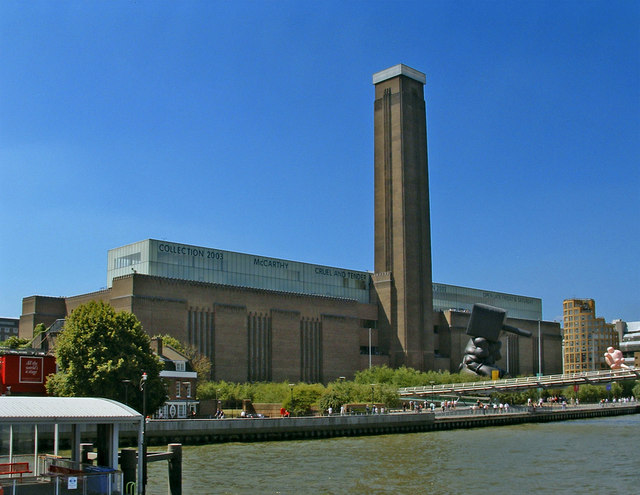
From where you stand, much of London is laid out around you. To the north is the City, where offices of glass stand beside old church towers. To the south, the brick chimney of Tate Modern rises from a former power station. Downstream, the river bends towards Tower Bridge and the tall towers beyond. Boats pass under you constantly — tour boats, river buses, and sometimes a working barge low in the water.
Before you move on, take one more look at the water. Watch how it folds around the granite piers and leaves a small wake behind each one. Then glance at the carved birds once more, and at the stone pulpits above them. Seven centuries ago, friars in black cloaks walked this riverbank. Today, you are here. As you walk away, listen for the gulls, and notice how the city sounds change as you step off the bridge and into the streets.
Key facts
What to look for
Practical tips
Common questions
Is there a free audio guide to Blackfriars Bridge?
Yes — the Lokali app narrates Blackfriars Bridge free of charge in 50+ languages. The guide runs about 7 minutes, covers the history, what to look for on site and practical tips, and works offline once downloaded.
Where is Blackfriars Bridge?
Blackfriars Bridge is in London, United Kingdom, at 51.5097, -0.1044. Tap the map link on this page for directions from where you are.
What is Blackfriars Bridge known for?
Named after Dominican friars who wore black cloaks. Present bridge opened by Queen Victoria in 1869.
What should you look for at Blackfriars Bridge?
Pulpit-shaped stone recesses jutting out over each pier. Freshwater birds carved on the upstream side of piers. Seabirds and marine life carved on the downstream piers.
What should you know before visiting Blackfriars Bridge?
Walk down to the riverside path to see the arches. Visit at low tide to spot the Fleet river outlet.
When is the best time to visit Blackfriars Bridge?
Avoid weekday rush hours for a calmer walk across.
On the map
Opens directions to Blackfriars Bridge from your location.
More to see in London



Hear Blackfriars Bridge in your language
The full story, narrated, in 50+ languages. Download it before you go and it plays offline, at your own pace, with no ticket and no tour group.