
Blackfriars Railway Bridge
51.5097° N · 0.1033° W · Bridge
Photo: G.Rogers (Rodge500) · CC BY-SA 2.5 · Wikimedia Commons
Blackfriars Railway Bridge is a railway bridge crossing the River Thames in London. The first railway bridge here opened in 1864. The free Lokali audio guide runs 7 minutes.
✓ Published October 2026 · how we write these guides
Visitor facts
| Lokali audio guide | 7 min · free |
|---|---|
| Type | Bridge |
| Location | London, United Kingdom |
| Coordinates | 51.5097, -0.1033 |
| Languages | 50+, in the Lokali app |
The story
Stand still for a moment and feel the platform under your feet. There is a faint hum, then a low vibration, as a train slides in from the north. Through the glass on either side, the Thames moves wide and grey-green below you. The air up here smells of river and steel, and the wind has nothing to stop it. You are standing on a railway station that sits right on top of a bridge, in the middle of one of the world's great rivers.
This is Blackfriars Railway Bridge. To most Londoners it is simply part of the commute, a few seconds of daylight between tunnels and streets. But slow down and the place has a lot to show you. It carries trains, it carries passengers, it generates electricity, and it holds the ghost of an older bridge that once stood right beside it. Let us take those layers one at a time.
First, the name. Long before any railway, this stretch of the north bank belonged to the Dominican friars. They wore black cloaks over their white habits, so Londoners called them the Black Friars. Their priory stood near here from the late thirteenth century until Henry the Eighth closed the monasteries in the sixteenth century. The friars are long gone, but their nickname stayed. It passed to the district, then to the road bridge, then to the station and the railway bridge you are on now.
Now look down at the water on the eastern side, the side facing Saint Paul's and the City. You will see a row of thick red columns rising out of the river. They hold up nothing at all. They look like the legs of a bridge that someone forgot to finish. In fact, they are the opposite. They are what remains of a bridge that was finished, used for more than a century, and then taken away.
That first railway bridge opened in 1864. It was built for the London, Chatham and Dover Railway, a company racing to push its trains from Kent and the south-east into the heart of London. In the Victorian era, getting a line across the Thames and into the City was a prize. Railway companies competed hard for every route, and a bridge here meant passengers could step off a train within walking distance of the banks and offices of the Square Mile.
A second bridge followed beside it and opened in 1886. That is the one under your feet today. For decades the two ran side by side. But the older bridge grew too weak for modern traffic. Its deck was eventually lifted away in the 1980s, leaving only the piers standing in the river. Rather than pull them out, London left them in place. Today they stand there like a sentence with the last words missing — and visitors photograph them constantly.
Here is a detail many people miss. On the south bank, at the end of the old bridge, the original company's coat of arms has survived. It is a large, ornate piece of painted ironwork, carrying the emblem of the London, Chatham and Dover Railway. That company disappeared into larger railway groups long ago. Yet its badge still faces the river, bright and confident, as if the trains of the 1860s might come rolling back at any moment.
The names here have shifted too. When the newer bridge opened, both the bridge and its station were called Saint Paul's, after the great cathedral just up the hill. In 1937 they were renamed Blackfriars, which partly helped avoid confusion with the Underground station named Saint Paul's. So if you find an old map or timetable mentioning Saint Paul's station by the river, this is the place it means.
Now look up. The long roof above the platforms is covered with solar panels — thousands of them, laid out in rows along the length of the bridge. When the station was rebuilt in the early 2010s, engineers turned the roof into one of the largest solar arrays on any bridge in the world. On a bright day, the panels supply a large share of the station's own electricity. It is a quietly radical idea: a Victorian river crossing that now harvests sunlight.
That same rebuild did something else unusual. It stretched the platforms right across the river and gave the station entrances on both banks. You can arrive on the north side, near the City, and leave on the south side, at Bankside, without ever touching a road bridge. Very few stations anywhere in the world span a river in this way. Most people pass through without realising they have just walked across the Thames indoors.
From the platforms, the views open in every direction. To the east, the dome of Saint Paul's Cathedral rises above the City, with the glass towers of the financial district crowding behind it. Further along, the pointed shape of the Shard rises on the south bank. To the west, the road bridge runs alongside you, and beyond it the river bends towards Westminster. Few railway platforms in Britain offer a panorama like this for the price of a journey.
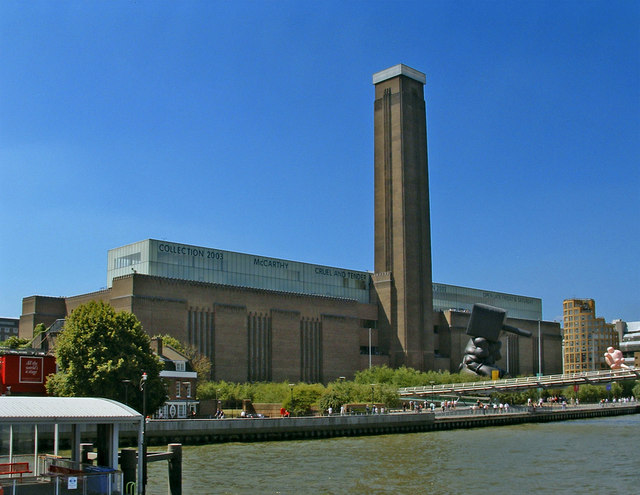
Below, on the south bank, is Bankside. The brick tower of the former power station there now houses Tate Modern, one of the most visited art galleries in the world. A riverside path runs beneath the bridge, linking theatres, cafés, and old wharves. Walk along it and you will hear the trains passing overhead, a steady rumble through the arches, mixing with gulls, buskers, and the slap of water against the river wall.
So pause here a little longer before you go. Watch a train ease onto the bridge. Look out at those red columns standing alone in the current, and at the panels catching the light above you. This crossing has been rebuilt, renamed, and reimagined more than once. Each version left something behind. As you walk off the bridge, on whichever bank you choose, listen for the next train — and for the river, which keeps moving underneath all of it.
Key facts
What to look for
Practical tips
Common questions
Is there a free audio guide to Blackfriars Railway Bridge?
Yes — the Lokali app narrates Blackfriars Railway Bridge free of charge in 50+ languages. The guide runs about 7 minutes, covers the history, what to look for on site and practical tips, and works offline once downloaded.
Where is Blackfriars Railway Bridge?
Blackfriars Railway Bridge is in London, United Kingdom, at 51.5097, -0.1033. Tap the map link on this page for directions from where you are.
What is Blackfriars Railway Bridge known for?
The first railway bridge here opened in 1864. The current bridge opened beside it in 1886.
What should you look for at Blackfriars Railway Bridge?
Red iron columns standing alone in the river. Old railway company coat of arms on the south bank. Rows of solar panels across the platform roof.
What should you know before visiting Blackfriars Railway Bridge?
Wait on the eastern platform edge for Saint Paul's views. Use the south bank exit to reach Tate Modern quickly.
When is the best time to visit Blackfriars Railway Bridge?
Visit on a clear morning for the sharpest skyline views.
On the map
Opens directions to Blackfriars Railway Bridge from your location.
More to see in London



Hear Blackfriars Railway Bridge in your language
The full story, narrated, in 50+ languages. Download it before you go and it plays offline, at your own pace, with no ticket and no tour group.