
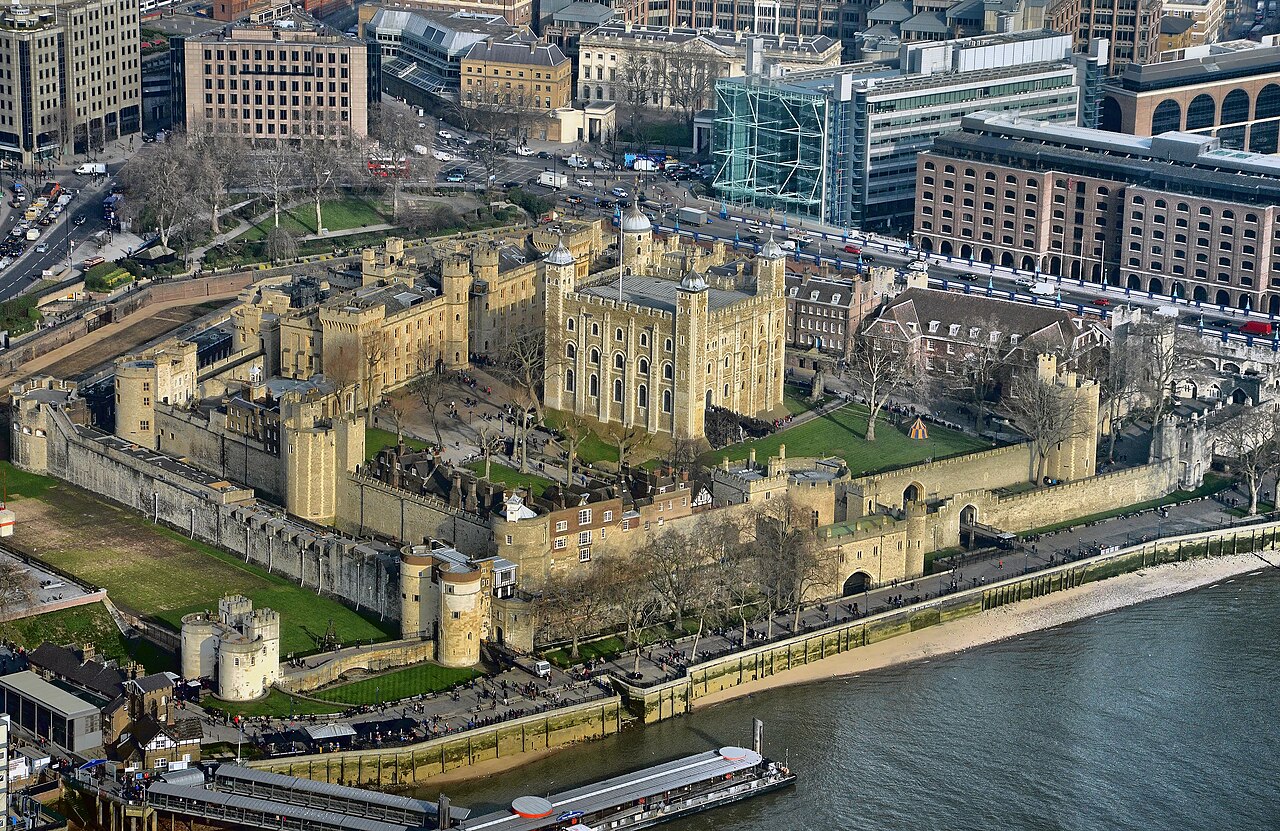
Photo: Images George Rex from London, England · CC BY-SA 2.0 · Wikimedia Commons
HMS Belfast is a 1938 Edinburgh-class light cruiser. It is in London, United Kingdom. Built by Harland and Wolff, the Titanic's shipyard. The free Lokali audio guide runs 7 minutes.
✓ Published October 2026 · how we write these guides
Visitor facts
| Lokali audio guide | 7 min · free |
|---|---|
| Type | Museum |
| Location | London, United Kingdom |
| Coordinates | 51.5067, -0.0814 |
| Official website | iwm.org.uk |
| Languages | 50+, in the Lokali app |
The story
Put your hand on the rail as you step aboard. The steel is cool, slightly rough under layers of grey paint, and beneath your feet the deck gives the faintest shift as the Thames moves below. Listen. Gulls, the slap of water against the hull, traffic rumbling over Tower Bridge just downstream. And then, rising above you, the long barrels of the guns, pointing calmly out over London. You are standing on a warship that went to sea in the Second World War.
This is HMS Belfast, a Royal Navy light cruiser, now moored on the south side of the river between Tower Bridge and London Bridge. She is one of the few large warships from that war still afloat anywhere in the world. Today she is part of Imperial War Museums. But for more than two decades she was a working ship, home to hundreds of sailors who ate, slept, fought and waited inside the steel walls around you.
Her name is a clue to her birth. The ship was built by Harland and Wolff in Belfast, the same shipyard that built the Titanic. She was launched in 1938, and the date was chosen with care: Saint Patrick's Day. Europe was edging toward war, and Britain was racing to strengthen its navy. Belfast was designed as a cruiser, a fast and heavily armed ship meant to protect convoys, scout for the fleet and hunt enemy raiders.
Here is the first surprise. Belfast almost did not survive her first months. In November 1939, only weeks after the war began, she struck a German magnetic mine in the Firth of Forth in Scotland. The blast broke her keel, the backbone of the ship, and injured many of her crew. Repairs took years. When she finally returned to service in late 1942, she was stronger and better equipped than before, with improved armour and radar.
Now look up at those turrets. There are four of them, each holding three six-inch guns, twelve main guns in all. Visitors often hear a popular claim: that the forward guns are angled toward a motorway service station north of London, about twelve miles away, roughly the distance they could reach. It is a good story to keep in mind as you stand beneath them. It gives you a sense of their power... right here in the middle of a peaceful city.
In the winter of 1943, Belfast sailed in the Arctic, escorting convoys that carried supplies to the Soviet Union. These were some of the hardest waters of the war, dark for most of the day, with ice forming on every surface. In December of that year, she took part in the Battle of North Cape off northern Norway. British ships tracked and sank the German battleship Scharnhorst. Belfast's radar helped to find the enemy in the darkness and the storms.
Six months later came D-Day. On 6 June 1944, Belfast was off the coast of Normandy, firing on German positions to support the Allied landings. She is often named as one of the first ships to open fire that morning. Over the following weeks she fired many thousands of shells in support of troops ashore. Think about that as you look at the barrels. The sound that once came from them carried across the Channel.
The second surprise waits below decks. Head down the steep ladders and the ship becomes a small floating town. There is a bakery, a galley where meals were cooked for the whole crew, a laundry, a sick bay with an operating theatre, even a dentist's surgery. There is a small chapel. In the mess decks, sailors slung hammocks just above the tables where they ate. Space was so tight that a man's whole world fit into a locker.
Keep going down and the air feels warmer, heavier. The boiler and engine rooms sit deep in the hull, a maze of pipes, valves, gauges and walkways. Here the stokers and engineers worked in heat and noise to keep the ship moving. The ladders are steep and narrow, so take them slowly and face the steps on the way down, as sailors did. Every surface was built to be functional, not comfortable.
Belfast's story did not end in 1945. She served in the Far East and took part in the Korean War in the early 1950s, again firing on shore targets. Later she was modernised, and her bridge and fittings were changed. By the early 1960s, the age of the big gun cruiser was over. Missiles and aircraft had changed naval warfare. Belfast was taken out of service in 1963, and her future looked uncertain.
Many ships of her age were sold for scrap. Belfast was saved by a group of campaigners, including a former officer who had once commanded her. They formed a trust and brought her to London. She opened to the public in 1971, on Trafalgar Day, the anniversary of Nelson's famous naval victory. A few years later she joined Imperial War Museums. Her striking pattern of grey and blue paint is a wartime camouflage scheme, designed to confuse the eye at sea.
As you walk the upper decks, notice how the city has grown up around her. Behind you stands the Tower of London, nearly a thousand years old. Across the water rise glass towers in the City of London. Upstream, the bridges and the domes and spires of the old skyline. This grey ship sits among them, linking the river's long history as a working waterway with the quieter, more polished London of today.
Before you leave, pause on the quarterdeck at the back of the ship. Look at the worn deck planks and the coils of rope. Listen to the river again, the same sound the crew heard when the ship was finally still. As you step back onto the riverside walk, turn around once more. From the bank, the cruiser looks smaller than she felt inside... a steel shell that once held a whole community at sea.
Key facts
What to look for
Practical tips
Common questions
Is there a free audio guide to HMS Belfast?
Yes — the Lokali app narrates HMS Belfast free of charge in 50+ languages. The guide runs about 7 minutes, covers the history, what to look for on site and practical tips, and works offline once downloaded.
Where is HMS Belfast?
HMS Belfast is in London, United Kingdom, at 51.5067, -0.0814. Tap the map link on this page for directions from where you are.
What is HMS Belfast known for?
Built by Harland and Wolff, the Titanic's shipyard. Launched in Belfast on Saint Patrick's Day, 1938.
What should you look for at HMS Belfast?
Blue and grey wartime camouflage pattern on the hull. Four triple turrets with twelve six-inch guns. Hammocks slung above tables in the mess decks.
What should you know before visiting HMS Belfast?
Wear flat, grippy shoes for steep, narrow ladders. Descend ladders facing the steps, like sailors did.
When is the best time to visit HMS Belfast?
Visit early to explore engine rooms before crowds.
On the map
Opens directions to HMS Belfast from your location.
More to see in London


Hear HMS Belfast in your language
The full story, narrated, in 50+ languages. Download it before you go and it plays offline, at your own pace, with no ticket and no tour group.