
Photo: Bernard Gagnon · CC BY-SA 3.0 · Wikimedia Commons
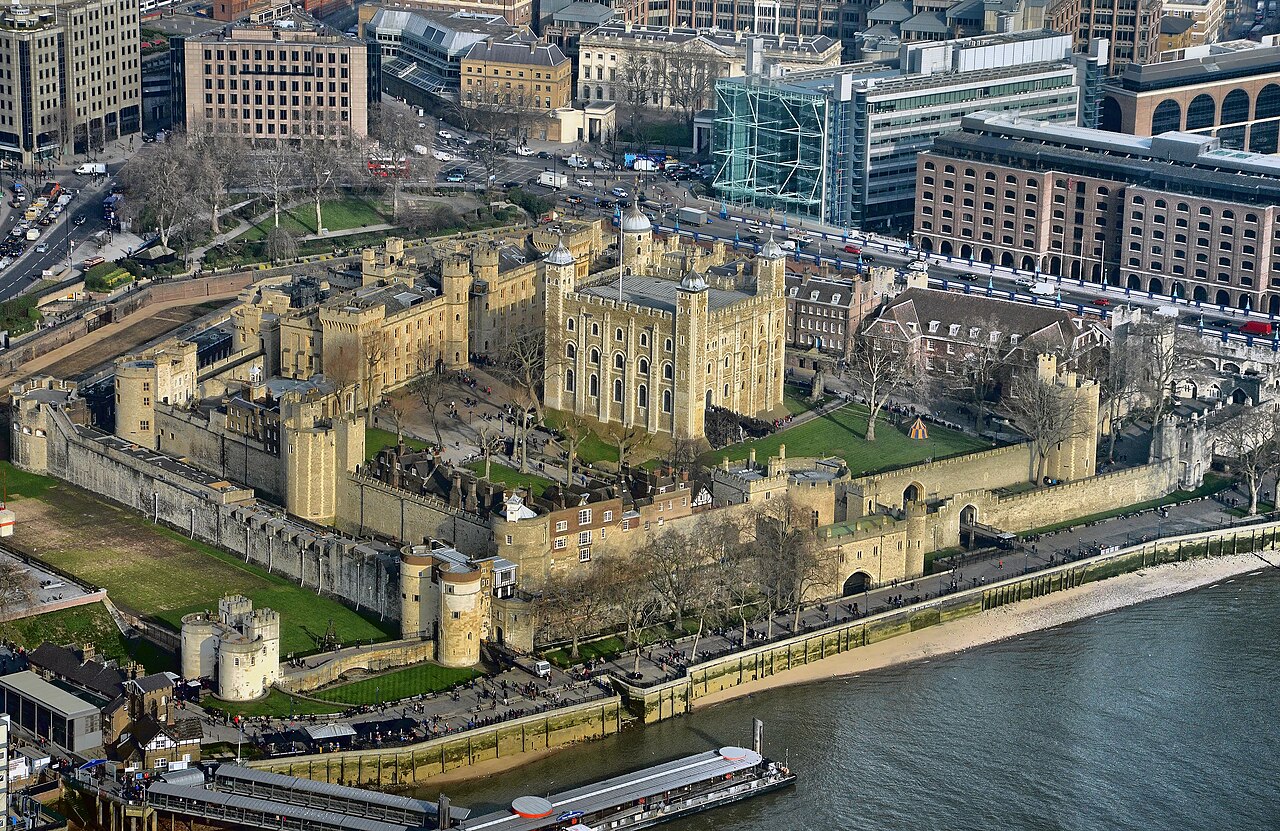
White Tower is a central tower, the old keep, at the Tower of London. Begun by William the Conqueror after the Norman Conquest of 1066. The free Lokali audio guide runs 7 minutes.
✓ Published October 2026 · how we write these guides
Visitor facts
| Lokali audio guide | 7 min · free |
|---|---|
| Type | Tower |
| Location | London, United Kingdom |
| Coordinates | 51.5081, -0.0760 |
| Languages | 50+, in the Lokali app |
The story
Stand still for a moment and look up. The stone in front of you is pale and uneven, some of it creamy, some of it grey and rough. Gulls call over the river. Behind you, traffic hums along the edge of the City of London. In front of you, a square keep rises out of the green lawns, with a small turret at each corner. This is the White Tower, the oldest building in the Tower of London and the reason the whole fortress exists.
The story begins in 1066. William, Duke of Normandy, crossed the Channel, defeated King Harold at the Battle of Hastings, and was crowned king of England. Winning a battle was one thing. Holding a hostile country was another. William needed buildings that told the English, in the plainest possible way, who was now in charge. On this riverside site, at the eastern edge of the old Roman city wall, he began a great tower of stone.
Work on the keep started in the decades after the Conquest, and it was finished around the year 1100, after William himself had died. Tradition links the project to Gundulf, a Norman monk who became Bishop of Rochester and had a reputation as a skilled builder. Imagine what Londoners saw at the time. Most of their homes were timber and thatch. Then, slowly, a stone giant grew beside the Thames. Nothing in the city came close to its size.
Now look closely at the walls. You can see two different kinds of stone. The rougher, darker blocks are Kentish ragstone, quarried in the south-east of England. The finer, paler stone used around corners and openings came from Caen, in Normandy, shipped across the sea. That choice was practical, because Caen stone carves cleanly. But it also carried a message. The new rulers were literally building England out of their homeland.
So why white? Here is the first surprise. The name does not come from the original stone. In the thirteenth century, King Henry the Third ordered the tower to be whitewashed, inside and out. Records from 1240 mention the work. A brilliant white keep standing above the river would have been visible for miles. Over time the paint washed away, but the name stayed. Today the tower is not really white at all. It simply remembers being white.
Walk around and you will notice that the four corner turrets are not the same. Three are square. One, on the north-east corner, is round. That round turret held a spiral staircase. The onion-shaped caps on top of the turrets are much later additions, and they give the old Norman keep a slightly playful skyline. Many of the windows are later too. In the late seventeenth century, many of the narrow Norman openings were widened into the larger windows you see today.
Here is the second surprise. The Normans did not put the main door at ground level. The original entrance was on the first floor, reached by a wooden staircase that could be removed or burned in an attack. Anyone trying to storm the keep faced a blank wall at the bottom. Today visitors climb a modern external stair on the south side, and that stair follows the logic of the original design. You enter the tower high up, just as a Norman guest would have done.
Inside, the walls are extremely thick, several metres deep at the base. You can feel it when you pass through a window opening. It is less a window and more a short tunnel. Look for small chambers built into the thickness of the walls. Some of these were garderobes, the medieval word for a toilet, which emptied down the outside of the building. It is a very human detail inside a building made to look all-powerful.
On the upper level, step into the Chapel of Saint John the Evangelist. Many visitors say it is the quietest room in the Tower of London. It is built in the Romanesque style, the round-arched style of Europe in the eleventh and twelfth centuries. Thick round columns carry plain arches. The stone is pale and almost undecorated. Look at the column tops, where simple carved shapes break the plainness. This is one of the oldest surviving church interiors in London, and it is still recognisably Norman.
The White Tower was never only a castle. Over the centuries it served as a royal residence, a store for weapons and gunpowder, a place for official records, and at times a prison. One of its earliest prisoners was Ranulf Flambard, Bishop of Durham, held here after Henry the First became king. According to the well-known account, in 1101 friends smuggled a rope to him inside a cask of wine. He got his guards drunk, climbed down the wall, and escaped to Normandy.
A darker story is tied to the ground just outside. In 1674, workmen near the White Tower found a wooden box containing the bones of two children. Many people believed they were the two young sons of King Edward the Fourth, the so-called Princes in the Tower, who disappeared in the 1480s. The remains were later placed in Westminster Abbey. Historians still debate who the children were and what happened to the princes. The mystery has never been fully solved.
Today the rooms are filled with the collections of the Royal Armouries. Look for the Line of Kings, a display of royal armour and carved wooden horses. Displays of royal armour have been shown here for centuries, which makes it one of the oldest visitor experiences in Britain. You will see armour made for King Henry the Eighth, and the changing shape of that armour follows his changing body. Children often enjoy comparing the sizes of the suits, from very small to very large.
Before you move on, step back onto the lawn and look at the whole building again. Notice how the glass towers of the City rise behind it, and how small they make it look, and how little that matters. For centuries this keep was the tallest thing for miles. Listen to the gulls, the river, and the voices of other visitors. Then let your eyes rest on that pale Caen stone at the corners, cut in Normandy more than nine hundred years ago, and still holding its place.
Key facts
What to look for
Practical tips
Common questions
Is there a free audio guide to White Tower?
Yes — the Lokali app narrates White Tower free of charge in 50+ languages. The guide runs about 7 minutes, covers the history, what to look for on site and practical tips, and works offline once downloaded.
Where is White Tower?
White Tower is in London, United Kingdom, at 51.5081, -0.0760. Tap the map link on this page for directions from where you are.
What is White Tower known for?
Begun by William the Conqueror after the Norman Conquest of 1066. Completed around the year 1100, after William's death.
What should you look for at White Tower?
Two stone types: rough ragstone and smooth pale Caen stone. The single round turret on the north-east corner. Onion-shaped caps topping the four corner turrets.
What should you know before visiting White Tower?
Visit the White Tower early, before larger groups arrive. Wear comfortable shoes for narrow spiral stairs inside.
When is the best time to visit White Tower?
Visit the White Tower early, before larger groups arrive.
On the map
Opens directions to White Tower from your location.
More to see in London



Hear White Tower in your language
The full story, narrated, in 50+ languages. Download it before you go and it plays offline, at your own pace, with no ticket and no tour group.