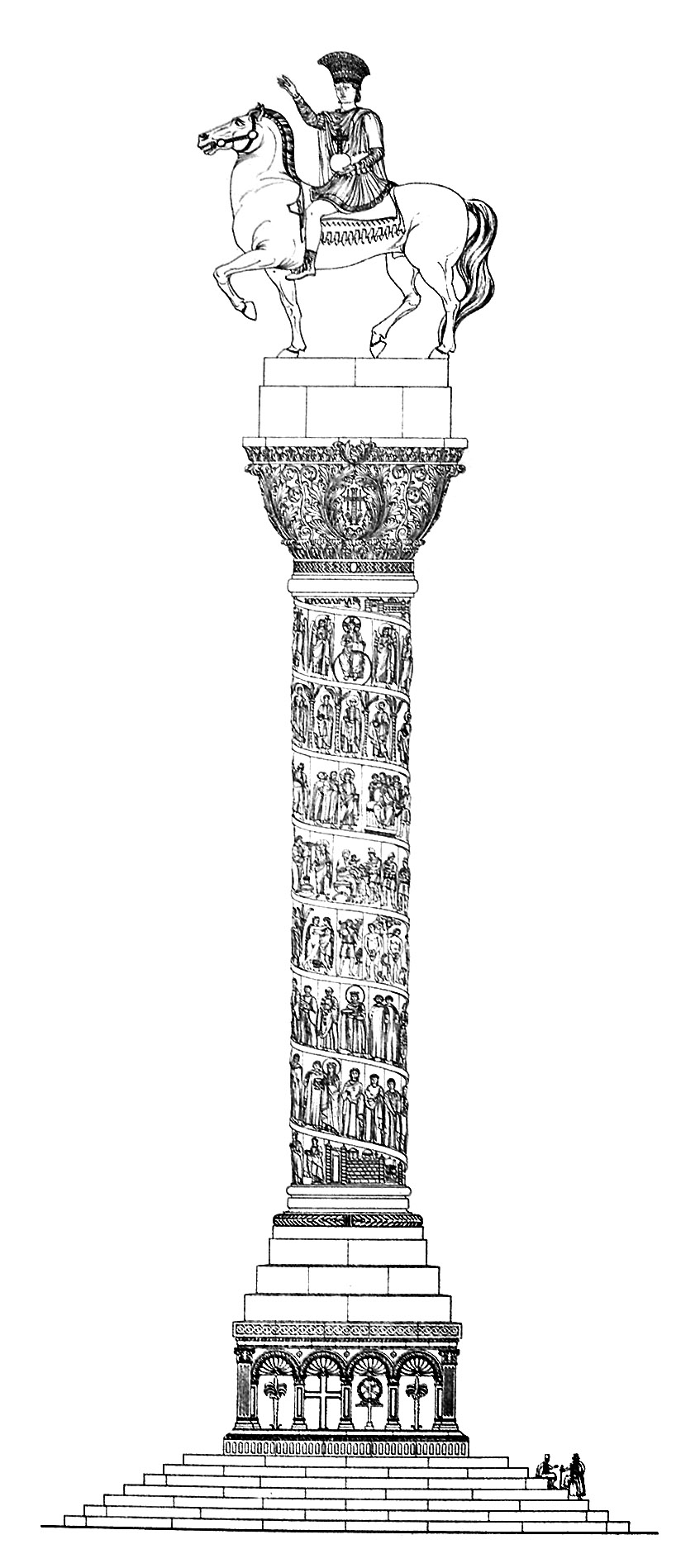
Photo: Wikimedia Commons contributor · Public domain · Wikimedia Commons
Column of Justinian is a roman triumphal column in Constantinople (Istanbul, Turkey). Emperor Justinian raised the column in the 540s. The free Lokali audio guide runs 7 minutes.
✓ Published October 2026 · how we write these guides
Visitor facts
| Lokali audio guide | 7 min · free |
|---|---|
| Type | Monument |
| Location | Istanbul, Türkiye |
| Coordinates | 41.0079, 28.9786 |
| Languages | 50+, in the Lokali app |
The story
Stand still for a moment on the open stones between Hagia Sophia and the old palace grounds. Feel the warm flagstones under your feet. Listen to the tram bells to the west, the gulls overhead, and the call to prayer rising from more than one minaret. The air smells of roasted chestnuts and sea salt. Look around for a towering column... and you will not find one. That empty space is the subject of this guide.
For almost a thousand years, a great column rose somewhere very close to where you are standing. On top of it sat a giant bronze horseman. The rider was the Emperor Justinian, who ruled the Eastern Roman Empire in the sixth century. Today nothing of it stands above ground. Yet for centuries, travellers arriving in Constantinople looked up at this figure before they saw almost anything else.
It helps to picture the square as it once was. This open ground was the Augustaion, a ceremonial plaza at the heart of the Byzantine capital. On one side rose the great church of Hagia Sophia. On another stood the gates of the Great Palace, where emperors lived. The Senate house was close by. Processions, coronations and public celebrations passed through this space. It was the city's formal front room, and the column stood at its centre.
Justinian raised the monument in the 540s, a few years after his builders finished the new Hagia Sophia. The timing matters. The emperor had survived a violent riot that almost toppled him. He had rebuilt the church on a scale the world had never seen. His armies had won back lands in North Africa and Italy. The column was his statement of victory, placed right beside his greatest building.
The historian Procopius, who wrote during Justinian's reign, described the monument in some detail. The column was built of stone and brick, and it was covered in sheets of bronze. Procopius said the metal shone, paler than gold but close to silver in colour. Imagine that surface catching the morning sun over the Bosphorus. Seen from the water, it must have flashed like a beacon above the rooftops.
Now the horseman himself. According to Procopius, the emperor rode facing east, toward the lands of Persia, the great rival empire. He wore armour, and a crested helmet rose above his head. His right hand was raised, palm open, as if to command the enemy to stop. In his left hand he held a globe topped with a cross. That globe meant one thing clearly: the Christian ruler held the world.
Here is a detail many visitors never hear. In the 1540s, a French scholar named Pierre Gilles came to Istanbul to study its ancient remains. He saw pieces of the bronze statue lying in the palace grounds, waiting to be melted down. He wrote that the leg was taller than he was, and the nose was longer than a hand. So the rider on the column was truly colossal, far larger than any living man.
That brings us to the end of the story. After the Ottoman conquest of 1453, the old Byzantine monuments slowly changed their meaning. The statue was taken down, and its bronze was eventually melted, most likely for cannon. The column itself was later dismantled in the sixteenth century. Its stones were probably reused in new buildings. In a city built and rebuilt for two thousand years, very little material went to waste.
For a while the statue lived on in people's minds. Different tales grew around it. Some later visitors believed the figure was not Justinian but another emperor. Legend has it that some believed the bronze rider protected the city, and that its fate was linked to the fate of Constantinople itself. Locals in later centuries told stories about its fall. These are popular tales, not documented history, but they show how strongly the figure held people's imagination.
So how do we know what it looked like? Apart from written accounts, a drawing survives from the fifteenth century, made before the statue came down. It shows a rider on a horse, holding a globe, with a tall feathered crest. Historians still debate how accurate the drawing is. Even so, it is one of the few images we have. Every reconstruction you may see in books or museums starts from these few sources.
While you are here, look across the tram line toward the entrance of the Basilica Cistern. Beside it stands a short, weathered stone pillar. That is a surviving fragment of the Milion, the marker from which distances across the empire were measured. It is a small, real piece of the same Byzantine world. Between that stone and Hagia Sophia, you can trace the edges of the old ceremonial heart of the city.
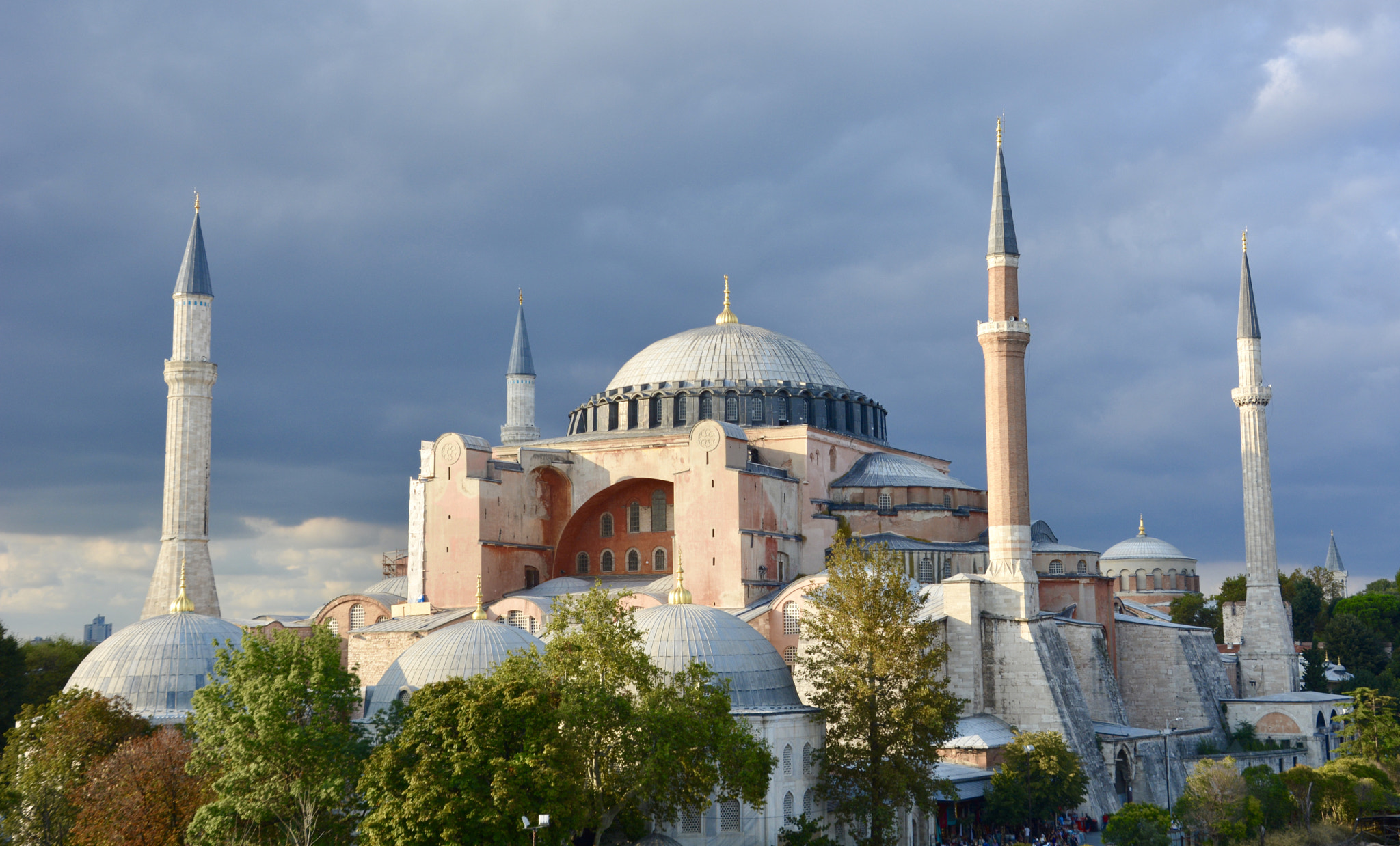
Now turn toward Hagia Sophia itself. Notice how its great dome and heavy buttresses fill the eastern side of your view. The minarets were added in Ottoman times, after the church became a mosque. Try to imagine a bright bronze column rising in front of it, perhaps taller than many of the buildings around you today. The horseman would have pointed east, over the dome, toward the morning light.
That contrast is worth a moment. The church survived because it stayed in use, first for Christian worship, then for Muslim prayer. The column did not survive because its metal was more useful than its message. One monument lasted through faith and constant care. The other disappeared into furnaces and building sites. Standing here, you are between the two outcomes.
Before you walk on, look once more at the open sky above the square. Watch the pigeons rise and settle on the stones. Hear the voices of visitors in a dozen languages. A bronze emperor once watched over this same space, his hand raised toward the east. He is gone now. But the square still draws people together, just as it did when processions filled it fourteen centuries ago.
Key facts
What to look for
Practical tips
Common questions
Is there a free audio guide to Column of Justinian?
Yes — the Lokali app narrates Column of Justinian free of charge in 50+ languages. The guide runs about 7 minutes, covers the history, what to look for on site and practical tips, and works offline once downloaded.
Where is Column of Justinian?
Column of Justinian is in Istanbul, Türkiye, at 41.0079, 28.9786. Tap the map link on this page for directions from where you are.
What is Column of Justinian known for?
Emperor Justinian raised the column in the 540s. A bronze equestrian statue of Justinian crowned the column.
What should you look for at Column of Justinian?
The weathered Milion stone fragment beside the cistern entrance. Hagia Sophia's great dome on the square's eastern side. Massive buttresses supporting Hagia Sophia's walls.
What should you know before visiting Column of Justinian?
Combine this stop with a visit to nearby Hagia Sophia. Come early morning when the square is quieter.
When is the best time to visit Column of Justinian?
Come early morning when the square is quieter.
On the map
Opens directions to Column of Justinian from your location.
More to see in Istanbul


Hear Column of Justinian in your language
The full story, narrated, in 50+ languages. Download it before you go and it plays offline, at your own pace, with no ticket and no tour group.