
Great Palace of Constantinople
41.0064° N · 28.9778° E · Palace
Photo: Gryffindor · CC BY-SA 4.0 · Wikimedia Commons
Great Palace of Constantinople is a Byzantine imperial palace complex. It is in Istanbul, Türkiye. Founded by Constantine the Great in the fourth century. The free Lokali audio guide runs 7 minutes.
✓ Published October 2026 · how we write these guides
Visitor facts
| Lokali audio guide | 7 min · free |
|---|---|
| Type | Palace |
| Location | Istanbul, Türkiye |
| Coordinates | 41.0064, 28.9778 |
| Languages | 50+, in the Lokali app |
The story
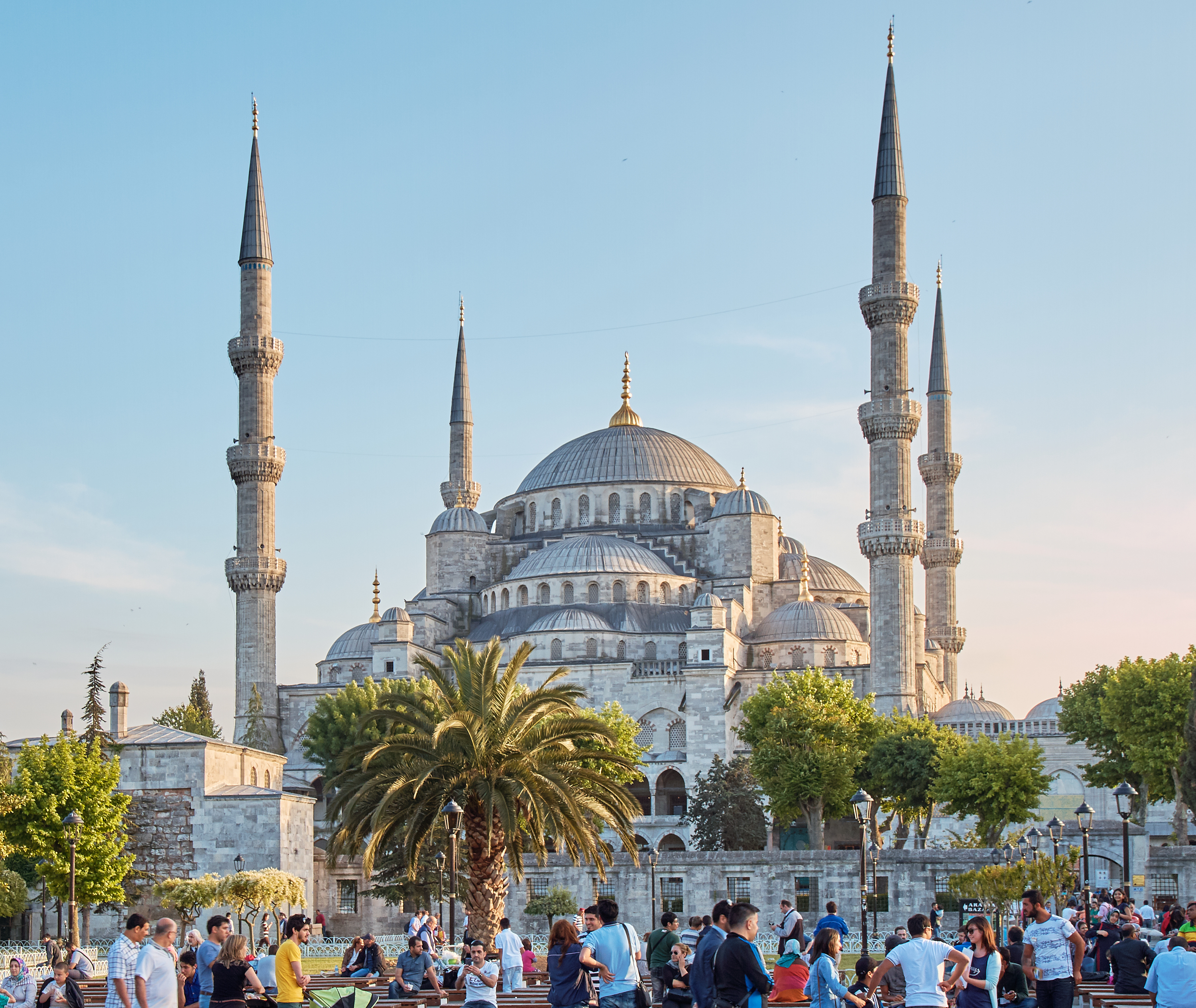
Listen for a moment. Gulls call over the rooftops. Shopkeepers in the lanes behind the Blue Mosque call out to people walking past. Underfoot, the ground tilts gently downhill, toward the grey-blue line of the Sea of Marmara. That slope is the first clue. You are standing on the terraces of a palace that no longer stands above ground... and yet it is still here, under the paving stones, the hotels and the bazaar around you.
This was the Great Palace of Constantinople. For centuries it was the home of the Byzantine emperors, the rulers of the eastern Roman Empire. Here they slept and prayed, received foreign envoys and plotted against one another. It was not one building. Over time it became a sprawling district of halls, chapels, courtyards, gardens and private quarters. Each new ruler added something, and the palace grew down the hillside, terrace by terrace, toward the water.
The story begins in the fourth century. Constantine the Great chose the old Greek town of Byzantium as his new capital, and the city took his name, Constantinople. He needed a residence worthy of an emperor. So he placed his palace here, on the high ground between the great church and the racetrack. This was no accident. The location tied together the three pillars of Byzantine life — faith, public spectacle and imperial power.
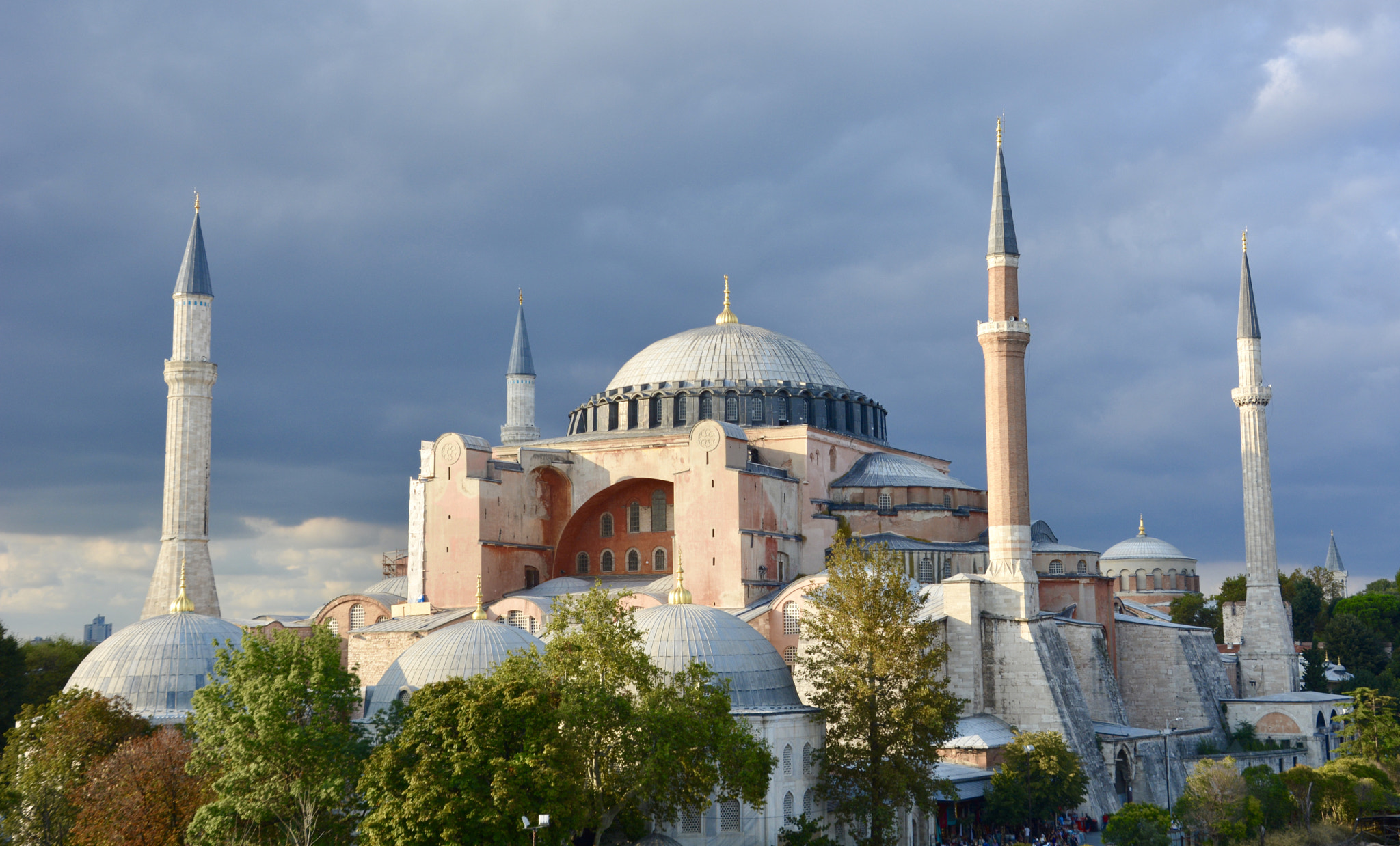
Look up the hill and you will see the domes of Hagia Sophia. The Hippodrome, the ancient chariot racetrack, ran along the open square to the west, where obelisks still stand today. The palace pressed right up against it. Historians describe an imperial box overlooking the track, reached from inside the palace. The emperor could appear before tens of thousands of cheering citizens... and then disappear back into his private world without crossing a public street.
The main ceremonial entrance was called the Chalke, a name that means bronze in Greek, probably after its bronze roof or doors. Beyond it, visitors moved through a sequence of halls and guarded courts. Byzantine court ceremony was famously elaborate. Envoys from distant lands were led slowly from room to room, and every step was designed to impress. Our word byzantine, meaning complicated, comes partly from this world of ritual and intrigue.
The palace had many named halls. One was the Magnaura, used for receiving foreign ambassadors. Another was the Chrysotriklinos, the Golden Hall, a domed throne room added in the sixth century. There was also a chamber lined with purple stone, called the Porphyra. Children born there to a reigning emperor were called porphyrogennetos — born in the purple. Here is a surprise many visitors miss: that is where our phrase for royal birth comes from.
Now let us move from the written records to something you can actually see. In the 1930s, archaeologists excavating near this spot uncovered a large floor mosaic. It once paved a colonnaded courtyard of the palace, and most scholars date it to around the sixth century. Today it is protected in the Great Palace Mosaic Museum, tucked behind the Arasta Bazaar. This floor is the most vivid surviving piece of the whole complex.
The mosaic is made of thousands of tiny cubes of stone and glass, set into a pale white background. The scenes are not religious. They show daily life and wild nature. There are hunters with spears, shepherds and grazing animals, children playing, an elephant fighting a lion, and an eagle locked in combat with a snake. Mythical creatures appear too. It is a rare window into what an emperor wanted to look at while walking through his own garden.
The palace did not fade in a single moment. In the late eleventh and twelfth centuries, the emperors of the Komnenos dynasty spent more of their time at the Blachernae Palace, in the far north-west of the city near the land walls. The Great Palace was still used for ceremonies. But slowly, the centre of gravity shifted. Expensive repairs were delayed, and some sections began to decay.
Then came 1204. Knights of the Fourth Crusade, who had set out for the Holy Land, turned instead on Constantinople and sacked it. The city's treasures were looted and carried west. Latin rulers lived in parts of the palace for a time, but when the Byzantines retook the city, they lacked the money to restore it. By the time the Ottomans conquered Constantinople in 1453, much of the great complex lay in ruins.
There is a well-known story about that moment. According to one popular tale, Sultan Mehmed the Second walked through the empty halls and recited a Persian verse. It speaks of a spider weaving curtains in the palace of the Caesars, and an owl calling from the towers. Nobody can confirm his exact words. But the image has stayed with the city for centuries, because it captures the silence that had settled over this place.
After the conquest, the city grew back over the ruins. Ottoman houses, workshops and later the Blue Mosque rose on the old terraces. Stones from the palace were reused in new walls. Down by the shore, along the old sea walls, fragments of the Boukoleon, the palace's waterfront section, still stand. Their tall window openings face the sea, though a busy coastal road now runs between them and the water.
So as you walk here, watch the ground itself. Notice where streets step sharply down, where a stretch of old brick appears at the base of a modern wall, or where a basement cafe sits below street level. Excavations around this neighbourhood have revealed walls, corridors and floors many times. Much more is believed to remain buried beneath the hotels and houses. Archaeologists still argue about where some of the famous halls actually stood.
Pause for one more moment before you move on. The carpet sellers are still calling out. The gulls are still circling. The ground still slopes toward the sea, just as it did when emperors walked these terraces. Their halls of gold and purple are gone. What remains is a floor of tiny stones, a few brick walls by the shore... and the quiet knowledge that an empire's heart lies just under your feet.
Key facts
What to look for
Practical tips
Common questions
Is there a free audio guide to Great Palace of Constantinople?
Yes — the Lokali app narrates Great Palace of Constantinople free of charge in 50+ languages. The guide runs about 7 minutes, covers the history, what to look for on site and practical tips, and works offline once downloaded.
Where is Great Palace of Constantinople?
Great Palace of Constantinople is in Istanbul, Türkiye, at 41.0064, 28.9778. Tap the map link on this page for directions from where you are.
What is Great Palace of Constantinople known for?
Founded by Constantine the Great in the fourth century. Home of Byzantine emperors for many centuries.
What should you look for at Great Palace of Constantinople?
An elephant fighting a lion in the floor mosaic. An eagle grappling with a snake among the mosaic scenes. Tall window openings in the Boukoleon seaside walls.
What should you know before visiting Great Palace of Constantinople?
Start at the Mosaic Museum behind the Arasta Bazaar. Walk downhill toward the sea to follow the terraces.
When is the best time to visit Great Palace of Constantinople?
Come early to see the mosaic before tour groups.
On the map
Opens directions to Great Palace of Constantinople from your location.
More to see in Istanbul


Hear Great Palace of Constantinople in your language
The full story, narrated, in 50+ languages. Download it before you go and it plays offline, at your own pace, with no ticket and no tour group.