
Photo: Ninara · CC BY 2.0 · Wikimedia Commons
Hagia Irene is a Byzantine church building in Istanbul, Turkey now a hall and museum. Irene means peace in Greek, not a saint's name. The free Lokali audio guide runs 6 minutes.
✓ Published October 2026 · how we write these guides
Visitor facts
| Lokali audio guide | 6 min · free |
|---|---|
| Type | Church |
| Location | Istanbul, Türkiye |
| Coordinates | 41.0097, 28.9811 |
| Languages | 50+, in the Lokali app |
The story
Listen for a moment. Under the plane trees of this courtyard, the noise of the city drops away. Your feet move from smooth paving onto older ground, and the building in front of you sits lower than the path. Its walls are striped, with bands of flat red brick between courses of pale stone. It looks heavy and patient. This is Hagia Irene, the Church of Holy Peace, and it is one of the oldest church buildings still standing in Istanbul.
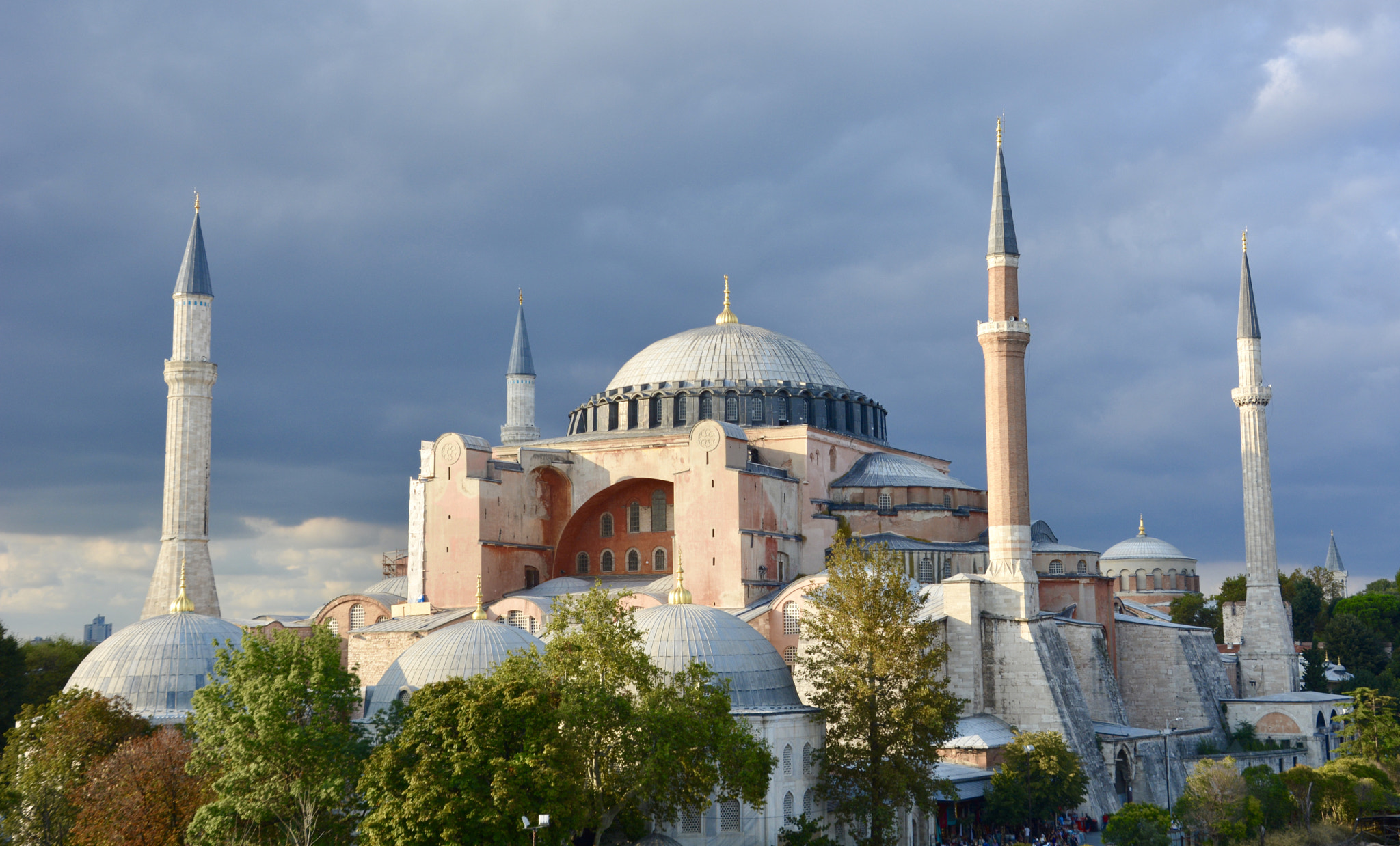
The name itself is a small lesson. In Greek, Irene means peace. It is not the name of a saint. Like its giant neighbour, Hagia Sophia, which means Holy Wisdom, this church was dedicated to an idea about God. The two buildings stand close together, and in Byzantine times they formed part of the same religious centre. Today they feel like two different worlds. One draws crowds. The other, here, is often quiet.
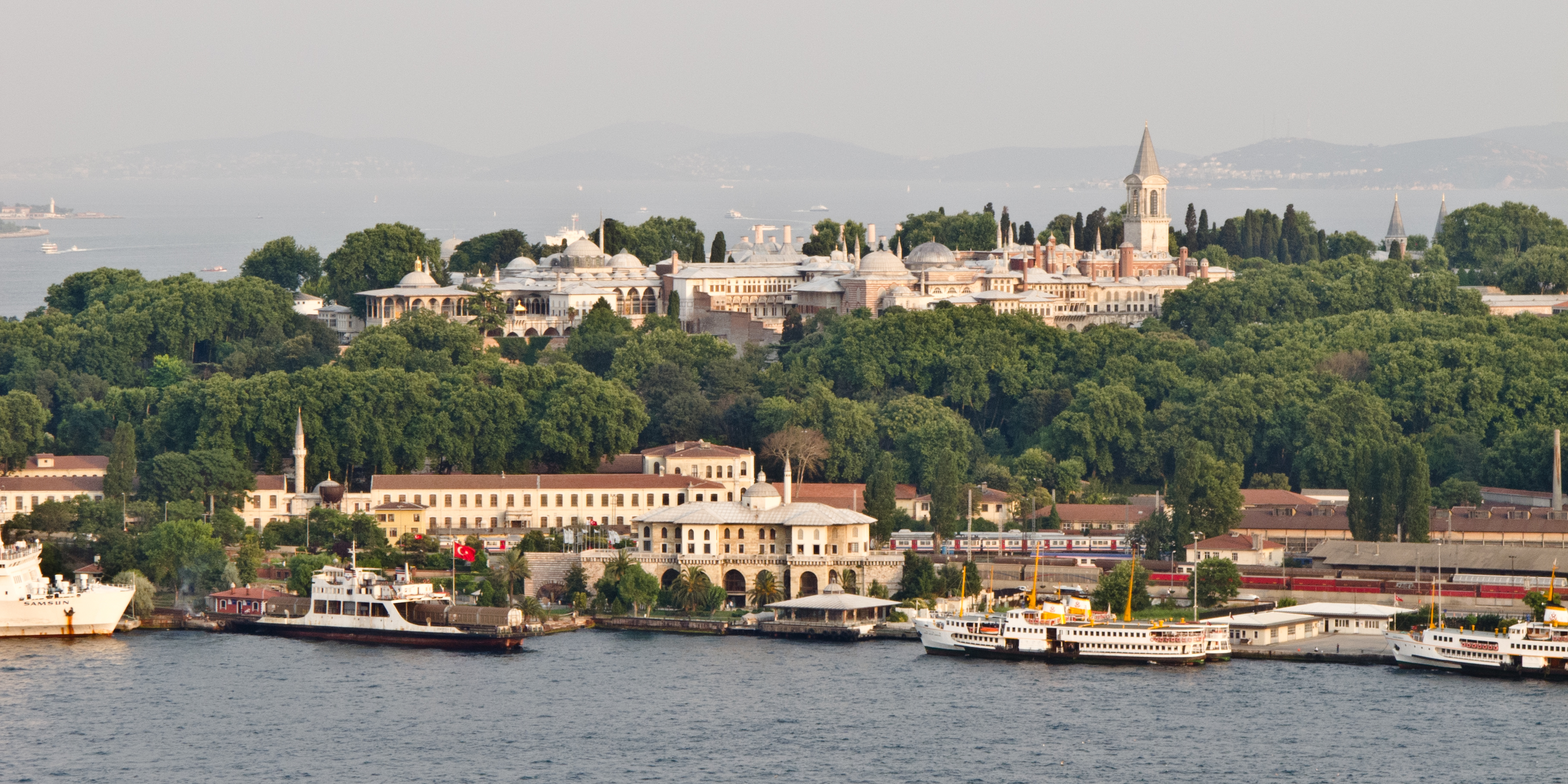
You are standing inside the outer walls of Topkapı Palace, in what is called the first courtyard. For centuries this was a semi-public space. Ottoman officials, soldiers, servants and petitioners passed through here on their way deeper into the palace. That location shaped the church's whole later life. Being inside the palace grounds kept it useful, and kept it standing.
The story of a church on this spot goes back a very long way. Legend has it that a pagan temple stood here before any Christian building. That claim is hard to prove, so treat it as a tale. What is better documented is that an early church of Holy Peace existed in Constantinople by the fourth century. Historians generally link it with the Second Ecumenical Council in 381, a great meeting of bishops that shaped Christian belief about the Holy Spirit.
That first church did not survive. In 532, the city exploded in the Nika riots — a rebellion that began among chariot-racing fans and nearly toppled the emperor Justinian. Fires spread through this whole district. Both Hagia Sophia and Hagia Irene burned. Justinian rebuilt them both. Then, in the eighth century, a powerful earthquake damaged this church again. Much of what you see today comes from the major rebuilding that followed.
Now look at the shape of the building. A central dome rises over the main space, and the brick and stone walls step up to support it. Byzantine builders used these alternating bands for strength and flexibility, which mattered in a city that shakes. The brick is thin and wide, with thick layers of mortar between each row. Up close, the mortar is almost as visible as the brick itself.
Here is something many visitors miss. In front of the church there is an atrium, an enclosed courtyard with arcades. Early churches often had one, a place to gather and prepare before entering. In Istanbul, almost all of them have disappeared. This one survives. Walking through it, you follow the same path that worshippers took more than a thousand years ago.
Step inside, and let your eyes rise to the apse, the curved wall at the far end. You will not see a painted Christ or a gallery of saints. Instead there is a large, simple cross set in mosaic against a gold background. This comes from the period called Iconoclasm, when Byzantine emperors banned religious images of people. A plain cross was allowed. Most iconoclast decoration was later destroyed. This one stayed — a rare survivor of a fierce argument about faith and images.
Below that cross, look for the curved rows of stepped seating that follow the line of the apse. This is called a synthronon, where clergy sat during services, with the bishop at the centre. Very few of these remain in Byzantine churches anywhere. Here, it still frames the end of the building. It is easy to imagine figures in robes seated on those steps, facing the congregation.
The next surprise is what happened after 1453, when the Ottoman Turks captured Constantinople. Many churches became mosques. Hagia Irene did not. Because it sat inside the palace walls, the Ottomans turned it into an arsenal. Weapons, armour and war trophies were stored inside. That practical new use is one reason the building kept its Byzantine interior, without minarets or a prayer niche added later.
In the nineteenth century, the stored weapons became something new. Old arms and military objects were arranged for display, and the building is often described as one of the earliest museum spaces in the Ottoman world. Later it served as a military museum. Eventually those collections moved elsewhere, and the church was left mostly empty. That emptiness is part of its power now. You see the structure itself, not a crowded exhibition.
In recent decades, the building has found yet another life — as a concert hall. Musicians value its acoustics. Sound rises into the dome and returns slowly, softened by brick and stone. Classical performances have been held here, especially during Istanbul's music festivals. If you speak quietly inside, you may notice your voice linger for a moment longer than you expect.
Outside, before you leave, look at the large stone sarcophagi near the building. Some are carved from dark red porphyry, a hard stone that Byzantine rulers reserved for imperial use. Many scholars believe a number of them came from imperial tombs elsewhere in the city. They sit in the open air now, weathered, and few people stop to look closely.
As you walk back toward the palace gate, turn once more. See the low dome against the sky, the striped walls, the ground sinking around them. This building has been a church, an arsenal, a museum and a concert hall. It has survived fire, earthquake and conquest. Today it simply stands here, holding its quiet name — Holy Peace — in the middle of a very loud city.
Key facts
What to look for
Practical tips
Common questions
Is there a free audio guide to Hagia Irene?
Yes — the Lokali app narrates Hagia Irene free of charge in 50+ languages. The guide runs about 6 minutes, covers the history, what to look for on site and practical tips, and works offline once downloaded.
Where is Hagia Irene?
Hagia Irene is in Istanbul, Türkiye, at 41.0097, 28.9811. Tap the map link on this page for directions from where you are.
What is Hagia Irene known for?
Irene means peace in Greek, not a saint's name. Church burned during the Nika riots of 532.
What should you look for at Hagia Irene?
Plain mosaic cross in the apse above the altar. Curved stepped clergy seating around the apse. Alternating bands of red brick and pale stone.
What should you know before visiting Hagia Irene?
Enter through the Imperial Gate of Topkapı Palace grounds. Buy a separate ticket for Hagia Irene's interior.
When is the best time to visit Hagia Irene?
Visit early to enjoy the courtyard in near silence.
On the map
Opens directions to Hagia Irene from your location.
More to see in Istanbul


Hear Hagia Irene in your language
The full story, narrated, in 50+ languages. Download it before you go and it plays offline, at your own pace, with no ticket and no tour group.