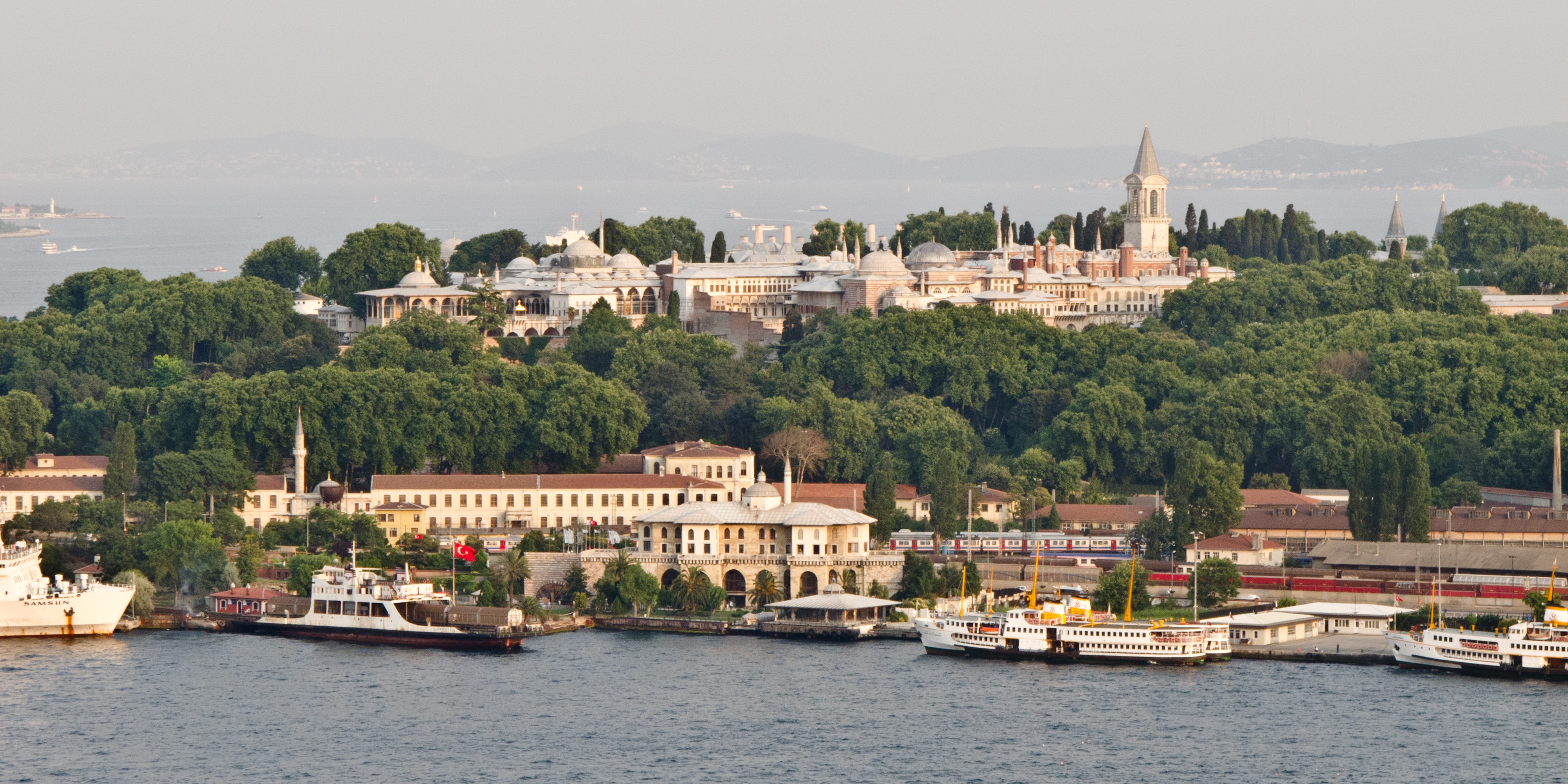
Topkapi Palace is a palace in Istanbul, Türkiye. Residence of Ottoman sultans from the 15th to 19th centuries, this sprawling palace complex overlooks the Golden Horn and contains courtyards, gardens, and pavilions. Most visitors spend 2–3 hours here. The free Lokali audio guide runs 5 minutes.
✓ Verified August 2026 · how we write these guides
Visitor facts
| Time needed | 2–3 hours |
|---|---|
| Lokali audio guide | 5 min · free |
| Type | Palace |
| Best for | History |
| Location | Istanbul, Türkiye |
| Coordinates | 41.0116, 28.9830 |
| Languages | 45, in the Lokali app |
The story
Behind high walls on a point of land where two seas meet, a series of garden courtyards opens one into the next, leading deeper toward the private heart of an empire. Gilded pavilions, tiled chambers, and treasure rooms lie within. This is Topkapi Palace, the seat of the Ottoman sultans for some four centuries.
The palace was begun by Mehmed the Second soon after his conquest of the city in 1453, on the site of the old Byzantine acropolis. Rather than a single grand block, it grew as a sprawling compound of courtyards, kiosks, and gardens, added to by sultan after sultan over the centuries.
The palace is organised as a sequence of four courtyards, each more private than the last. The outer courts were open to officials and the business of state; the inner ones were the sultan's private world, and moving inward you trace the line between public power and private life.
The most famous part is the Harem, the private quarters of the sultan's household and family, a maze of tiled rooms, courtyards, and corridors. Far from the lurid legends, it was the domestic centre of the dynasty, and it requires a separate ticket that is well worth buying.
The Imperial Treasury holds objects of astonishing richness — jewelled weapons, thrones, and gems, including a famous dagger set with great emeralds and one of the largest diamonds in the world. The wealth on display makes plain the reach of the empire at its height.
Another set of rooms holds sacred relics of Islam, brought to the city when the Ottomans took control of the holy places, including items associated with the Prophet Muhammad. These are venerated objects, and the rooms are quiet and reverent; visitors are asked to behave accordingly.
Throughout the palace, walls glow with Iznik tiles in blues, greens, and reds, among the finest ceramics ever made. The pavilions, fountains, and painted ceilings show a taste for beauty on a human, garden scale rather than for sheer overwhelming size.
Because the palace sits on a point above the water, its terraces and windows give sweeping views over the Bosphorus, the Golden Horn, and the city beyond. Sultans watched their fleets and their city from here, and the same views are now one of the quiet pleasures of a visit.
This is a large site that rewards time. Between the courtyards, the Harem, the Treasury, and the relic rooms, a thorough visit takes several hours, and trying to rush it leaves you tired and the place only half seen.
Topkapi sits at the tip of the old city, beside Hagia Sophia and the other great monuments of the historic peninsula, so it falls naturally into a day exploring the heart of old Istanbul on foot.
A few practical notes. Buy tickets ahead in summer, and add the separate Harem ticket; come early to beat both the heat and the tour groups. Modest dress is wise, especially in the relic rooms, and comfortable shoes help across the wide courtyards.
Before you leave, stand at a terrace rail and look out over the meeting of the seas, as sultans once did. For four hundred years, decisions made within these courtyards shaped a vast empire. When you step back out through the gate into the modern city, that long weight of power lingers behind the walls.
Key facts
What to look for
Practical tips
Common questions
How long do you need at Topkapi Palace?
Plan 2–3 hours. That is the time most visitors spend at Topkapi Palace. The free Lokali audio guide adds about 5 minutes of narration you can listen to as you walk, so it fits inside your visit rather than adding to it.
Is there a free audio guide to Topkapi Palace?
Yes — the Lokali app narrates Topkapi Palace free of charge in 50+ languages. It covers the history, what to look for on site and practical tips, and it works offline once downloaded.
Where is Topkapi Palace?
Topkapi Palace is in Istanbul, Türkiye, at 41.0116, 28.9830. Tap the map link on this page for directions from where you are.
What should you know before visiting Topkapi Palace?
Buy tickets ahead and add the Harem.
What is Topkapi Palace known for?
Seat of the Ottoman sultans for some four centuries.
What is the best time to visit Topkapi Palace?
Wander the Harem's private quarters to sense domestic life behind palace walls.
On the map
Opens directions to Topkapi Palace from your location.
Reference
More to see in Istanbul


Hear Topkapi Palace in your language
The full story, narrated, in 50+ languages. Download it before you go and it plays offline, at your own pace, with no ticket and no tour group.