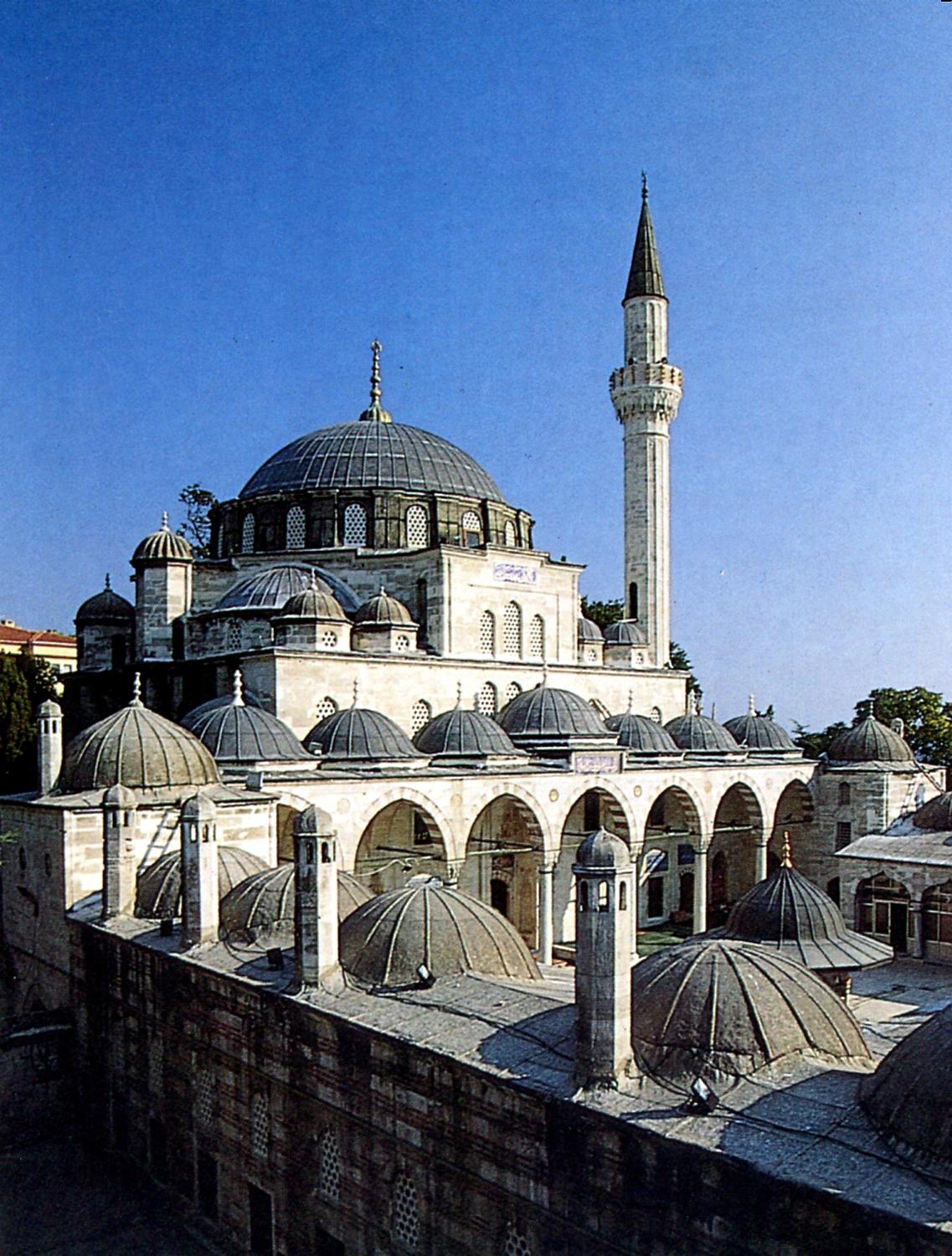
Sokollu Mehmed Pasha Mosque, Kadırga
41.0047° N · 28.9719° E · Mosque
Photo: MChew · CC BY-SA 3.0 · Wikimedia Commons
Sokollu Mehmed Pasha Mosque, Kadırga is a mosque in İstanbul, Turkey. Designed by Mimar Sinan, chief Ottoman royal architect. The free Lokali audio guide runs 6 minutes.
✓ Published October 2026 · how we write these guides
Visitor facts
| Lokali audio guide | 6 min · free |
|---|---|
| Type | Mosque |
| Location | Istanbul, Türkiye |
| Coordinates | 41.0047, 28.9719 |
| Languages | 50+, in the Lokali app |
The story
Start with the stairs. The street in Kadırga tilts downhill toward the Sea of Marmara, and the mosque does not sit beside it. It sits above it. You climb worn stone steps through a shadowed passage, and the noise of the neighbourhood falls away behind you. Then the passage opens, and a quiet courtyard fills with light.
That entrance is a deliberate piece of theatre. The site is steep, and the architect used the slope instead of fighting it. The passage runs underneath a classroom of the religious school, the madrasa, that wraps around the courtyard. So your first view of the mosque comes from below, framed by an arch. You arrive almost the way a student once did, climbing toward learning and prayer.
The architect was Mimar Sinan. He was the chief royal architect of the Ottoman Empire in the sixteenth century, and he designed or supervised hundreds of buildings. Many historians count this small mosque among his finest works. It was finished in the early 1570s, when Sinan was already an old man. Its scale is modest. But Sinan solved difficult problems here with great control.
The mosque carries the name of its patron, Sokollu Mehmed Pasha. He was born in Bosnia and came into Ottoman service as a boy through the devshirme. That was a system that recruited Christian youths from the Balkans, converted them, and trained them for the army or the palace. Sokollu rose to become grand vizier. That is the chief minister of the empire. He served three sultans, starting with Suleiman the Magnificent.
His wife deserves equal credit. Esmahan Sultan was a daughter of Sultan Selim the Second, and the couple founded this complex together. Their marriage tied the most powerful minister in the empire directly to the royal family. A mosque like this was a public statement. It showed piety, wealth, and status. It also gave the neighbourhood a school, a place of worship, and a centre for daily life.
Now look around the courtyard. Low domes cover the madrasa rooms on three sides, one dome for each cell. Students once lived and studied in these rooms. A covered portico runs along the front of the mosque itself, and a fountain for ritual washing stands in the middle. The stone is pale and plain. Sinan kept the outside calm, almost severe. He saved the colour for the inside.
Before you enter, look up at the doorway. Set into the wall above the entrance is a small dark fragment. According to long tradition, it is a piece of the Black Stone of the Kaaba in Mecca, the most sacred site in Islam. Other fragments are said to be set into the mihrab, the niche that points toward Mecca, and into the pulpit. Most visitors walk straight past them.
Remove your shoes and step inside. The first thing you may notice is how bright the space feels for its size. The central dome rests on a ring of six supports, a hexagon, instead of the more common square. Smaller half-domes fill the corners. This lets the dome cover the room with very few interruptions. Your eye travels upward without meeting a heavy pillar.
Then the colour arrives. The wall facing Mecca is covered in tiles from Iznik, a town in western Anatolia that produced the finest Ottoman ceramics. These tiles come from the best period of Iznik production. Look for the deep cobalt blue, the turquoise, and a red that stands slightly raised from the surface. That red was very hard to make. Potters could only achieve it for a few decades.
The designs are mostly flowers. You can find tulips, carnations, and blossoming branches, along with bands of calligraphy that carry verses from the Quran. Notice how the tiles do not cover every wall. They concentrate around the mihrab and rise toward the windows. The rest of the interior stays pale. That contrast makes the tiled wall glow, especially when sunlight comes through the coloured glass above.
Now find the pulpit, the minbar. It is carved from white marble, with a steep staircase leading up to a small platform. Look at its tall pointed cap. It is covered in tiles, which is unusual. Most Ottoman minbars have a plain stone or metal roof. Here the tiles continue the colour of the wall right to the top. It is one of the details that makes this interior feel complete.
The name of the neighbourhood tells you something too. Kadırga means galley, the oared warship of the Mediterranean. In Byzantine and early Ottoman times, a harbour for these ships lay nearby on the Marmara shore. The harbour was later filled in, and houses now stand where boats once moored. Sokollu himself was closely connected to the Ottoman navy, so the location suits him.
His story ended violently. In 1579 Sokollu Mehmed Pasha was stabbed to death by an assailant, after decades at the centre of power. He is not buried here. But this building stayed. For more than four centuries it has served the same streets, through fires, earthquakes, and the slow change of the city around it. It is still a working mosque today.
Before you leave, stand for a moment in the courtyard again. Listen to the sound of water at the fountain, and to the pigeons on the domes. Then walk back down the stairs and through the dark passage. Notice how the noise of the street rises to meet you. Sinan designed that transition too... from the city, to stillness, and back again.
Key facts
What to look for
Practical tips
Common questions
Is there a free audio guide to Sokollu Mehmed Pasha Mosque, Kadırga?
Yes — the Lokali app narrates Sokollu Mehmed Pasha Mosque, Kadırga free of charge in 50+ languages. The guide runs about 6 minutes, covers the history, what to look for on site and practical tips, and works offline once downloaded.
Where is Sokollu Mehmed Pasha Mosque, Kadırga?
Sokollu Mehmed Pasha Mosque, Kadırga is in Istanbul, Türkiye, at 41.0047, 28.9719. Tap the map link on this page for directions from where you are.
What is Sokollu Mehmed Pasha Mosque, Kadırga known for?
Designed by Mimar Sinan, chief Ottoman royal architect. Completed in the early 1570s.
What should you look for at Sokollu Mehmed Pasha Mosque, Kadırga?
Dark stone fragment set above the main entrance door. Raised tomato-red colour in the Iznik tiles. Tiled pointed cap on top of the marble minbar.
What should you know before visiting Sokollu Mehmed Pasha Mosque, Kadırga?
Dress modestly; women should bring a scarf for their hair. Avoid visiting during the five daily prayer times.
When is the best time to visit Sokollu Mehmed Pasha Mosque, Kadırga?
Visit late morning when sunlight warms the tiled wall.
On the map
Opens directions to Sokollu Mehmed Pasha Mosque, Kadırga from your location.
More to see in Istanbul



Hear Sokollu Mehmed Pasha Mosque, Kadırga in your language
The full story, narrated, in 50+ languages. Download it before you go and it plays offline, at your own pace, with no ticket and no tour group.