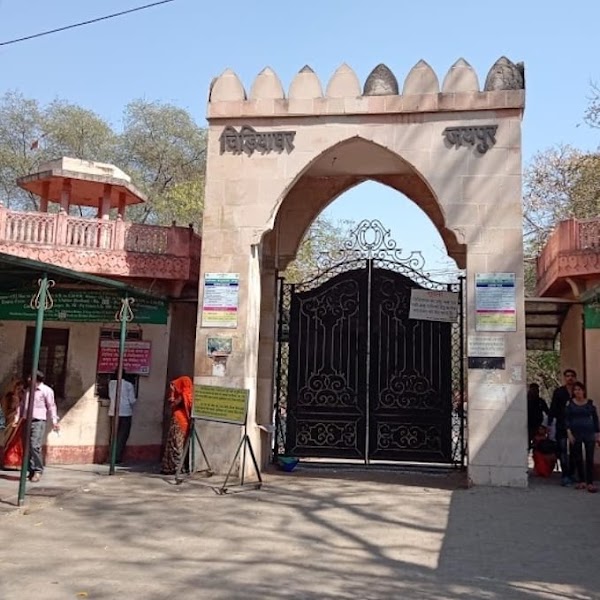
Jaipur Zoo is a zoo in Jaipur, India. Opened in 1876 under Maharaja Ram Singh II. Part of Ram Niwas Garden famine relief project. Most visitors spend 1-2 hours here. The free Lokali audio guide runs 5 minutes.
✓ Verified October 2026 · how we write these guides
Visitor facts
| Time needed | 1-2 hours |
|---|---|
| Lokali audio guide | 5 min · free |
| Type | Zoo |
| Best for | Families |
| Location | Jaipur, India |
| Coordinates | 26.9122, 75.8214 |
| Languages | 45, in the Lokali app |
The story
The air here smells of dry earth and acacia leaves. Traffic noise from the Ram Niwas Garden gates fades as you step deeper into the zoo grounds, replaced by the calls of peafowl and the rustle of old trees overhead. This is one of India's oldest zoological parks, opened to the public in 1876 during the reign of Maharaja Sawai Ram Singh II. The zoo sits within the larger Ram Niwas Garden complex, a green refuge the maharaja commissioned to counter a devastating famine — he wanted work for his people and a lasting public space for the city.
The layout reflects Victorian-era zoo design, with enclosures arranged along tree-lined paths rather than the open moat systems you see in newer parks. Many of the original cages and buildings remain, their pink sandstone walls weathered by more than a century of monsoons. The zoo covers roughly thirty acres, compact by modern standards but dense with history. Early records show it began as a menagerie for the royal family, housing exotic animals gifted by visiting dignitaries and specimens collected from Rajasthan's forests.
Today the collection includes crocodiles, leopards, sloth bears, and a small population of gharials — the narrow-snouted crocodilians native to Indian rivers. The gharial enclosure sits near the centre of the grounds, a concrete pool surrounded by viewing rails. These animals are critically endangered in the wild, their numbers collapsed by habitat loss and fishing net entanglement. The zoo participates in breeding programs, though the enclosures themselves show their age. You will see visitors crowding the rails during feeding times, children pressed against the barriers while keepers toss fish into the water.
The big cat section holds leopards and a few Bengal tigers, their enclosures shaded by old neem trees. The cats pace narrow circuits in the afternoon heat, a behaviour common in older zoo designs where space is limited. Animal welfare standards have evolved significantly since the eighteen seventies, and many Indian zoos including this one face ongoing criticism for outdated infrastructure. Still, the zoo remains a popular weekend destination for Jaipur families, especially in the cooler months between November and February.
Birdlife is the zoo's unexpected strength. The grounds attract wild species alongside the captive collection — you will hear the metallic calls of common mynas, see rose-ringed parakeets flashing green through the canopy, and if you visit at dusk, watch for Indian flying foxes roosting in the tallest trees. The zoo keeps a small aviary near the main path, housing pheasants and a few species of crane. The mesh is patched in places, and the enclosures feel cramped, but the birds are well-fed and the keepers visibly attentive.
A museum building stands near the entrance, a low sandstone structure with arched doorways. Inside you will find dusty taxidermy specimens, faded diagrams of animal anatomy, and display cases holding skulls and preserved insects. The exhibits have not been updated in decades, but they offer a glimpse of how natural history was taught in India during the colonial and early independence periods. The lighting is dim, the air conditioning sporadic. Most visitors skip the museum entirely, heading straight for the live animals.
The zoo is part of the broader Ram Niwas Garden, which also includes the Albert Hall Museum and a public park with fountains and walking paths. Families often combine a zoo visit with a stop at the museum or a picnic under the garden's old rain trees. The zoo entrance fee is modest, a few rupees for Indian nationals and slightly more for foreign visitors. Expect crowds on Sundays and public holidays, when the paths fill with school groups and extended families.
As you walk the perimeter path, notice the pink sandstone benches placed at intervals under the trees — these are original to the eighteen seventies layout, worn smooth by generations of visitors. The zoo may not meet contemporary standards for animal enclosures, but it remains a living piece of Jaipur's public history, a space where the city's residents have gathered for leisure and learning across a century and a half. The peafowl call again as you near the exit, their voices mingling with the hum of the city just beyond the garden walls.
Key facts
What to look for
Practical tips
Common questions
How long do you need at Jaipur Zoo?
Plan 1-2 hours. That is the time most visitors spend at Jaipur Zoo. The free Lokali audio guide runs 5 minutes and is made to listen to while you walk.
Is there a free audio guide to Jaipur Zoo?
Yes — the Lokali app narrates Jaipur Zoo free of charge in 50+ languages. No ticket, tour group or subscription, and it works offline once downloaded.
Where is Jaipur Zoo?
Jaipur Zoo is in Jaipur, India, at 26.9122, 75.8214. Tap the map link on this page for directions.
What should you know before visiting Jaipur Zoo?
Visit between November and February for cooler weather
What is Jaipur Zoo known for?
Opened in 1876 under Maharaja Ram Singh II
What is the best time to visit Jaipur Zoo?
Avoid Sundays and holidays for smaller crowds
On the map
Opens directions to Jaipur Zoo from your location.
More to see in Jaipur



Hear Jaipur Zoo in your language
The full story, narrated, in 50+ languages. Download it before you go and it plays offline, at your own pace, with no ticket and no tour group.