
Photo: Tomio344456 · CC BY-SA 4.0 · Wikimedia Commons
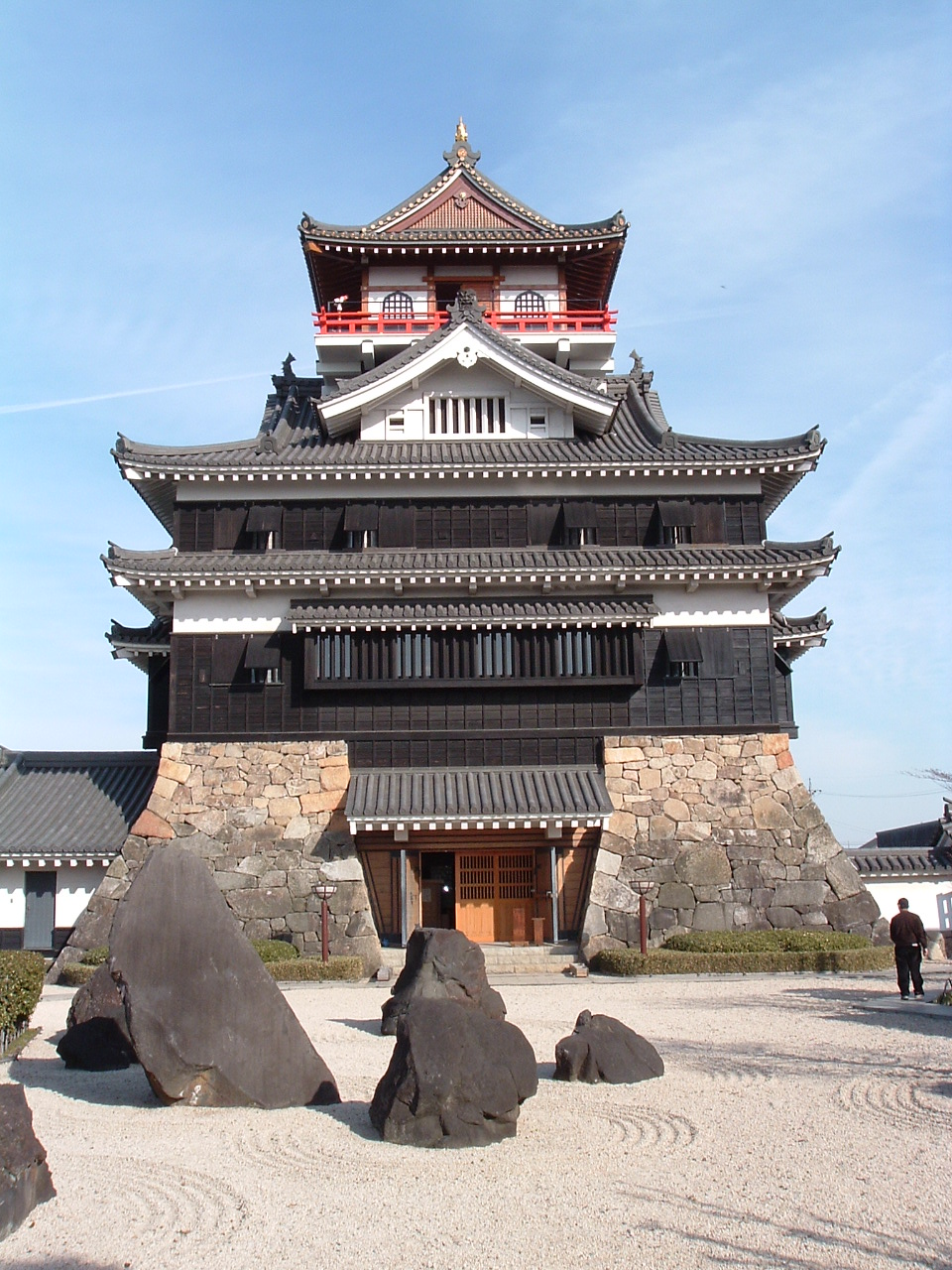
Inuyama Castle is one of the 12 Japanese castles still in existence which were built before the Edo period. It is near Kakamigahara, Japan. One of twelve original surviving castle keeps in Japan. The free Lokali audio guide runs 6 minutes.
✓ Published October 2026 · how we write these guides
Visitor facts
| Lokali audio guide | 6 min · free |
|---|---|
| Type | Castle |
| Location | Kakamigahara, Japan |
| Coordinates | 35.3883, 136.9392 |
| Official website | inuyama-castle.jp |
| Languages | 50+, in the Lokali app |
The story
Start with your feet. Inside the keep, you climb in socks or slippers over dark, polished wooden boards. They are worn smooth by centuries of steps, and they creak a little under your weight. The stairs are steep, closer to a ladder than a staircase. You will probably grip the rope handrail. That narrow, careful climb is part of the story. This building was made for soldiers, not for comfort.
Welcome to Inuyama Castle. If you are staying in Kakamigahara, you have come a short distance across the Kiso River. The castle stands on the opposite bank, in the town of Inuyama in Aichi Prefecture. From Kakamigahara's side of the water, you can see the white keep on its wooded hill. Here the river is the border between two prefectures. Long ago, it marked the edge between rival provinces.
That position explains almost everything about this place. The castle sits on a small, steep hill directly above the river. A river is a natural moat, so the main tower watches the water like a lookout. In the sixteenth century, central Japan was divided among warlords. Control of a river crossing meant control of trade, soldiers and supplies. Whoever held this hill could see an army coming long before it arrived.
The keep is one of only twelve castle towers in Japan that survive in their original form. Many castles you see across the country are concrete reconstructions from the twentieth century. This one is not. It is also one of only five castles designated as National Treasures. The others are Himeji, Matsumoto, Hikone and Matsue. So the wood around you is old wood, not a modern copy.
Exactly how old is a question historians still discuss. Tradition says Oda Nobuyasu built a castle here in the sixteenth century. He was an uncle of Oda Nobunaga, the warlord who began the unification of Japan. More recent studies of the timber suggest the present tower took its shape somewhat later, near the end of that century. Either way, these beams were cut when samurai still fought for this hill.
Now here is something many visitors do not know. For most of its modern life, this castle was privately owned by a single family. In the early Edo period, the Naruse family became lords of Inuyama. They served the powerful Tokugawa house of Owari, based in nearby Nagoya. The Naruse held the castle for generations, through the long peace that followed the wars.
The story takes a sharp turn in the late nineteenth century. After the Meiji Restoration, when Japan dismantled its old feudal system, many castles were taken over by the state. Many were torn down. Then, in 1891, a powerful earthquake struck this region and badly damaged the keep. The castle was returned to the Naruse family on the condition that they repair it. They did. The family remained the owners until 2004, when ownership passed to a foundation.
As you climb, notice how dark the lower floors are. The windows are small, and the walls are thick with plaster over wood. These rooms were for storage and defence, not for living. Look at the heavy, rough-cut beams overhead. Some still show the marks of hand tools. You can almost read the work of the carpenters in each surface.
At the top, you step out onto a narrow wooden balcony that wraps around the whole floor. This is the second surprise. Very few original castle towers let you walk outside like this. The railing is low, and the drop is real, so move slowly and hold on. The wind often pushes hard up here. On a clear day, the view runs across the river, the plains of Gifu, and the mountains beyond.
Look down at the Kiso River below. The water is wide and green, and it bends around the foot of the hill. On summer evenings, boats with burning torches sometimes drift here for cormorant fishing. This is an old method in which trained birds catch fish for the fishermen. Inuyama is one of the towns that keeps this tradition alive. Watching the firelight on the water from near the castle is something locals still enjoy.
The castle has a poetic nickname too. It is often called Hakuteijo, which means White Emperor Castle. According to a popular account, a Confucian scholar of the Edo period gave it this name. It came from a Chinese poem by Li Bai about a castle high above a river. Whether or not the story is exact, the image fits. A white tower above moving water is what you are looking at now.
When you come back down, take time on the path below. At the foot of the hill you will find small Shinto shrines, with red gates and wooden prayer plaques. At one of them, heart-shaped plaques hang in rows, left by visitors praying for love. Beyond that is the old castle town. Its streets still follow a pattern laid out for the castle, with wooden shopfronts, sweets and small museums.
Before you leave, turn around once more. Look back up at the keep, white walls and grey roofs above the trees. Listen for the river and the wind in the pines. The same hill has stood over this crossing through war, peace, an earthquake, and private care. As you walk down into the town, notice how the tower stays in view, watching the road just as it was built to.
Key facts
What to look for
Practical tips
Common questions
Is there a free audio guide to Inuyama Castle?
Yes — the Lokali app narrates Inuyama Castle free of charge in 50+ languages. The guide runs about 6 minutes, covers the history, what to look for on site and practical tips, and works offline once downloaded.
Where is Inuyama Castle?
Inuyama Castle is near Kakamigahara, Japan, at 35.3883, 136.9392. Tap the map link on this page for directions from where you are.
What is Inuyama Castle known for?
One of twelve original surviving castle keeps in Japan. One of five castles designated a National Treasure.
What should you look for at Inuyama Castle?
Tool marks on the heavy beams inside the keep. Narrow outdoor balcony circling the top floor. Kiso River bending around the foot of the hill.
What should you know before visiting Inuyama Castle?
Wear socks you are happy to show indoors. Hold the rope rail on the steep stairs.
When is the best time to visit Inuyama Castle?
Look into evening cormorant fishing on the summer river.
On the map
Opens directions to Inuyama Castle from your location.
More to see near Inuyama Castle



Hear Inuyama Castle in your language
The full story, narrated, in 50+ languages. Download it before you go and it plays offline, at your own pace, with no ticket and no tour group.