
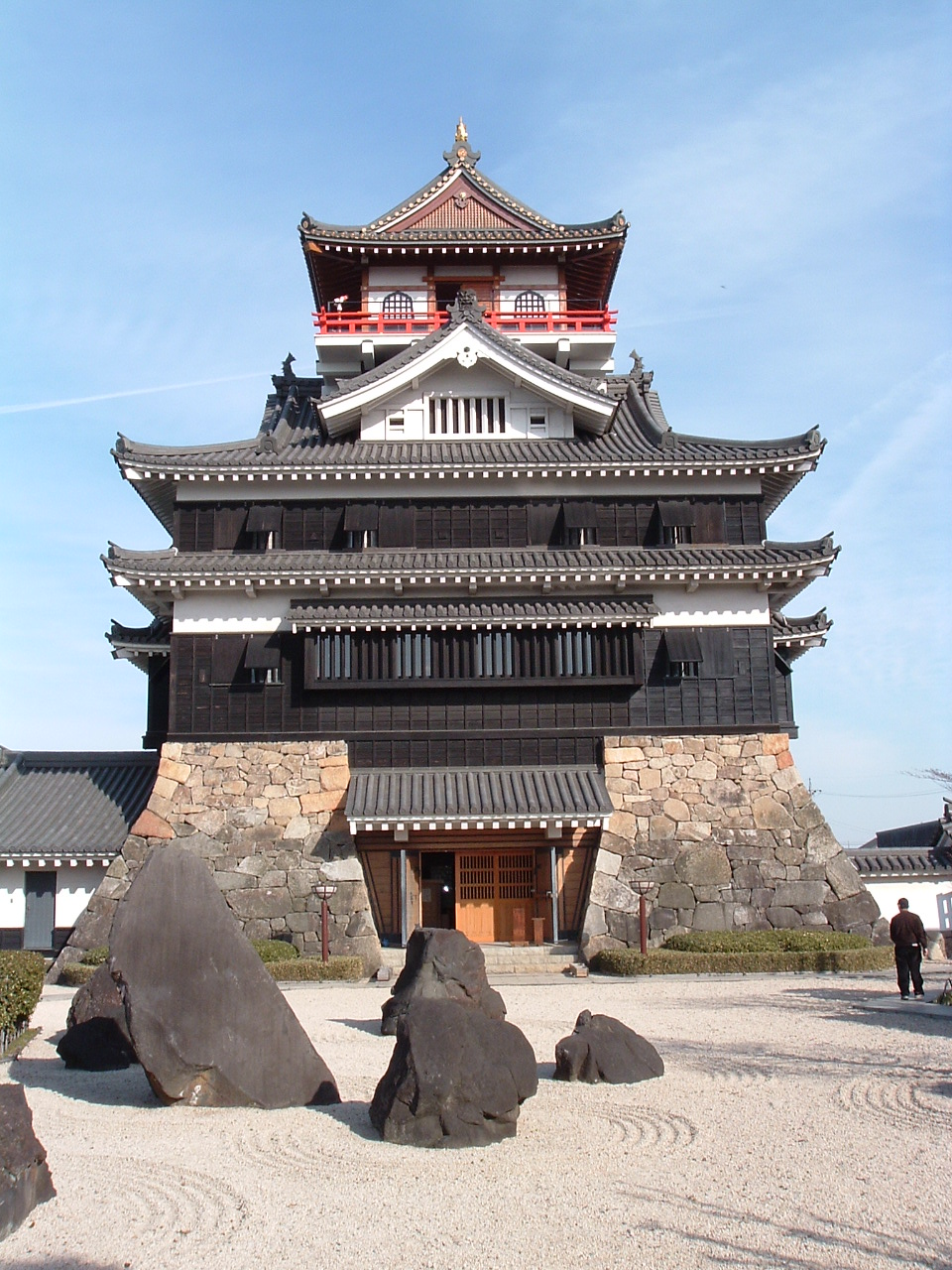
Photo: Collin Grady · CC BY-SA 2.0 · Wikimedia Commons
Meiji-mura is an open-air museum in Japan. Meiji era ran from 1868 to 1912. The free Lokali audio guide runs 6 minutes.
✓ Published October 2026 · how we write these guides
Visitor facts
| Lokali audio guide | 6 min · free |
|---|---|
| Type | Museum |
| Location | Komaki, Japan |
| Coordinates | 35.3419, 136.9893 |
| Official website | meijimura.com |
| Languages | 50+, in the Lokali app |
The story
Listen for a moment. Somewhere behind the trees, a bell clangs. It is the warning bell of an old streetcar, its wooden body rocking on narrow rails. Under your feet, gravel crunches. Ahead, a red-brick facade rises from a wooded hillside. It looks like a city street from more than a century ago, set down in a Japanese forest. Welcome to Meiji-mura, a village of old buildings north of Nagoya.
The name gives the idea away. Meiji is the era from 1868 to 1912, when Japan opened to the world after centuries of near isolation. Mura simply means village. In those few decades, Japan built railways, telegraph lines, schools, banks, and factories. Architects mixed Western brick and stone with Japanese timber and craft. Meiji-mura exists to save the buildings from that time. Most of them would otherwise have been demolished long ago.
The story of the museum starts with loss. After the Second World War, Japanese cities rebuilt at great speed. Many Meiji buildings had survived earthquakes and air raids, and then they fell to the wrecking crews. The architect Taniguchi Yoshirō watched this happen and felt it keenly. He found a partner in Tsuchikawa Motoo, a senior figure at the Nagoya Railroad company. Together they planned an open-air museum. It opened in 1965.
Here is the first surprise. Almost nothing here was built on this hillside. Each structure was taken apart at its original site, often piece by piece. The parts were numbered, carried here, and assembled again. Today more than sixty buildings stand across the grounds. They came from Tokyo, Kyoto, Kanazawa, Sapporo, and many other places. A few came from much further away, as you will hear in a moment.
As you walk, you will notice how the layout works. The village climbs gently uphill from the lake, in a rough sequence of districts. There are city streets with shops and offices. There are residences with quiet gardens. There are industrial sheds with heavy machinery. Paths wind between them under pine and maple. The lake below is Iruka Pond, an old irrigation reservoir. Its still water shows in glimpses between the buildings.
One building draws many visitors here. Look for a low, horizontal facade of golden-brown brick and pale carved stone. This is the main entrance and lobby of the Imperial Hotel, from Tokyo. The American architect Frank Lloyd Wright designed it in the early twentieth century. The hotel survived the Great Kanto Earthquake of 1923, which destroyed much of Tokyo. In the late 1960s, the hotel was demolished. The lobby section was saved and rebuilt here.
Come close to the walls of the Wright building. The bricks are not smooth. They carry fine vertical grooves, a texture often called scratch tile. Now look at the soft, porous carved stone around it. This is Ōya stone, a volcanic tuff from Tochigi, north of Tokyo. Ōya stone is easy to carve, so Wright covered it with geometric patterns. Step inside, and the ceiling drops low before the space opens upward. Wright used this kind of compression and release in many of his buildings.
Now, a second surprise. Some buildings here were never in Japan at all. In the late nineteenth century, many Japanese emigrated to Hawaii, to the west coast of the United States, and later to Brazil. Meiji-mura holds structures connected with those communities. Among them are a meeting hall from Hawaii and a church used by Japanese settlers in Seattle. They are a reminder that the Meiji story also travelled across the Pacific.
Not every treasure here is grand. Look for a modest wooden house from Tokyo with a quiet garden. Two of Japan's best-known writers lived in it, at different times. Mori Ōgai lived here first. Years later, Natsume Sōseki moved in, and he wrote his novel I Am a Cat while living in the house. For many Japanese readers, standing on these tatami mats feels personal. The rooms are simple. A small study looks out onto the garden.
Then there are the working pieces. Old streetcars from Kyoto run along a short line through the village. Steam locomotives from the Meiji years have also carried passengers here at various times. Inside the factory buildings, you can see machines from Japan's early textile industry. Japan built much of its modern economy on silk and cotton thread. These clattering machines were a large part of that change. When a machine runs, the floor hums under your feet.
As you move around, notice the small things in the streets. There are post boxes, gas lamps, and wooden signboards. There is a tiny police box from Kyoto, barely big enough for one officer. There is a lighthouse that once guided ships near Tokyo, and a church with a red-brick nave from Kyoto. Some buildings hold shops or cafes. Staff sometimes wear period clothing. Visitors can rent Meiji-style dress and walk the streets in it.
It is worth thinking about what this place really is. These buildings were created to look modern, even foreign, in their own day. Brick, glass windows, and iron columns were new and exciting in Meiji Japan. Today the same features look old and gentle. Meiji-mura captures that shift in a single walk. You can see the moment when Japan decided what a modern country should look like... and the craftsmen who made it real with their hands.
Before you leave, stop at any bench and look around. Notice the mix of wood and brick, of tiled roofs and tall Western windows. Listen for the streetcar bell again, and the wind moving through the pines. Each of these buildings once stood on a busy street, surrounded by people who never imagined it would travel. Now they stand together on this quiet hill. As you walk on, take a last look at the lake below, catching the light between the trees.
Key facts
What to look for
Practical tips
Common questions
Is there a free audio guide to Meiji-mura?
Yes — the Lokali app narrates Meiji-mura free of charge in 50+ languages. The guide runs about 6 minutes, covers the history, what to look for on site and practical tips, and works offline once downloaded.
Where is Meiji-mura?
Meiji-mura is near Komaki, Japan, at 35.3419, 136.9893. Tap the map link on this page for directions from where you are.
What is Meiji-mura known for?
Meiji era ran from 1868 to 1912. The open-air museum opened to visitors in 1965.
What should you look for at Meiji-mura?
Grooved scratch-tile bricks on the Imperial Hotel walls. Geometric carvings in soft, porous Ōya stone. The tiny wooden police box from Kyoto.
What should you know before visiting Meiji-mura?
Wear comfortable shoes for steep hillside paths. Ride the Kyoto streetcar to save walking uphill.
When is the best time to visit Meiji-mura?
Visit the Wright lobby early before crowds arrive.
On the map
Opens directions to Meiji-mura from your location.
More to see near Meiji-mura



Hear Meiji-mura in your language
The full story, narrated, in 50+ languages. Download it before you go and it plays offline, at your own pace, with no ticket and no tour group.