
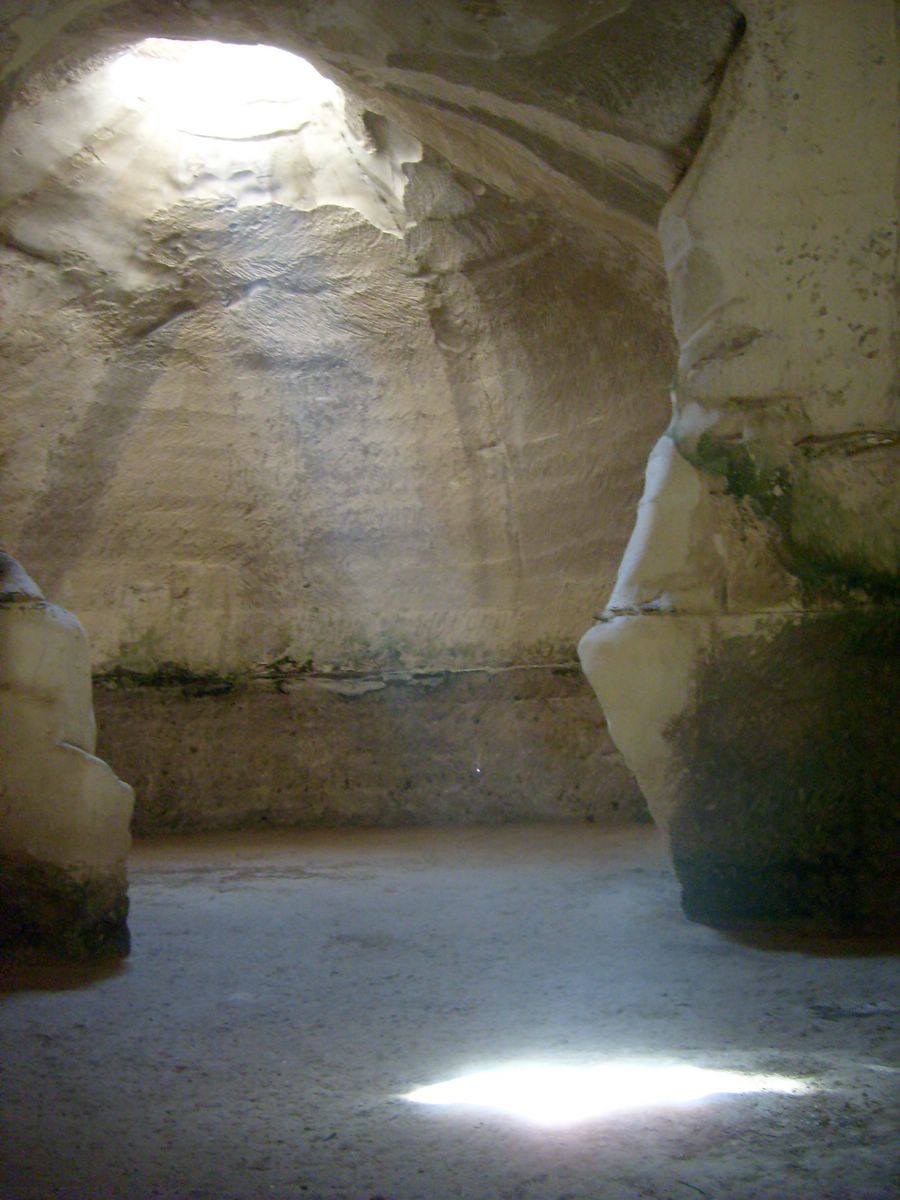
Photo: Bukvoed · CC BY 3.0 · Wikimedia Commons
Gath is an ancient city and archaeological site mentioned in the Bible and in Akkadian sources. Gath was one of five Philistine league cities. The free Lokali audio guide runs 7 minutes.
✓ Published October 2026 · how we write these guides
Visitor facts
| Lokali audio guide | 7 min · free |
|---|---|
| Type | Archaeological Site |
| Location | Kiryat Gat, Israel |
| Coordinates | 31.6997, 34.8469 |
| Languages | 50+, in the Lokali app |
The story
Listen for a moment. Out here, wind moves over open fields and pale, dusty soil. A tractor hums somewhere in the distance. Larks call over the wheat. This is the Shephelah, the low rolling hill country between the mountains of Judea and the coastal plain of the Mediterranean. It looks quiet. For thousands of years, it was anything but quiet.
The name you came for is Gath. It is one of the oldest names in this land. In the Hebrew Bible, Gath was one of five great cities of the Philistines, a seafaring people who settled this coast more than three thousand years ago. The other four were Gaza, Ashkelon, Ashdod and Ekron. Together they formed a league of rival cities. Gath was the inland city, the one that faced the hills, and the kingdoms rising beyond them.
And Gath is remembered above all for one man. According to the biblical story, the giant Goliath came from Gath. He walked out to fight a young shepherd named David in the Valley of Elah, not far to the northeast of here. The sling, the stone, the fall of the champion — it is one of the most retold stories in the world. Painters, poets and sports writers still use it today, whenever the small one defeats the strong one.
Now here is the first surprise. The modern city around you, Kiryat Gat, carries the ancient name. The name simply means "Town of Gath." The city was founded in the 1950s, in the early years of the State of Israel. Its planners named it for the Philistine city, because at that time many scholars believed that biblical Gath lay right here. They pointed to a nearby mound called Tel Erani, at the edge of the modern town.
A tel, by the way, is an artificial hill. It is built up slowly from layer after layer of human settlement. People built a town, it burned or collapsed, and new people built on top of the ruins. Over many centuries the ground rose higher and higher. When you see a flat-topped hill that looks a little too neat in this landscape, you are often looking at a city buried inside itself.
Tel Erani did turn out to be an important place. Archaeologists found remains there from the Early Bronze Age, more than a thousand years before the Philistines arrived. Among the finds were signs of contact with early Egypt, from the age when the first pharaohs were uniting the Nile valley. So the hill beside Kiryat Gat is old and significant. But over the decades, the evidence for Philistine Gath pointed elsewhere.
Most archaeologists today place biblical Gath at a larger mound called Tell es-Safi, known in Hebrew as Tel Tzafit. It stands some distance to the north of the modern city, on a high white ridge above the Elah Valley. It is now protected as a national park. So the city that carries the name, and the ruins that most likely carry the story, are close neighbours but not the same place. Many visitors never learn this.
At Tell es-Safi, a long-running excavation from Bar-Ilan University has worked for many seasons. The team has uncovered houses, temples, pottery and the daily traces of Philistine life. Philistine pottery is easy to love. It often carries painted birds, spirals and bands in red and black, with styles that link it to the Aegean world. These people kept memories of a homeland across the sea, even as they mixed with their Canaanite neighbours.
Here is the second surprise. Among the finds at Tell es-Safi was a small inscribed piece of pottery. It carries two names written in an early alphabet. Some scholars note that these names sound a little like the name Goliath. This does not prove that Goliath was a real person. But it shows that names of this kind were used at Gath in roughly the right period. The story and the soil come a little closer together.
The Bible tells other stories about Gath too. When David fled from King Saul, he took shelter with Achish, the king of Gath. Fearing the king's servants, David pretended to be mad, scratching at the gates and letting spit run into his beard. Later, David's own guard included fighters from Gath. In these old texts, the border between enemy and ally moves back and forth, just like the border across these hills.
Gath's power did not last. The Bible says that Hazael, a king of Aram from Damascus, captured the city. At Tell es-Safi, archaeologists found a long siege trench around the city, and a thick layer of destruction. Many researchers link this to Hazael's attack in the late ninth century before the common era. After that, Gath fades from the record. Later prophets mention it almost as a warning — a great city that fell.
So what does all of this mean for you, standing in Kiryat Gat today? It means the place name itself is a kind of monument. Every road sign, every bus stop, every school with the word Gat carries a three-thousand-year-old name into ordinary life. The town is modern, practical and full of daily work. Its people live among fields, factories and apartment blocks. The ancient name sits lightly on top, like the newest layer on a tel.
If you have time, the landscape tells the rest. Drive or look north toward the white ridge of Tell es-Safi. Look northeast toward the Elah Valley, where the Goliath story is set. To the south lies Lachish, another great ancient city of this region. Between them, the same low hills and the same pale earth that farmers and armies crossed for millennia.
Before you move on, take one more look around. Notice the colour of the soil, the line of the hills, the wide sky above the fields. The Philistines saw these same shapes. So did the kings who fought over them. As you walk away, listen again to the wind over the wheat. It is the oldest sound here, older than the name Gath itself.
Key facts
What to look for
Practical tips
Common questions
Is there a free audio guide to Gath?
Yes — the Lokali app narrates Gath free of charge in 50+ languages. The guide runs about 7 minutes, covers the history, what to look for on site and practical tips, and works offline once downloaded.
Where is Gath?
Gath is near Kiryat Gat, Israel, at 31.6997, 34.8469. Tap the map link on this page for directions from where you are.
What is Gath known for?
Gath was one of five Philistine league cities. The Bible names Goliath as a warrior from Gath.
What should you look for at Gath?
Flat-topped mounds that mark buried ancient settlements. The white chalk ridge of Tell es-Safi to the north. Pale, dusty soil typical of the Shephelah fields.
What should you know before visiting Gath?
Pair Kiryat Gat with a visit to Tel Tzafit National Park. Bring water and a hat for exposed hilltop sites.
When is the best time to visit Gath?
Come in spring when the surrounding fields turn green.
On the map
Opens directions to Gath from your location.
More to see in Kiryat Gat



Hear Gath in your language
The full story, narrated, in 50+ languages. Download it before you go and it plays offline, at your own pace, with no ticket and no tour group.