
Tel Lachish
31.5653° N · 34.8492° E · Archaeological Site
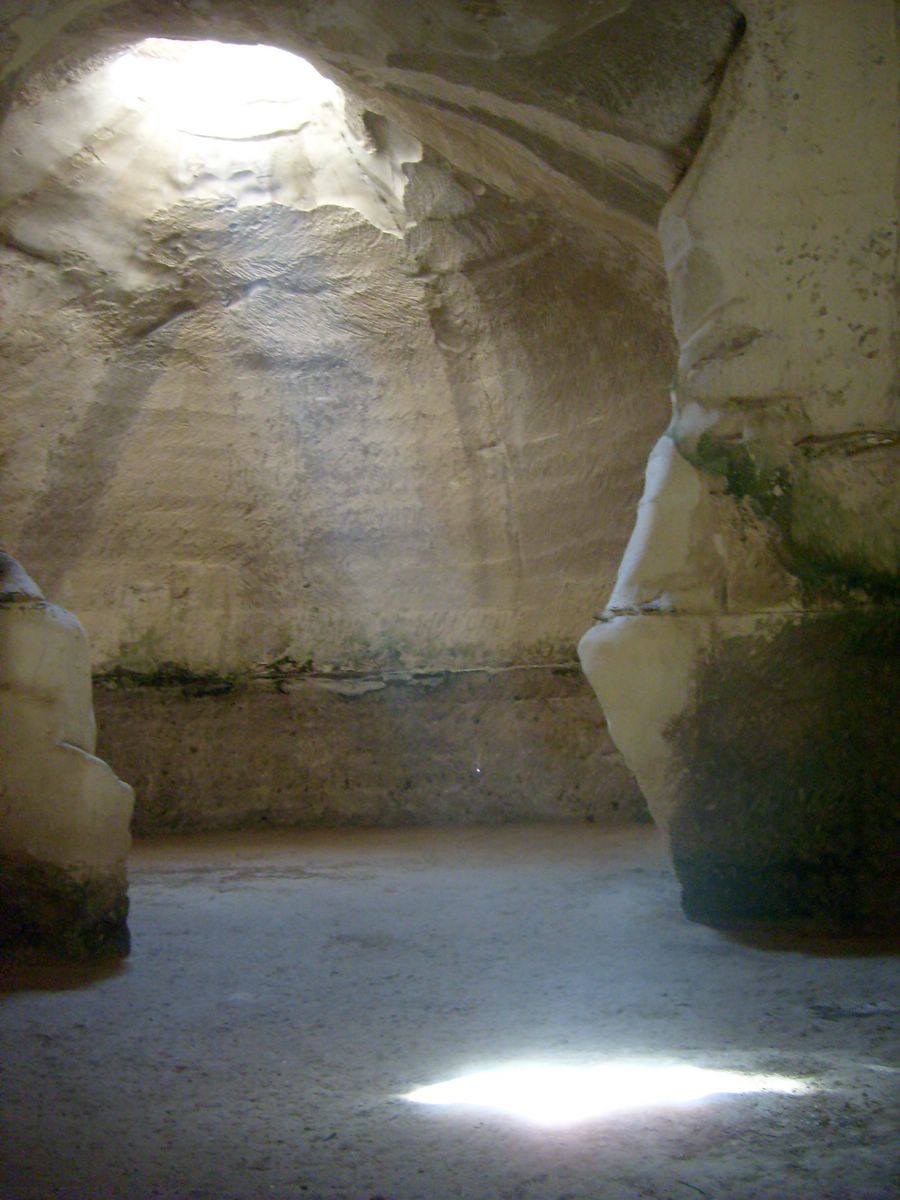
Photo: Wilson44691 · CC BY-SA 3.0 · Wikimedia Commons
Tel Lachish is an archaeological site in Israel. Lachish was Judah's second city after Jerusalem. The free Lokali audio guide runs 6 minutes.
✓ Published October 2026 · how we write these guides
Visitor facts
| Lokali audio guide | 6 min · free |
|---|---|
| Type | Archaeological Site |
| Location | Kiryat Gat, Israel |
| Coordinates | 31.5653, 34.8492 |
| Languages | 50+, in the Lokali app |
The story
Feel the ground under your boots. It is pale and chalky, and it crunches a little with every step. Around you, the low hills of the Judean foothills roll away in soft folds of olive, wheat and dry grass. The wind comes up the slope with almost nothing to stop it. And under your feet, layer upon layer, lie the remains of a city that once ranked among the most important in the ancient land of Judah.
This is Tel Lachish. A tel is an artificial hill, built up over thousands of years as people built new towns on the ruins of the old ones. Each layer holds a different chapter of life. Here, those chapters run from the Canaanite cities of the Bronze Age to the kingdom of Judah in the Iron Age, and later still. You are standing on a stack of cities, not on a natural hill.
Look at the shape of the mound. The sides are steep and the top is broad and flat. That shape was no accident. Lachish sat on routes between the coastal plain and the hill country, and whoever held this place could watch the valleys around it. In the Bronze Age it was already a substantial Canaanite city. Its rulers even appear in the Amarna letters — diplomatic tablets sent to the pharaohs of Egypt in the fourteenth century before Christ.
By the time of the kingdom of Judah, Lachish was the kingdom's second city, after Jerusalem. It was a fortress city with massive walls and a great gate. Archaeologists have uncovered the remains of a large raised platform near the centre of the mound. It probably supported a palace or a governor's residence. From here, officials of the king ran the region and guarded the southwestern approaches to the kingdom.
Now comes the story that made this hill famous far beyond Israel. In 701 BCE, the Assyrian king Sennacherib marched against Judah. Assyria was the superpower of its day, centred in what is now northern Iraq. King Hezekiah of Judah had rebelled. Sennacherib's army moved through the countryside, and Lachish stood in its path. What happened next is recorded in three very different sources — the Bible, Assyrian royal records, and the ground itself.
Here is the first surprise. Walk to the southwestern corner of the mound and look at the slope. That broad incline of stone and earth is an Assyrian siege ramp. Soldiers piled up tons of boulders against the city wall so they could push battering rams up to the defences. It is the oldest siege ramp ever found, and the only Assyrian one known to survive. You are looking at the actual engineering of an ancient war.
The defenders did not simply wait. Inside the walls, excavators found a counter-ramp — a mound of earth and debris that the people of Lachish built to raise their own defences against the attack. They also found hundreds of arrowheads, sling stones, and pieces of armour scattered near the wall. It was a desperate race, ramp against ramp. In the end, the Assyrians broke through, and the city fell.
The second surprise is not here at all. It is in London. Sennacherib was so proud of this victory that he had it carved in stone on the walls of his palace at Nineveh. The panels show the siege ramp, the battering rams, archers, and captives leaving the city with their belongings. Those carvings, known as the Lachish reliefs, are now displayed in the British Museum. Few visitors who see them realise this quiet hill is the real place they show.
Lachish was rebuilt, but its story did not end well. In the early sixth century before Christ, the Babylonians under Nebuchadnezzar invaded Judah. During excavations in the 1930s, a British team led by James Leslie Starkey found a group of letters written in ink on pieces of broken pottery. They are known as the Lachish Letters. They were written by soldiers and officers in the final, tense days before the Babylonian conquest.
One of these letters carries a line that still gives readers a chill. An officer writes that he and his men are watching for the fire signals of Lachish, because they can no longer see the signals of Azekah, a nearby fortress. Many scholars read this as a sign that Azekah had already fallen. Standing here, you can imagine the night sky over these hills, and men searching it for a light that would not come.
More recent excavations have added new pieces to the puzzle. Near the great city gate, archaeologists found a small shrine. Its altars had their horns cut off, and a stone toilet had been placed inside the holy room. Many researchers think this was a deliberate act of desecration. It may connect to the religious reforms of King Hezekiah, who, according to the Bible, closed down shrines outside Jerusalem.
As you walk the paths, take note of the gate area and the remains of the walls. The stones are rough and pale, and you can still follow the line of the defences around the summit. The site is quiet, often almost empty. You may hear only birds, wind in the grass, and perhaps a tractor working the fields below. It is a very different sound from the noise of the armies that once stood here.
Before you leave, stand for a moment at the edge of the mound and look out over the valleys. Somewhere out there, an Assyrian camp once spread across the fields. Somewhere out there, a lookout once watched for fire on the hills. Now there are farms, roads, and the distant buildings of modern towns. As you walk back down, listen to the crunch of chalk underfoot... it is the same ground those soldiers knew.
Key facts
What to look for
Practical tips
Common questions
Is there a free audio guide to Tel Lachish?
Yes — the Lokali app narrates Tel Lachish free of charge in 50+ languages. The guide runs about 6 minutes, covers the history, what to look for on site and practical tips, and works offline once downloaded.
Where is Tel Lachish?
Tel Lachish is near Kiryat Gat, Israel, at 31.5653, 34.8492. Tap the map link on this page for directions from where you are.
What is Tel Lachish known for?
Lachish was Judah's second city after Jerusalem. Assyrian king Sennacherib besieged Lachish in 701 BCE.
What should you look for at Tel Lachish?
The broad stone incline of the Assyrian siege ramp. Remains of the massive Iron Age city gate. The raised platform of the palace or governor's residence.
What should you know before visiting Tel Lachish?
Visit early morning before the midday heat builds. Bring plenty of water and a sun hat.
When is the best time to visit Tel Lachish?
Visit early morning before the midday heat builds.
On the map
Opens directions to Tel Lachish from your location.
More to see in Kiryat Gat



Hear Tel Lachish in your language
The full story, narrated, in 50+ languages. Download it before you go and it plays offline, at your own pace, with no ticket and no tour group.