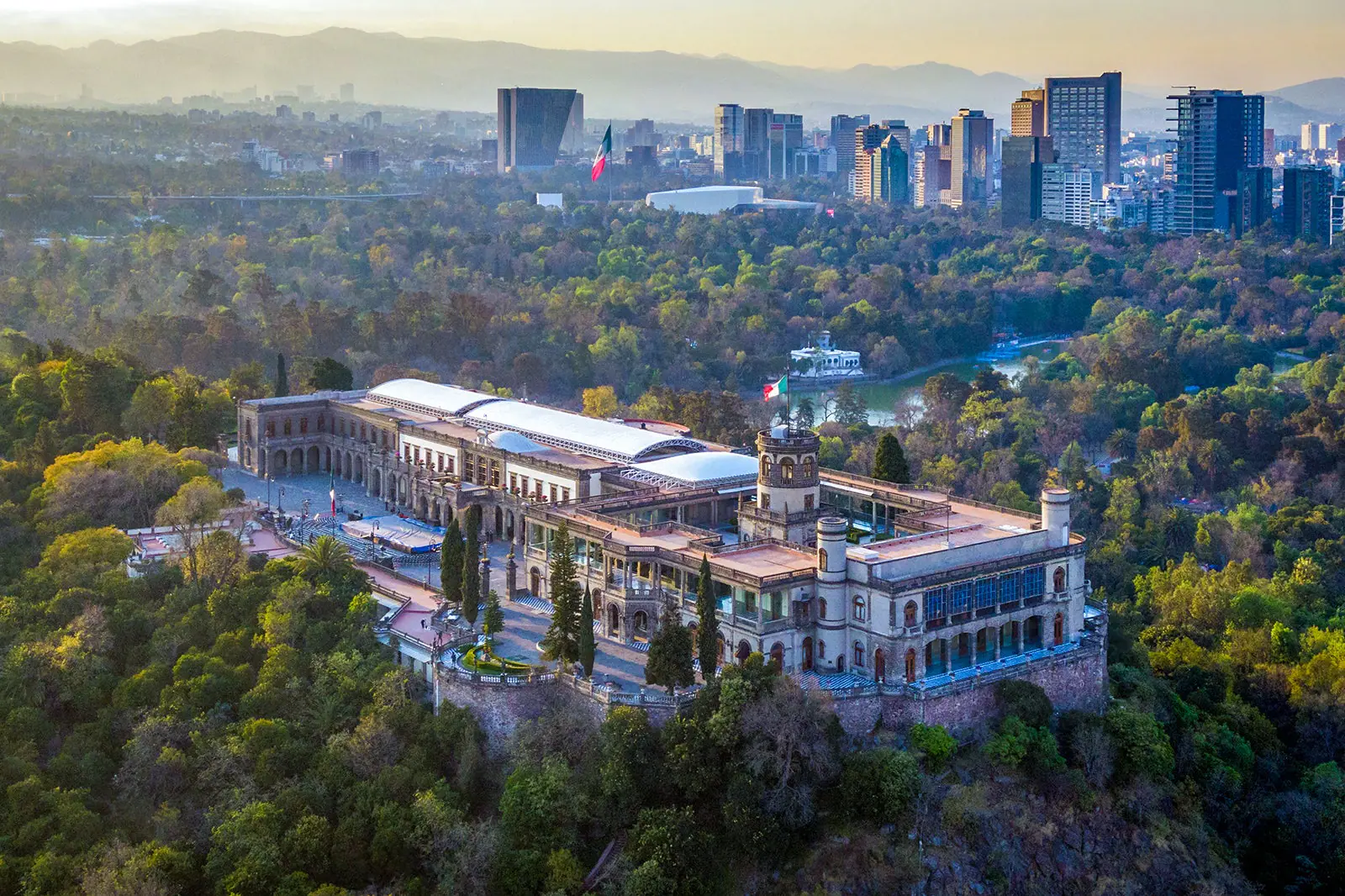
Chapultepec Castle is a castle in Mexico City, Mexico. Only royal castle in the Americas. Built 1785 by Spanish viceroy Bernardo de Gálvez. Most visitors spend 2-3 hours here. The free Lokali audio guide runs 6 minutes.
✓ Verified October 2026 · how we write these guides
Visitor facts
| Time needed | 2-3 hours |
|---|---|
| Lokali audio guide | 6 min · free |
| Type | Castle |
| Best for | History |
| Location | Mexico City, Mexico |
| Coordinates | 19.4204, -99.1819 |
| Languages | 45, in the Lokali app |
The story
Stand at the base of the hill and look up. The castle rises from a crown of ancient cypress trees, its pale stone catching the high-altitude light in a way that shifts throughout the day. The air here is cooler than the streets below, scented with pine resin and the faint mineral smell of volcanic rock. This is the only royal castle in the Americas — a fortress turned palace turned museum, perched two thousand metres above sea level on a site humans have considered sacred for over three thousand years.
The Aztecs called this place Chapultepec, grasshopper hill, and built their own structures here in the fourteenth century. When the Spanish arrived, they recognized the strategic value immediately — a natural fortress with views across the entire valley. The current castle dates from 1785, commissioned by the Spanish viceroy Bernardo de Gálvez as a summer retreat. He never finished it. The crown deemed the project too expensive and too grand for a colonial administrator, and the half-built palace sat empty for decades, its stone walls weathering under the Mexican sky.
The building found its purpose in the nineteenth century. After independence, it served as a military academy — and in 1847, it became the site of one of Mexico's most painful memories. During the Mexican-American War, young cadets defended the castle against advancing U.S. forces. Six teenage boys, the Niños Héroes, died in the battle. Legend says one wrapped himself in the Mexican flag and leaped from the ramparts rather than surrender. Whether the leap happened or not, the story became a cornerstone of national identity. You will see their monument at the base of the hill, six marble columns rising like sentinels.
In 1864, the castle transformed again. Emperor Maximilian I and his wife Carlota moved in, remaking the fortress into a European-style palace. Maximilian planted gardens, installed the first elevator in Latin America, and commissioned murals that still line the walls. He designed a carriage road up the hill — the broad, tree-lined avenue you can still walk today. Carlota furnished the rooms with French porcelain and Belgian tapestries. They lived here for three years, hosting balls and diplomatic receptions, until Maximilian faced a firing squad in Querétaro and the dream of a Mexican empire collapsed.
After Maximilian, the castle became the official residence of Mexican presidents. Porfirio Díaz expanded it during his long dictatorship, adding the grand staircase and the mirrored ballrooms. Lázaro Cárdenas was the last president to live here, moving out in 1939 and converting the building into the National Museum of History. Walk through the state rooms today and you will see layers of Mexico's past stacked like geological strata — Aztec artifacts, colonial-era maps, imperial furniture, revolutionary manifestos.
The views from the terraces are what most visitors remember. On clear mornings, you can see the entire sprawl of Mexico City laid out below — the towers of Reforma, the green rectangle of the Zócalo, the distant volcanoes Popocatépetl and Iztaccíhuatl on the horizon. The castle sits at the western edge of Chapultepec Park, the largest urban park in the Western Hemisphere, a green lung that has anchored the city since Aztec times. Stand at the balustrade where Maximilian stood and you will understand why every ruler who came here wanted to stay.
Inside, the museum holds Diego Rivera murals that cover entire walls. One depicts the full sweep of Mexican history from pre-Columbian times to the mid-twentieth century, a visual essay on conquest, resistance, and reinvention. The painting technique is Rivera's signature — bold colours, flattened perspective, figures that feel both monumental and intimate. The rooms themselves are preserved as they were during the Porfiriato, with original furniture, Tiffany lamps, and stained glass windows that cast coloured light across parquet floors.
The castle's architecture is a hybrid, part fortress and part palace. The lower floors have thick defensive walls and narrow windows, relics of its military origins. The upper floors open into airy salons with high ceilings and French doors leading to balconies. The contrast is deliberate — Maximilian wanted a residence that felt European but acknowledged the building's martial past. Walk from the dark stone corridors into the sunlit music room and you will feel the shift, the way the building moves between power and elegance.
Climbing the hill takes about twenty minutes on foot, longer if you stop to rest under the ahuehuete trees that line the path. These are Montezuma cypresses, some over five hundred years old, their trunks thick as small houses. The Aztecs planted them, and they have outlasted empires. The path is steep in places, but the shade is generous and the views improve with every switchback. Alternatively, a small train runs from the park entrance to the castle gates, winding through the forest like a toy railway.
As you leave, pause at the top of the grand staircase and look back toward the entrance. The castle frames the city below, a stone threshold between the forested hill and the urban valley. The light here is particular — thin and bright, the kind of light that makes details sharp and distances feel compressed. This is what the Aztecs saw when they chose this hill, what the Spanish recognized, what Maximilian tried to claim. The castle is a monument to ambition and loss, to the way places outlast the people who build them. The grasshoppers still sing in the dry grass at the edges of the paths, the same sound that gave the hill its name a thousand years ago.
Key facts
What to look for
Practical tips
Common questions
How long do you need at Chapultepec Castle?
Plan 2-3 hours. That is the time most visitors spend at Chapultepec Castle. The free Lokali audio guide runs 6 minutes and is made to listen to while you walk.
Is there a free audio guide to Chapultepec Castle?
Yes — the Lokali app narrates Chapultepec Castle free of charge in 50+ languages. No ticket, tour group or subscription, and it works offline once downloaded.
Where is Chapultepec Castle?
Chapultepec Castle is in Mexico City, Mexico, at 19.4204, -99.1819. Tap the map link on this page for directions.
What should you know before visiting Chapultepec Castle?
Climb on foot for views, takes twenty minutes
What is Chapultepec Castle known for?
Only royal castle in the Americas
What is the best time to visit Chapultepec Castle?
Visit early morning for clearer air and light
On the map
Opens directions to Chapultepec Castle from your location.
More to see in Mexico City


Hear Chapultepec Castle in your language
The full story, narrated, in 50+ languages. Download it before you go and it plays offline, at your own pace, with no ticket and no tour group.