
Photo: Paolobon140 · CC BY-SA 4.0 · Wikimedia Commons
Museo Poldi Pezzoli is an art museum in Milan. Founder Gian Giacomo Poldi Pezzoli died in 1879. The free Lokali audio guide runs 7 minutes.
✓ Published October 2026 · how we write these guides
Visitor facts
| Lokali audio guide | 7 min · free |
|---|---|
| Type | Museum |
| Location | Milan, Italy |
| Coordinates | 45.4687, 9.1916 |
| Official website | museopoldipezzoli.it |
| Languages | 50+, in the Lokali app |
The story
Push open the heavy door on Via Manzoni and the traffic noise drops away almost at once. The air inside is cooler and quieter. Your footsteps soften on stone and then on wood. This does not feel like a museum entrance. It feels like the hallway of a private house, because that is exactly what it was. Welcome to the Museo Poldi Pezzoli, one of the most personal art collections in Milan.
The man behind it was Gian Giacomo Poldi Pezzoli, a nineteenth-century Milanese aristocrat. He inherited a large fortune and a strong eye for beautiful things. His mother came from the Trivulzio family, one of the oldest noble houses in the city. So he grew up surrounded by art, books and fine objects. As an adult, he turned that background into a lifelong project — collecting, and then arranging, his own home as a work of art.
Here is the first thing many visitors miss. Gian Giacomo did not only collect paintings. He collected armour, clocks, carpets, glass, porcelain, lace and jewellery. Then he hired designers to decorate each room in a different historical style, so the objects would sit in a matching setting. Some rooms were themed on earlier centuries of European taste. Walking through the house was meant to feel like walking through a series of small, curated worlds.
He was also politically active. In the middle of the nineteenth century, Italy was fighting to become one unified country, and Milan was under Austrian rule. Gian Giacomo supported the Italian cause, and for a time he left the city. When he returned, he poured his energy into the house and the collection. He died in 1879, still fairly young. In his will, he left the house and its contents so that the public could enjoy them. The museum opened in 1881.
That makes this one of the earliest house museums of its kind in Europe. Collectors in other countries later built similar homes for their treasures. But here the idea was clear from the start — a private home, kept intact, open to strangers. As you move from room to room, notice the scale. The ceilings are high but the spaces are intimate. You stand close to the art, often closer than in a large state gallery.
The house you see today, however, is not completely the one Gian Giacomo knew. In 1943, during the Second World War, Allied bombing hit central Milan hard, and this building was badly damaged. Many of the decorated interiors were lost. Fortunately, the collection itself had been moved to safety before the raids. After the war, the house was rebuilt and the museum reopened in the early 1950s. So what you walk through is partly restoration, partly reconstruction — and the survival of the objects is a quiet wartime story.
Now to the painting that has become the face of the museum. Look for a small panel showing a young woman in profile, against a deep blue sky. It is usually credited to Piero del Pollaiolo, a Florentine artist of the fifteenth century. Her pale skin, the pearls in her hair, the fine line of her nose and chin — everything is drawn with almost jeweller-like precision. Profile portraits like this were a fashion of the early Renaissance, the period when Italian artists revived the ideals of ancient Rome and Greece.
Nobody can say for certain who the young woman was. Scholars have suggested names, but the question remains open. That uncertainty is part of her pull. She looks calm and distant, as if she is not aware of us at all. Spend a moment with her. Notice how the clouds behind her are painted lighter near her face, so her profile stands out cleanly. It is a small trick, and it works beautifully even five centuries later.
The collection holds several other Renaissance treasures. There is a gentle Madonna and Child by Sandro Botticelli, the Florentine painter famous for The Birth of Venus. In it, Mary holds an open book, and the child looks up at her. There are works connected to Andrea Mantegna and Giovanni Bellini, two masters of northern Italy. And there is a panel by Piero della Francesca, an artist admired for his clear geometry and calm, solid figures. Seeing these names in a private home, rather than a vast gallery, is the second surprise of this place.
Then the mood changes. The armoury rooms hold helmets, swords and suits of armour — the collection that first started Gian Giacomo's passion as a young man. Around 2000, the Italian sculptor Arnaldo Pomodoro redesigned this space. He is known for bronze sculptures that look like polished spheres split open to show complex machinery inside. Here, his setting gives the old metal a dark, dramatic stage. The contrast between old steel and modern design is striking, and it shows the museum is still evolving.
Keep an eye out for the smaller collections too, because they are where the house feels most alive. There are clocks and sundials, some of them mechanical marvels from centuries ago. There are Persian carpets with dense patterns of animals and plants. There is delicate Venetian glass and fine porcelain. These objects remind you that a wealthy nineteenth-century home was full of craft, not just paintings. Each case is like an open drawer in a cabinet of curiosities.
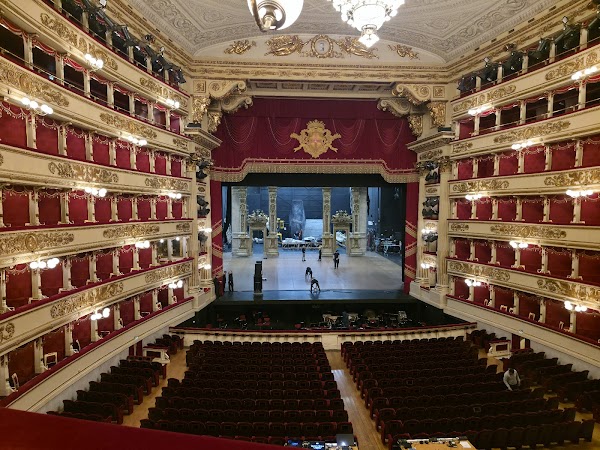
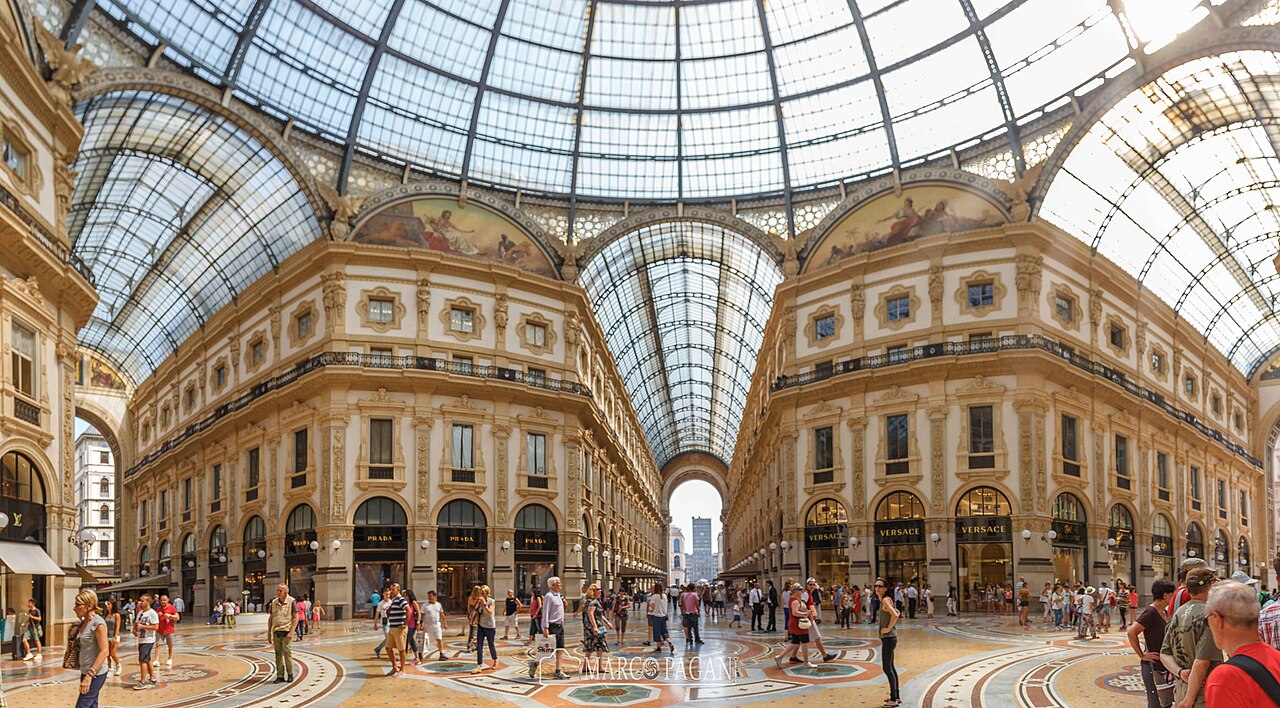
The house also connects to a wider network. Milan has several historic house museums, each built around a family and its taste. Together they form a small circuit across the city, and many visitors combine two or three of them. The Poldi Pezzoli sits in a very central spot. La Scala, the famous opera house, is only a short walk away. The elegant shopping streets of the fashion district begin just around the corner, so the quiet of these rooms feels even more precious.
Before you leave, pause on the staircase or by a window. Listen to how still the house is compared with the street outside. Think of the man who planned all this — choosing a carpet, a frame, a corner for a single portrait. Then step back out onto Via Manzoni. Look at the facades around you and the doorways you pass. Behind some of them, other private worlds are still waiting. This house is simply one that a collector chose to open.
Key facts
What to look for
Practical tips
Common questions
Is there a free audio guide to Museo Poldi Pezzoli?
Yes — the Lokali app narrates Museo Poldi Pezzoli free of charge in 50+ languages. The guide runs about 7 minutes, covers the history, what to look for on site and practical tips, and works offline once downloaded.
Where is Museo Poldi Pezzoli?
Museo Poldi Pezzoli is in Milan, Italy, at 45.4687, 9.1916. Tap the map link on this page for directions from where you are.
What is Museo Poldi Pezzoli known for?
Founder Gian Giacomo Poldi Pezzoli died in 1879. The museum first opened to the public in 1881.
What should you look for at Museo Poldi Pezzoli?
Young woman in profile against a deep blue sky. Pearls woven into the hair of the profile portrait. Botticelli's Madonna holding an open book.
What should you know before visiting Museo Poldi Pezzoli?
Combine your visit with other Milan house museums. Start upstairs to see the Renaissance paintings fresh.
When is the best time to visit Museo Poldi Pezzoli?
Visit on a weekday morning for quieter rooms.
On the map
Opens directions to Museo Poldi Pezzoli from your location.
More to see in Milan

Hear Museo Poldi Pezzoli in your language
The full story, narrated, in 50+ languages. Download it before you go and it plays offline, at your own pace, with no ticket and no tour group.