
Kiyevsky Railway Station
55.7432° N · 37.5674° E · Historic Site
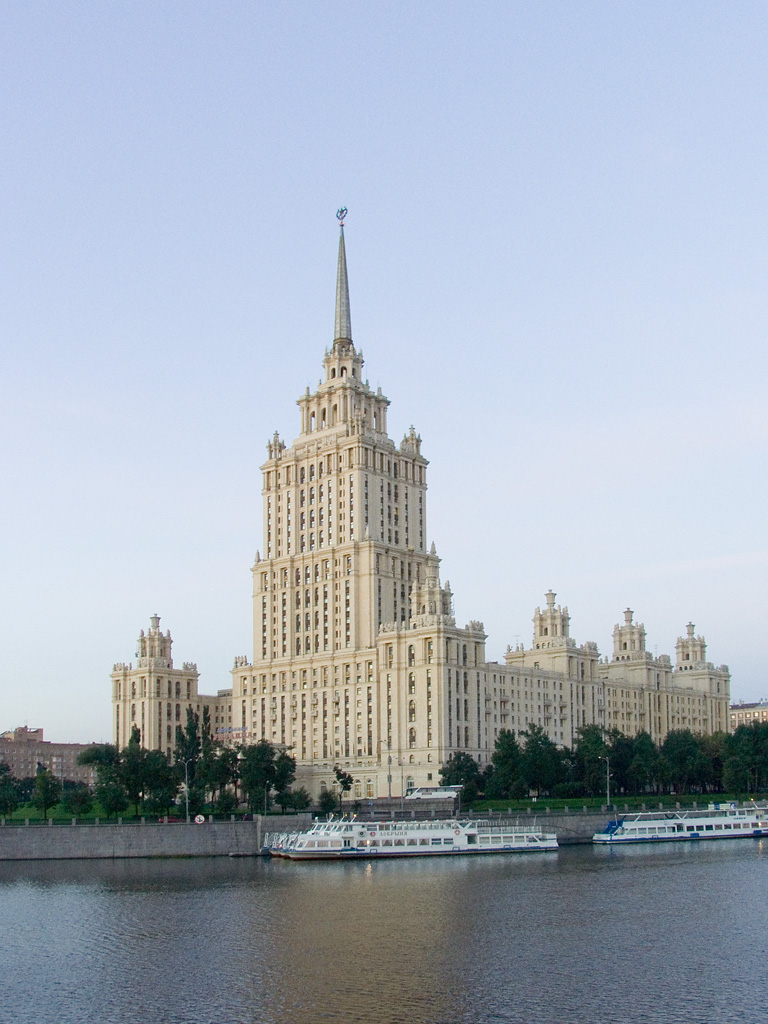
Photo: Sachkv · CC BY-SA 4.0 · Wikimedia Commons
Kiyevsky Railway Station is a railway station. It is in Moscow, Russia. Construction began in 1914, during the First World War. The free Lokali audio guide runs 6 minutes.
✓ Published October 2026 · how we write these guides
Visitor facts
| Lokali audio guide | 6 min · free |
|---|---|
| Type | Historic Site |
| Location | Moscow, Russia |
| Coordinates | 55.7432, 37.5674 |
| Official website | kievsky.dzvr.ru |
| Languages | 50+, in the Lokali app |
The story
Stand on the square for a moment and listen. Wheeled suitcases rattle over the paving. A train announcement echoes from somewhere inside. Above it all, a tall clock tower rises over the rooftops, its face turned toward the city. This is Kiyevsky railway station, one of Moscow's great gateways. For more than a century, it has sent travellers south and west toward Kaluga, Bryansk and far beyond.
The building in front of you looks calm and confident, but it was born in difficult times. Construction began in 1914, just as the First World War broke out across Europe. Work continued through war, shortages and revolution. The station opened in 1918, in a country that had changed completely while its walls were going up. It is worth keeping that in mind as you look at the steady, orderly facade.
The architect was Ivan Rerberg, a leading Moscow designer of the early twentieth century. He worked in a neoclassical style, which means he borrowed the columns, symmetry and proportions of ancient Greek and Roman buildings. Look at the long, balanced front of the station. Notice how the wings stretch out evenly on either side. Nothing here feels rushed. The building was meant to look permanent, as if it had always stood on this bend of the Moskva River.
The clock tower is the detail most people remember. It rises from one corner of the facade rather than from the centre, which gives the whole building a slightly unexpected rhythm. For travellers arriving from the countryside, the tower worked as a landmark you could spot from far away. Even today, it helps people find their way across the busy square. Take a moment to look up at its upper stages and the clock faces near the top.
Here is the first surprise for many visitors. The station did not always carry the name Kiyevsky. When it opened, it was known as Bryansky station, named after the city of Bryansk on the line to the southwest. The name Kiyevsky, meaning Kiev station, came in 1934. So the building you see has carried two names in its working life, and older Muscovites sometimes still remember the story of the change.
Now walk toward the platforms, and look up. Above the tracks stretches an enormous glass and steel roof, a train shed more than two hundred metres long. This roof was engineered by Vladimir Shukhov, one of the most inventive engineers in Russian history. Shukhov is also known for a famous lattice radio tower elsewhere in Moscow. Here, he created a wide, light structure that spans many tracks without columns crowding the platforms below.
That is the second surprise. Many visitors admire the stone facade and never notice that the real engineering achievement is overhead. Stand under the roof and follow the curved steel arches with your eyes. Light falls through the glazing in long strips. On a grey Moscow day, it gives the platforms a soft, even glow. On a bright day, you can see shadows of the metal framework moving slowly across the trains as the sun shifts.
Inside the station halls, the mood changes again. The spaces are high and formal, with decorated ceilings and generous windows. Rerberg designed them to impress, but also to handle crowds. Watch how people move here. Some travellers hurry with tickets in hand. Others wait on benches with bags at their feet, families sharing snacks before a long journey. A railway station is always a small portrait of the city, and this one is no exception.
For most of its history, Kiyevsky was the starting point for long journeys to Ukraine and Moldova. Trains left here for Kyiv, Odesa and other cities to the southwest. In recent years, those international routes have stopped running. Today, the long-distance trains mostly travel within Russia. The station's name now points toward a destination its trains no longer reach, a quiet reminder of how history keeps changing what a place means.
The station also serves modern, everyday travel. Suburban trains carry commuters to towns outside Moscow. The Aeroexpress train runs from here to Vnukovo, one of the city's airports, so you may see travellers with airline luggage tags. Underground, the Kiyevskaya metro station connects three different lines. If you have time, step down into the metro. Its halls are decorated in the grand style that Moscow's underground is known for.
When you step back outside, look across to the open square beside the station. This is Europe Square, a modern public space with flags, fountains and a large metal sculpture at its centre. Next to it stands a big shopping centre, and the river is only a short walk away. The contrast is striking. On one side, an early twentieth century station. On the other, glass and steel from the twenty-first century.
A short walk brings you to the embankment of the Moskva River. From there, you can look back at the station and see the clock tower against the sky. This is one of the best places to understand the building as a whole. Bridges cross the water nearby, and boats sometimes pass slowly on the river in the warmer months. It is a calm spot to pause after the noise of the platforms.
Before you leave, stand still once more in front of the main entrance. Listen to the announcements, the rolling wheels and the voices in many accents. Look at the clock, still keeping time for people who are arriving and leaving. More than a century after it opened, this building is still doing exactly what it was made to do. As you walk away, glance back once at the tower, and watch it slowly disappear behind the rooftops.
Key facts
What to look for
Practical tips
Common questions
Is there a free audio guide to Kiyevsky Railway Station?
Yes — the Lokali app narrates Kiyevsky Railway Station free of charge in 50+ languages. The guide runs about 6 minutes, covers the history, what to look for on site and practical tips, and works offline once downloaded.
Where is Kiyevsky Railway Station?
Kiyevsky Railway Station is in Moscow, Russia, at 55.7432, 37.5674. Tap the map link on this page for directions from where you are.
What is Kiyevsky Railway Station known for?
Construction began in 1914, during the First World War. The station opened to travellers in 1918.
What should you look for at Kiyevsky Railway Station?
The tall clock tower set at one corner. Curved steel arches of Shukhov's glass train shed. Long strips of daylight falling across the platforms.
What should you know before visiting Kiyevsky Railway Station?
Walk onto the platforms to see the roof overhead. Visit the nearby river embankment for a full facade view.
On the map
Opens directions to Kiyevsky Railway Station from your location.
More to see in Moscow



Hear Kiyevsky Railway Station in your language
The full story, narrated, in 50+ languages. Download it before you go and it plays offline, at your own pace, with no ticket and no tour group.