
Heraion of Argos
37.6919° N · 22.7747° E · Archaeological Site
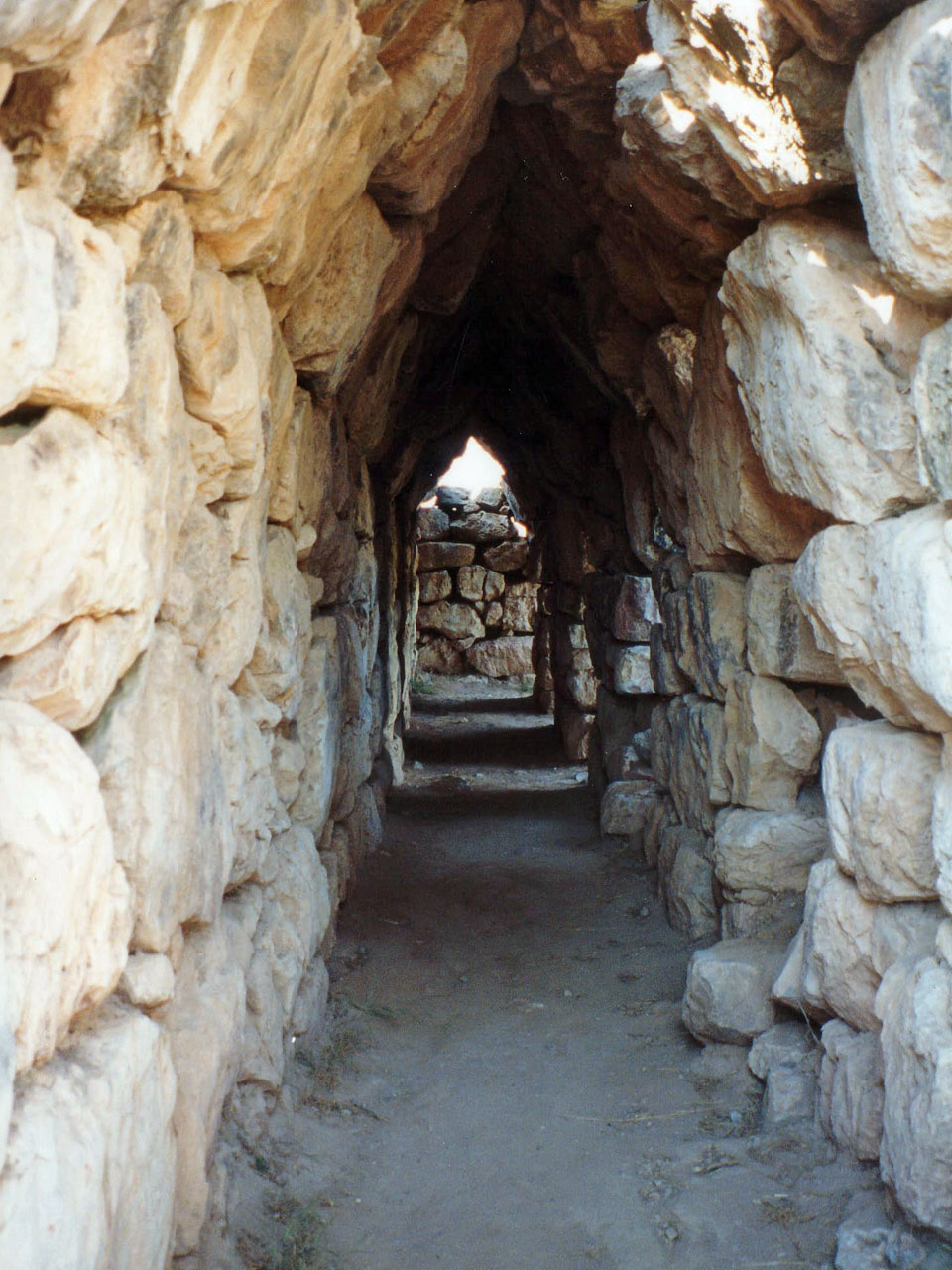
Photo: Sarah Murray · CC BY-SA 2.0 · Wikimedia Commons
Heraion of Argos is a major ancient sanctuary of Hera between Argos and Mycenae. Sanctuary of Hera, queen of the Greek gods. The free Lokali audio guide runs 7 minutes.
✓ Published October 2026 · how we write these guides
Visitor facts
| Lokali audio guide | 7 min · free |
|---|---|
| Type | Archaeological Site |
| Location | Nafplio, Greece |
| Coordinates | 37.6919, 22.7747 |
| Official website | odysseus.culture.gr |
| Languages | 50+, in the Lokali app |
The story
Listen first. On a warm day the only sounds here are cicadas in the olive trees, the wind moving across a dry hillside, and perhaps a goat bell somewhere below. Underfoot the ground is pale and stony. Grey limestone blocks lie in long lines across the slope, half-buried in wild thyme. In front of you the whole plain of Argos opens out, green and gold, running all the way to the sea. This quiet terrace was once one of the holiest places in the Greek world.
You are standing at the Heraion of Argos, the great sanctuary of the goddess Hera. In Greek myth, Hera was the queen of the gods, the wife of Zeus, and the protector of marriage and of women. Many cities honoured her. But the people of the Argolid, the region around Argos, believed that this plain was especially her own. In the oldest stories, Argos is Hera's favourite city. This hillside was where that belief took shape in stone.
Look at the way the site is built. It does not sit on a flat summit. Instead, it climbs the slope in a series of broad terraces, one above the other. The builders held these terraces in place with heavy retaining walls of large, roughly fitted stones. Some of those walls still stand along the edge of the hill. From below, in ancient times, the sanctuary would have looked like a giant staircase rising toward the temple at the top.
The location was not chosen by chance. The hill sits between the old power centres of this plain. Mycenae, the fortress of the legendary king Agamemnon, lies a short distance to the north. The city of Argos lies to the south and west. People were already living and burying their dead on these slopes in the Bronze Age, long before the classical temples rose. Archaeologists have found tombs from that early period on the hillsides nearby.
The first great temple here belonged to the Archaic period, roughly the seventh and sixth centuries before Christ. It stood on the upper terrace. Little of it survives today — mainly foundations and the outline of its platform. But it carries one of the most unusual stories in Greek history, and this story is not legend. It comes from the historian Thucydides, who wrote about the war between Athens and Sparta.
In 423 BCE, the old temple burned down. According to Thucydides, the priestess of Hera, a woman named Chrysis, had placed a lit lamp near some sacred garlands. Then she fell asleep. The garlands caught fire, and the flames spread through the building before anyone could stop them. Chrysis fled to a nearby town in fear. It is a strangely human moment — a tired woman, a small flame, and a sacred building lost overnight.
The people of Argos rebuilt. They raised a new temple on a lower terrace, closer to the plain. Its architect, according to the ancient writer Pausanias, was a man named Eupolemos of Argos. Inside, they placed a cult statue of Hera made by Polykleitos, one of the most admired sculptors of the classical age. Pausanias describes the statue as seated, made of gold and ivory, and very large. He also says Hera held a pomegranate in one hand.
That pomegranate is a small detail most visitors miss. Pausanias mentions it, but he refuses to explain its meaning. He says the story behind it is a sacred secret, too holy to write down. So even in ancient times, part of this place was hidden from visitors. Today, the statue is gone completely. What remains of the second temple is its foundation, which you can trace on the ground by following the line of cut blocks.
This sanctuary also appears in one of the best-loved tales of ancient Greece. The historian Herodotus tells of a priestess of Hera who needed to reach the festival here. The oxen for her cart did not arrive in time. So her two sons, Kleobis and Biton, put themselves in the harness and pulled the cart for many kilometres to the temple. The crowd praised them. Herodotus presents this as a story told to him, and that is how it should be heard.
In the tale, their mother prayed that Hera would give her sons the best thing a person could receive. That night, the young men lay down in the temple and never woke again. To the Greeks, a peaceful death at the height of honour was a gift. Two marble statues, often linked to the brothers, now stand in the museum at Delphi. So a piece of this hillside's story lives on in another sanctuary far to the north.
There is also a link to the town where you may be staying. Pausanias writes about a spring called Kanathos at Nauplia, the ancient name for Nafplio. The Argives said that Hera bathed there each year and became a young bride again. This is myth, and Pausanias reports it as a local belief. But it ties the goddess of this hill to the harbour town on the coast, which you can almost see from here on a clear day.
In modern times the site was excavated by American archaeologists, beginning in the late nineteenth century. They uncovered the terraces, the temple foundations, and the remains of long colonnaded halls called stoas, where visitors could shelter from sun and rain. They also found many small offerings. These were things ordinary people left for Hera, such as figurines, jewellery, and pottery. Most of these finds are now kept in museums, not here on the hill.
Because so little stands upright, this place asks for some imagination. Walk slowly along the terraces. Notice how each level gives a slightly different view of the plain. Picture processions climbing from below, with music, animals for sacrifice, and crowds in festival clothes. Unlike the busier sites nearby, you may have this hillside almost to yourself. That quiet is part of its value. It lets you hear the place as the ancient pilgrims might have.
Before you leave, stand at the edge of the upper terrace and look out once more. The olive groves, the hills of Argos, the faint line of the sea... these are the same shapes that Chrysis and Polykleitos and the brothers of the old story would have known. The temples are gone. The goddess is gone. But the view she was given is still here, and for a moment, it belongs to you.
Key facts
What to look for
Practical tips
Common questions
Is there a free audio guide to Heraion of Argos?
Yes — the Lokali app narrates Heraion of Argos free of charge in 50+ languages. The guide runs about 7 minutes, covers the history, what to look for on site and practical tips, and works offline once downloaded.
Where is Heraion of Argos?
Heraion of Argos is near Nafplio, Greece, at 37.6919, 22.7747. Tap the map link on this page for directions from where you are.
What is Heraion of Argos known for?
Sanctuary of Hera, queen of the Greek gods. The old temple burned in 423 BCE, says Thucydides.
What should you look for at Heraion of Argos?
Heavy retaining walls holding up the stepped terraces. Foundation blocks tracing the outline of the second temple. Views south across the plain toward the sea.
What should you know before visiting Heraion of Argos?
Wear sturdy shoes for the uneven, stony terraces. Bring water and a hat — shade is scarce here.
When is the best time to visit Heraion of Argos?
Visit early morning for softer light over the plain.
On the map
Opens directions to Heraion of Argos from your location.
More to see in Nafplio


Hear Heraion of Argos in your language
The full story, narrated, in 50+ languages. Download it before you go and it plays offline, at your own pace, with no ticket and no tour group.