
Germanisches Nationalmuseum
49.4483° N · 11.0756° E · Museum
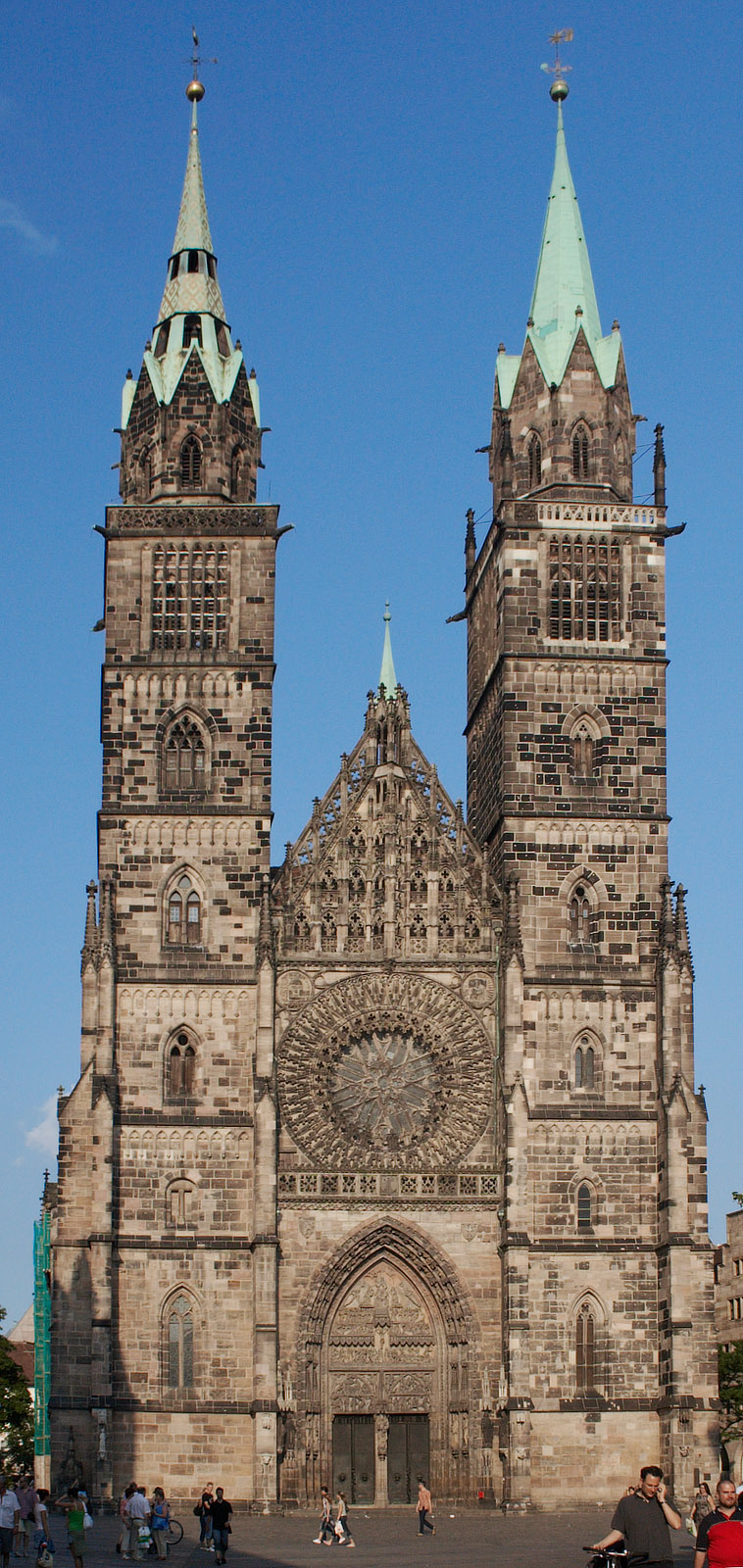
Photo: The original uploader was Keichwa at German Wikipedia. · CC BY-SA 3.0 · Wikimedia Commons
Germanisches Nationalmuseum is a museum about German National cultural history in Nuremberg, Germany. Founded in 1852 by Hans von und zu Aufseß. The free Lokali audio guide runs 6 minutes.
✓ Published October 2026 · how we write these guides
Visitor facts
| Lokali audio guide | 6 min · free |
|---|---|
| Type | Museum |
| Location | Nuremberg, Germany |
| Coordinates | 49.4483, 11.0756 |
| Official website | gnm.de |
| Languages | 50+, in the Lokali app |
The story
Listen for a moment. Out on the street, Nuremberg moves at its usual pace: bicycles, footsteps, a tram somewhere in the distance. Then you pass through the doors, and the sound changes. Stone floors take your steps and return them softly. The air feels cooler and older. You are standing at the edge of one of the largest collections of cultural history in the German-speaking world.
The museum was founded in 1852 by a Franconian nobleman, Hans von und zu Aufseß. He had a simple and ambitious idea. At that time, Germany was not one country. It was a patchwork of kingdoms, duchies and free cities. Aufseß wanted one place that would gather the art, crafts and everyday objects of all German-speaking lands, from the earliest times onward.
That idea matters. Many great national museums were built by kings to display royal treasure. This one began as a civic project, supported by donations and by people who believed in a shared culture before a shared state existed. Over the decades, the collection grew to more than a million objects. Only a part of them can be shown at any one time... and even that part takes days to see properly.
Now look at the buildings around you. The heart of the museum is a former Carthusian monastery from the late fourteenth century. The Carthusians were a strict, quiet order. Their monks lived mostly alone, each in a small cell with a tiny garden, and they met only for prayer. The museum moved into these walls in its early years, and the monastery cloisters still form part of your route today.
This is the first surprise most visitors miss. You are not only looking at a museum collection — you are walking through one of its largest exhibits. The Gothic church, the cloister walks, the vaulted passages: all of them belong to the monastery. When you see a medieval sculpture placed beneath a medieval vault, the pairing is not a design choice. It is history sitting where it has always sat.
The complex did not survive the twentieth century untouched. Nuremberg was heavily bombed during the Second World War, and the museum suffered serious damage. In the decades after the war, the architect Sep Ruf added clean, modern wings of glass and steel beside the old stone. Walk between the sections and you will feel the shift — from narrow Gothic windows to wide panes full of daylight.
One of the most important objects here is a sphere about the size of a large armchair seat. It is the globe made in Nuremberg in the early 1490s under the direction of the merchant and traveller Martin Behaim. It is considered the oldest surviving globe of the Earth. And here is the second surprise. It shows no Americas at all. It was finished just as Columbus was crossing the Atlantic, so the ocean runs directly from Europe to Asia.
Stand close and you can see the painted islands, sea creatures and long inscriptions in small lettering. This is the world as an educated Nuremberg merchant understood it, just before that world changed forever. The city at that time was a centre of trade, printing and precision craft. Its workshops produced instruments, maps and metalwork that travelled across Europe.
That same city produced Albrecht Dürer, the painter and printmaker who lived and worked only a short walk from here. The museum holds important works connected with him, including his imposing portraits of the emperors Charlemagne and Sigismund. These paintings were made for Nuremberg itself, where the imperial regalia, the crown and other symbols of the Holy Roman Empire, were once kept. Look at the heavy gold, the fur, the stern faces. They were made to impress.
If painting feels too grand, find the historic dollhouses. Nuremberg was famous for them, and the examples here date back several centuries. They were not really toys. They were often used to show young people how to run a wealthy household — the kitchen with its copper pans, the pantry, the linen cupboard. Every tiny plate and pot shows how a real home of that time was organised.
Other rooms take you much further back. The prehistoric collection includes the Ezelsdorf gold cone, a tall, thin hat of hammered gold from the Bronze Age. Its surface is covered in rings and patterns that some researchers connect with the calendar and the sky. Elsewhere you will find musical instruments, scientific tools, weapons, clothing, furniture and folk art. The range is wide, and that range was the founder's whole point.
Before you leave, step back out to the street that runs beside the museum, Kartäusergasse. Here stands the Way of Human Rights, created by the Israeli artist Dani Karavan and opened in the 1990s. It is a row of tall white concrete columns. Each one carries an article of the Universal Declaration of Human Rights, written in German and in another language. In a city that also carries the memory of Nazi rallies and the postwar trials, this quiet row of columns has a clear meaning.
Walk slowly between them. Read one article in a language you know, then one you do not. Children often run through the columns, and that feels right too. The work is not fenced off or placed behind glass. It belongs to the street, to anyone who passes, every day of the year.
So take a last look around you now. The pale stone of the old monastery. The glass of the newer wings. The white columns lined up along the street. Each layer was added by a different century, and each one answered a different question about who these people were. As you walk back into the city, notice how often you see that same mix — old stone beside new — in the streets of Nuremberg.
Key facts
What to look for
Practical tips
Common questions
Is there a free audio guide to Germanisches Nationalmuseum?
Yes — the Lokali app narrates Germanisches Nationalmuseum free of charge in 50+ languages. The guide runs about 6 minutes, covers the history, what to look for on site and practical tips, and works offline once downloaded.
Where is Germanisches Nationalmuseum?
Germanisches Nationalmuseum is in Nuremberg, Germany, at 49.4483, 11.0756. Tap the map link on this page for directions from where you are.
What is Germanisches Nationalmuseum known for?
Founded in 1852 by Hans von und zu Aufseß. Holds more than a million objects of cultural history.
What should you look for at Germanisches Nationalmuseum?
The missing Americas on Martin Behaim's painted globe. Tiny copper pans inside the historic Nuremberg dollhouses. Ring patterns hammered into the Bronze Age gold cone.
What should you know before visiting Germanisches Nationalmuseum?
Pick two or three sections rather than attempting everything. Start with the cloisters to understand the monastery layout.
On the map
Opens directions to Germanisches Nationalmuseum from your location.
More to see in Nuremberg


Hear Germanisches Nationalmuseum in your language
The full story, narrated, in 50+ languages. Download it before you go and it plays offline, at your own pace, with no ticket and no tour group.