
Fotheringhay Castle
52.5242° N · 0.4357° W · Castle
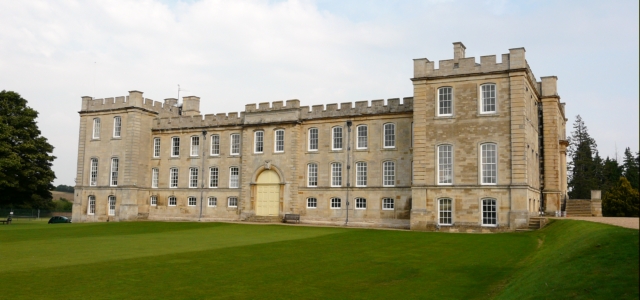
Photo: Iain Simpson · CC BY-SA 2.0 · Wikimedia Commons
Fotheringhay Castle is a ruined castle in Fotheringhay, Northamptonshire, England, UK. Richard the Third was born here in October 1452. The free Lokali audio guide runs 7 minutes.
✓ Published October 2026 · how we write these guides
Visitor facts
| Lokali audio guide | 7 min · free |
|---|---|
| Type | Castle |
| Location | Peterborough, United Kingdom |
| Coordinates | 52.5242, -0.4357 |
| Languages | 50+, in the Lokali app |
The story
Listen first. A breeze moves through the long grass on the mound. Somewhere below, the River Nene slides past, slow and brown, between willows and reeds. Sheep may be calling from a nearby field. There is no gatehouse here, no great tower, no ticket booth. There is only a grassy hill, a ditch, and a single fenced chunk of old stone. And yet this quiet patch of Northamptonshire countryside, a short drive west of Peterborough, saw the birth of a king and the death of a queen.
Let us start with the shape of the ground beneath your feet. The mound you see is a motte, an artificial hill raised by human hands. Around it, the lower enclosure was the bailey, a yard protected by banks and ditches. This style of castle arrived in England with the Normans in the eleventh century. Early versions were built of earth and timber, and they could be thrown up quickly to control a river crossing or a stretch of farmland.
The first castle here is generally credited to Simon de Senlis, a Norman lord who became Earl of Northampton, around the beginning of the twelfth century. The site made sense. The Nene was a highway in those days, carrying goods and people across the flat Midlands. A fortress on its bank could watch the water, the fields, and the roads all at once. Over the following centuries, timber gave way to stone, and the castle grew into a substantial residence.
In the fourteenth century, Fotheringhay passed into the hands of the House of York. That is the family whose white rose later became famous during the Wars of the Roses — the long struggle between two branches of the royal family, York and Lancaster, for the English crown. For the Yorkists, this was not a remote outpost. It was a home, a centre of power, and a place they chose to remember their dead.
Here is the first surprise. In October 1452, a boy was born at this castle who would become King Richard the Third. He was the youngest surviving son of Richard, Duke of York. Few visitors realise that the most argued-about king in English history began his life on this riverbank. Shakespeare later painted him as a villain. Historians still debate that picture. But his story, whatever you believe about it, started right here.
Now turn your eyes toward the village and find the tall church tower rising beyond the trees. That is the Church of Saint Mary and All Saints. The Yorkist dukes turned it into a collegiate church, which means it was staffed by a community of priests who prayed for the family's souls. Members of the House of York are buried there, including Richard's father, the Duke of York, who was reburied with great ceremony in the 1470s.
The church today is smaller than it once was. Part of the original building was lost after the religious changes of the sixteenth century. Even so, it is worth the short walk. Inside, look for the memorials to the Yorkist dukes. They were set up on the orders of Queen Elizabeth the First, who found the old tombs neglected. It is a small act of family respect, from a Tudor queen to ancestors from a rival line.
And that brings us to the most famous chapter of all. In 1586, Mary, Queen of Scots, was brought to Fotheringhay as a prisoner. She had fled Scotland years earlier and had spent nearly two decades in English captivity. Her cousin, Queen Elizabeth, saw her as a threat — a Catholic claimant to the English throne at a time of plots and fear. At this castle, Mary was put on trial for her alleged part in a conspiracy against Elizabeth.
She was found guilty. On the eighth of February, 1587, Mary was executed inside the great hall of the castle. Accounts of the day describe a cold winter morning and a room full of witnesses. It was a shocking event. One anointed queen had allowed the execution of another. The news travelled across Europe and helped push Catholic Spain toward war with England. A great deal of that history turned on one morning in a building that once stood around you.
Here is the second surprise. Look closely at the plants on and around the mound, especially in summer. Thistles grow here. Local legend calls them Queen Mary's Tears, and the story says Mary herself planted Scottish thistles during her captivity. There is no record to prove it. But the name has stayed in the area for generations, and it gives the bare hillside a quiet, human link to the woman who died here.
So where did the castle go? After Mary's death, the place fell out of use. By the early seventeenth century it was in poor repair, and it was taken apart for its materials. Stone, timber, and fittings were carried off and reused. Local tradition says some pieces travelled not far at all. One popular tale claims that a staircase from the castle ended up in an inn in the nearby town of Oundle. It is a good story — treat it as a story.
That is why this site feels so empty. Almost nothing is standing except the earthworks and that one block of masonry by the river. Walk over to it if you can. Plaques have been placed nearby, including tributes connected to Mary and to Richard. The stone shows rough, weathered surfaces and old mortar. It is a single fragment, but it is a real piece of the building where so much happened. Run your eyes along it and imagine the walls rising above.
Before you leave, climb a little way up the mound, if the path allows, and look around. You will see the river bending through flat green land, the church tower standing over the village, and wide English sky. Notice how quiet it is. Notice the smell of damp grass and river water. As you walk back toward the lane, listen again to the wind in the grass — the same sound that crossed this hill on a February morning, long ago.
Key facts
What to look for
Practical tips
Common questions
Is there a free audio guide to Fotheringhay Castle?
Yes — the Lokali app narrates Fotheringhay Castle free of charge in 50+ languages. The guide runs about 7 minutes, covers the history, what to look for on site and practical tips, and works offline once downloaded.
Where is Fotheringhay Castle?
Fotheringhay Castle is near Peterborough, United Kingdom, at 52.5242, -0.4357. Tap the map link on this page for directions from where you are.
What is Fotheringhay Castle known for?
Richard the Third was born here in October 1452. Mary, Queen of Scots, was executed here in 1587.
What should you look for at Fotheringhay Castle?
The fenced block of original masonry beside the river. Commemorative plaques near the surviving castle stone. Thistles locally nicknamed Queen Mary's Tears.
What should you know before visiting Fotheringhay Castle?
Wear sturdy shoes; the mound and riverbank can be muddy. Visit Saint Mary and All Saints Church in the village.
When is the best time to visit Fotheringhay Castle?
Come in summer to see thistles flowering on the mound.
On the map
Opens directions to Fotheringhay Castle from your location.
More to see near Fotheringhay Castle



Hear Fotheringhay Castle in your language
The full story, narrated, in 50+ languages. Download it before you go and it plays offline, at your own pace, with no ticket and no tour group.