
Church of Saint Nicholas
50.0878° N · 14.4199° E · Cathedral
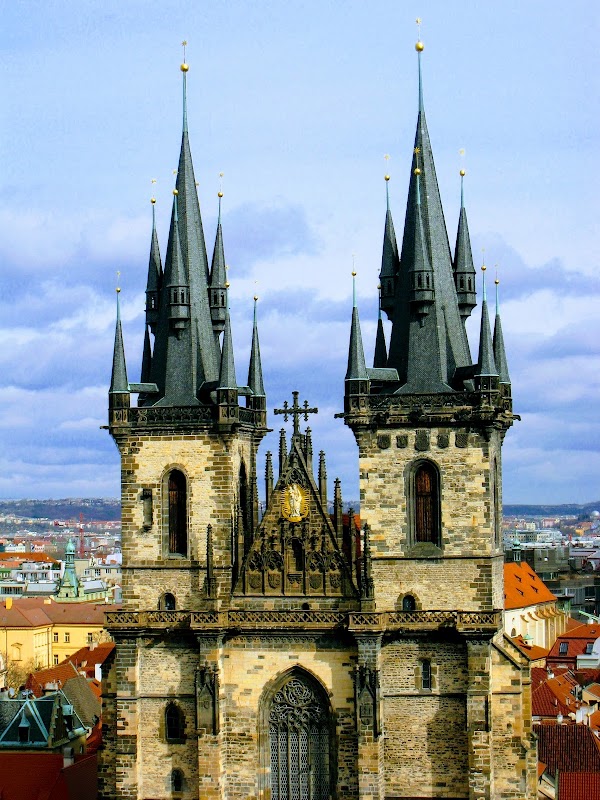
Photo: A.Savin · FAL · Wikimedia Commons
Church of Saint Nicholas is a church in Prague, Czech Republic. Saint Nicholas was a fourth-century bishop of Myra. The free Lokali audio guide runs 7 minutes.
✓ Published October 2026 · how we write these guides
Visitor facts
| Lokali audio guide | 7 min · free |
|---|---|
| Type | Cathedral |
| Location | Prague, Czechia |
| Coordinates | 50.0878, 14.4199 |
| Official website | svmikulas.cz |
| Languages | 50+, in the Lokali app |
The story
Pause at the threshold for a moment. Feel the stone under your feet, smoothed and slightly hollowed by the many people who stood exactly where you stand now. Listen to how the sound changes. The noise of the old town fades behind you. The air turns cooler and carries a faint smell of stone, old wood, and perhaps candle wax. A church works on the senses before it says anything about history. So let us begin the way the building begins, with the body and with the quiet.
This is the Church of Saint Nicholas. Churches with this name stand in old towns across Europe and far beyond, from Baltic ports to Balkan hill towns. Each one has its own builders and its own story. This guide will be honest about that. We will not fill your ears with dates that may belong to another Saint Nicholas in another city. Instead, we will look closely at what stands in front of you. We will also meet the man whose name this church carries.
So who was Nicholas? He was a bishop in the fourth century, in a town called Myra, on the southern coast of what is now Turkey. Very little about his life is documented with certainty. Much of what people know comes from stories told and retold over many centuries. Those stories made him one of the most loved saints in Christianity. Catholic, Orthodox, and many Protestant communities all honour him. That shared affection is one reason his name appears in so many towns.
The best-known tale is a legend, and you should hear it as one. According to the story, a poor man could not pay dowries for his three daughters. Nicholas wanted to help without being seen. So he threw bags of gold through the man's window at night. In some versions, the gold landed in stockings that were drying by the fire. You may already guess where this is going. Over the centuries, that quiet gift-giver travelled north and west, and slowly became Santa Claus.
Here is a detail many visitors miss. Nicholas is also a patron saint of sailors, merchants, and travellers. Legends tell of him calming storms at sea. Because of this, churches named for him often stood in trading towns, near harbours, river crossings, or busy market squares. These were places where people lived by risk and wanted a protector. When you leave, notice where this church sits. Is it close to an old market, a former town gate, or the road to the water? The location may hint at who first prayed here.
There is a second surprise in his story, and this one is documented. In 1087, sailors from the Italian port of Bari took relics of Saint Nicholas from Myra and carried them home. A great basilica was built in Bari to hold them, and pilgrims have travelled there ever since. So the saint of travellers became a traveller himself. His fame spread along the same sea routes that carried goods and people across the medieval world. In a way, every church with his name is a small stop on that long journey.
Now turn to the building itself. If you can, look at the outer walls before you go further inside. Notice the material. Is it rough fieldstone, cut limestone, or plastered brick? Old churches are rarely built in a single moment. Often you can see changes in the masonry. A band where the stone colour shifts. A window that someone filled in with brick. A doorway that looks too low, or too grand, for its wall. Each change marks a later builder, working in a later age.
Inside, give your eyes a moment to adjust. Follow the line of the space toward the far end, where the altar stands. In many churches this end faces east, toward the rising sun. That is a very old Christian custom. Then look up at the ceiling. A wooden roof, a stone vault, or a dome each changes how sound behaves. Listen to footsteps on the floor, or to a quiet voice nearby. Under stone, even soft sounds can travel surprisingly far across the room.
Now look for the saint himself. Nicholas usually appears as an older man with a short white or grey beard, dressed in a bishop's robes. Sometimes he holds a book, which stands for the Gospels. Sometimes you will see three golden balls or three bags of gold, a reminder of the dowry legend. In Orthodox icons, his face is often calm and direct, with a high forehead. See if you can find him here, in a painting, a statue, a window, or a carving.
Then turn to the smaller things. Memorial plaques on the walls. Worn names on the floor slabs. Wooden benches made smooth by many hands. These are often the most human parts of a church. Many old town churches served as more than places of worship. They were also gathering places for guilds, for families, and for whole neighbourhoods. The people remembered here may have walked the same streets you walked today, and bought bread in the same square.
Some churches like this one still hold regular services. Others now serve as museums, concert halls, or quiet spaces for visitors. If a service is taking place, the mood changes completely. You may hear voices, music, or smell incense. Move quietly, keep your voice low, and avoid walking in front of people at prayer. If music is playing, simply sit for a while. Old stone halls hold sound in a special way, and singing here can feel very different from music anywhere else.
Before you leave, find a place to sit or stand still for a minute. Let the light settle around you. Notice where it falls, through which windows, and onto which wall or floor. In the early morning and late afternoon, low sun often enters at a slant. It picks out carvings, cracks, and colours that are almost invisible at noon. If you come back at a different hour, this interior may look like a different room. That is one small reward for a second visit.
When you step back outside, pause again on the threshold. Feel the change, the warmer air, the brighter light, the sounds of the old town returning. Look back once at the doorway. People have crossed it for generations, carrying worries, gifts, and prayers for safe journeys. Today you are one of them... a traveller, passing under the name of the travellers' saint. Take that small thought with you as you walk on, into the streets around you.
Key facts
What to look for
Practical tips
Common questions
Is there a free audio guide to Church of Saint Nicholas?
Yes — the Lokali app narrates Church of Saint Nicholas free of charge in 50+ languages. The guide runs about 7 minutes, covers the history, what to look for on site and practical tips, and works offline once downloaded.
Where is Church of Saint Nicholas?
Church of Saint Nicholas is in Prague, Czechia, at 50.0878, 14.4199. Tap the map link on this page for directions from where you are.
What is Church of Saint Nicholas known for?
Saint Nicholas was a fourth-century bishop of Myra. Myra lies on the southern coast of modern Turkey.
What should you look for at Church of Saint Nicholas?
Shifts in stone colour marking later building phases. Bricked-up windows or doorways in the outer walls. Images of Nicholas holding three golden balls.
What should you know before visiting Church of Saint Nicholas?
Walk around the outer walls before stepping inside. Keep your voice low if a service is underway.
When is the best time to visit Church of Saint Nicholas?
Visit in early morning or late afternoon for slanting light.
On the map
Opens directions to Church of Saint Nicholas from your location.
More to see in Prague


Hear Church of Saint Nicholas in your language
The full story, narrated, in 50+ languages. Download it before you go and it plays offline, at your own pace, with no ticket and no tour group.