
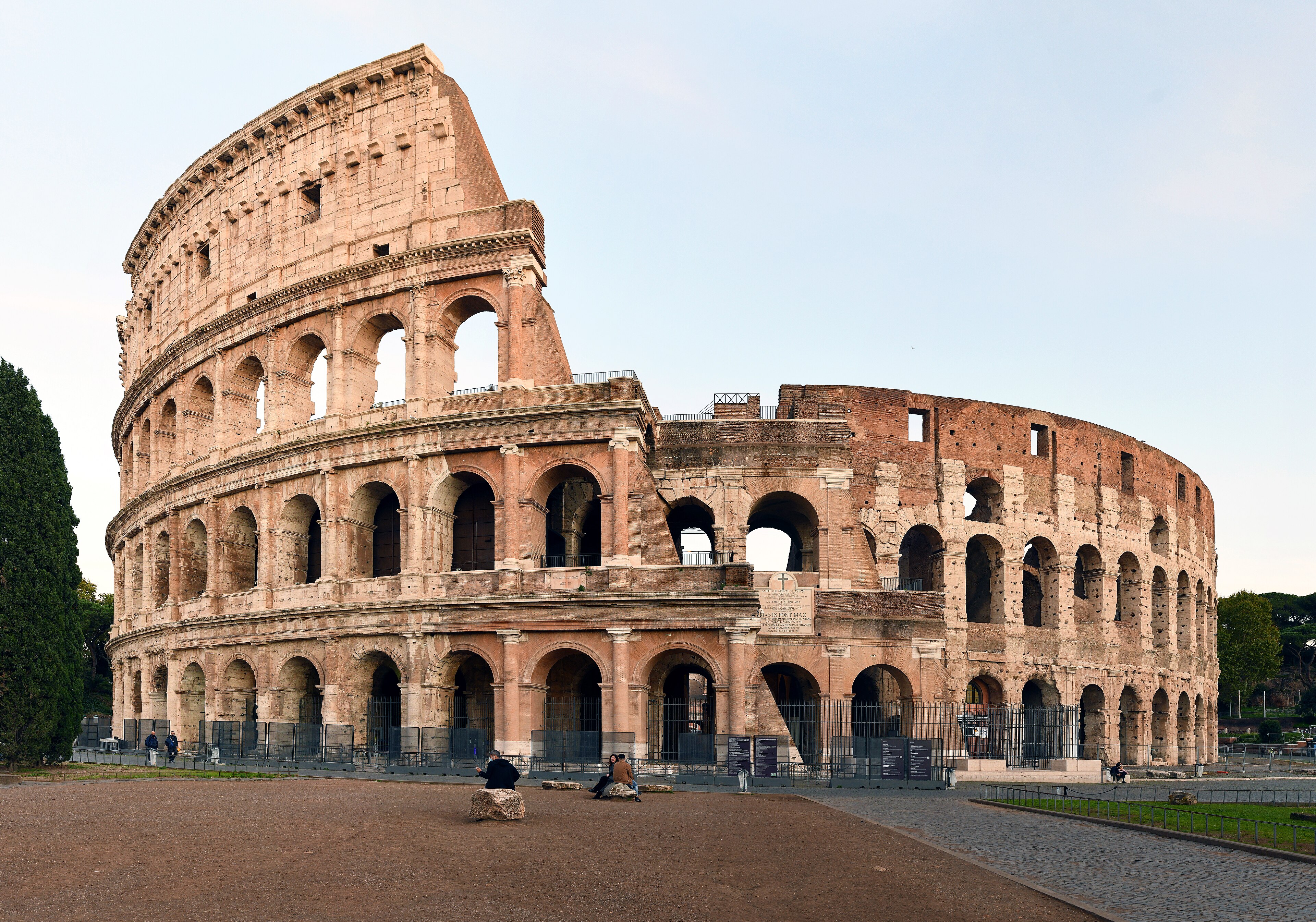
Photo: Luciano Tronati · CC BY-SA 4.0 · Wikimedia Commons
San Pietro in Vincoli is a church in Rome. The name means Saint Peter in Chains. The free Lokali audio guide runs 6 minutes.
✓ Published October 2026 · how we write these guides
Visitor facts
| Lokali audio guide | 6 min · free |
|---|---|
| Type | Church |
| Location | Rome, Italy |
| Coordinates | 41.8939, 12.4931 |
| Official website | lateranensi.org |
| Languages | 50+, in the Lokali app |
The story
Climb the last steps from the street below and you feel the change in air at once. The traffic noise drops behind you. Your shoes meet worn stone, and a quiet square opens up on the slope of the Esquiline Hill. In front of you stands a plain church with a simple arched porch. Nothing on the outside prepares you for what waits inside.
This is San Pietro in Vincoli, which means Saint Peter in Chains. It sits only a short walk from the Colosseum, yet many visitors pass right by. The way up from Via Cavour climbs a narrow stairway under a dark arch, past old houses linked to the Borgia family. Locals sometimes call it a shortcut. For you, it is a doorway into two very different stories.
The first story is very old. A church stood on this spot in early Christian times. In the fifth century it was rebuilt with the support of the imperial family. The empress Licinia Eudoxia, wife of the western emperor Valentinian the Third, is closely linked to it. For that reason, the church also carries a second name, the Basilica Eudoxiana. That makes this one of the older church foundations in the city still in daily use.
Step inside and look along the nave. Two long rows of ancient columns march toward the altar. They are fluted, with simple Doric tops, the plainest of the classical styles. These columns are much older than the walls around them. Builders reused them from earlier Roman structures, a common practice in late antique Rome. Stand still for a moment. The space feels wide, calm, and full of soft light.
Now walk toward the main altar. Below it, down a few steps, you will find a reliquary behind glass. Inside lie the chains that give the church its name. Tradition says they bound Saint Peter, the apostle, during his imprisonment. This is where the second layer of the story begins — and it is pure legend.
According to the popular tale, one set of chains came from Jerusalem, where Peter was held in prison. Another set came from Rome, from his captivity before his death. When the two were brought together, legend has it, they joined into a single unbroken chain. Look up at the ceiling and you will see this miracle painted above you. The fresco was added much later, in the early eighteenth century.
But most people come here for one figure. Turn to the right side of the church, near the end of the aisle. There, inside a large marble monument, sits Michelangelo's Moses. He is seated, powerful, and turned slightly to one side. His long beard falls in thick, twisting strands. His muscular arm rests on the tablets of the law. Even from a distance, he seems ready to rise.
This monument is part of the tomb of Pope Julius the Second. The pope commissioned it from Michelangelo in the early sixteenth century. The first plan was enormous — a free-standing structure with dozens of statues. Then came delays, disputes, and the work on the Sistine Chapel ceiling. Over the decades, the project shrank again and again. Michelangelo's early biographer called it the tragedy of the tomb.
Here is a surprise many visitors miss. Pope Julius the Second is not buried here. His remains lie in Saint Peter's Basilica in the Vatican. So this grand tomb is, in a sense, a monument without its owner. The reclining figure of the pope above Moses was carved by other hands, as were most of the upper statues. Michelangelo's own touch is clearest in Moses himself.
Look closely at the head. You will notice two small horns rising from his hair. They are not a mistake by the sculptor. They come from an old Latin translation of the Bible. The Hebrew text describes rays of light shining from Moses' face. The Latin version rendered this as horns. For centuries, artists followed that reading, and Michelangelo did the same.
On either side of Moses stand two quieter female figures. They are Rachel and Leah, sisters from the Book of Genesis. Michelangelo carved them late in the project. They often stand for two kinds of life — one devoted to prayer, one to action. Next to the force of Moses they feel calm, almost shy. Notice how differently the light falls on their smooth robes.
The statue has fascinated more than artists. In 1914 Sigmund Freud, the founder of psychoanalysis, published an essay about this Moses. He spent long hours studying it and tried to read the exact moment it shows. And locals love one more story. Legend says Michelangelo struck the knee when he finished and asked the statue why it did not speak. No record confirms this. Still, standing here, you understand why people tell it.
Before you leave, walk the rest of the church slowly. Look for a small mosaic of Saint Sebastian, shown not as a young man but as an older, bearded figure. It is an early work, far older than most decoration here. In the left aisle you will also find the tomb of the Pollaiuolo brothers, two Florentine artists of the fifteenth century. Few visitors stop for them.
Now take one last look back toward Moses. Hear the soft shuffle of feet and the murmur of many languages. When you step outside, the square will be bright again. The stone steps lead you down toward the noise of the city. Notice how quickly the street returns — and how this quiet hilltop stays behind you, waiting for the next visitor.
Key facts
What to look for
Practical tips
Common questions
Is there a free audio guide to San Pietro in Vincoli?
Yes — the Lokali app narrates San Pietro in Vincoli free of charge in 50+ languages. The guide runs about 6 minutes, covers the history, what to look for on site and practical tips, and works offline once downloaded.
Where is San Pietro in Vincoli?
San Pietro in Vincoli is in Rome, Italy, at 41.8939, 12.4931. Tap the map link on this page for directions from where you are.
What is San Pietro in Vincoli known for?
The name means Saint Peter in Chains. Rebuilt in the fifth century with imperial support.
What should you look for at San Pietro in Vincoli?
The small horns rising from Moses' head. Thick twisting strands of Moses' marble beard. The chains in the glass reliquary below the altar.
What should you know before visiting San Pietro in Vincoli?
Climb the stairway from Via Cavour for a dramatic approach. Come early morning before tour groups fill the aisle.
When is the best time to visit San Pietro in Vincoli?
Come early morning before tour groups fill the aisle.
On the map
Opens directions to San Pietro in Vincoli from your location.
More to see in Rome



Hear San Pietro in Vincoli in your language
The full story, narrated, in 50+ languages. Download it before you go and it plays offline, at your own pace, with no ticket and no tour group.