
Preah Ko
13.3439° N · 103.9727° E · Archaeological Site
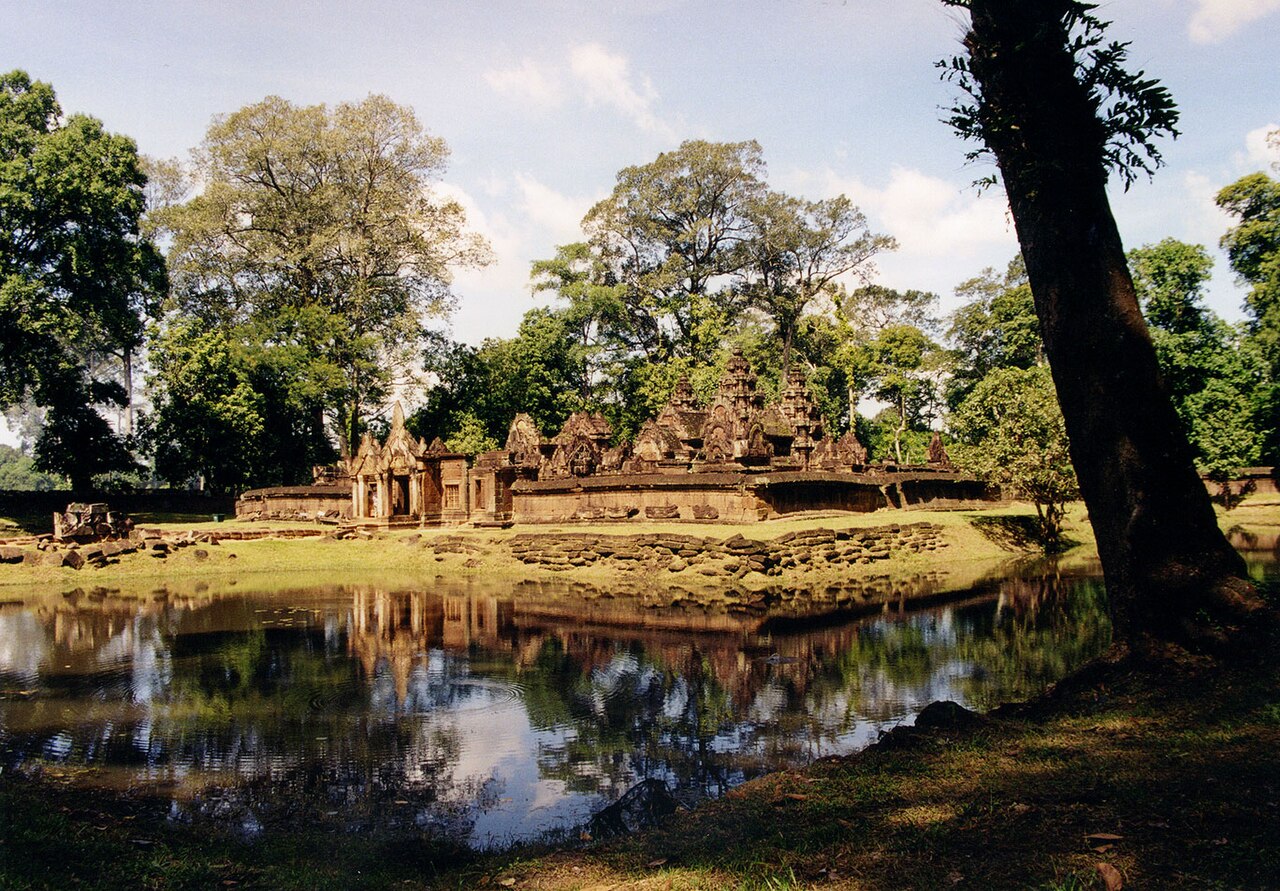
Photo: en:User:Markh · Public domain · Wikimedia Commons
Preah Ko is an archaeological site in Siem Reap, Cambodia. Built under King Indravarman the First in the ninth century. The free Lokali audio guide runs 6 minutes.
✓ Published October 2026 · how we write these guides
Visitor facts
| Lokali audio guide | 6 min · free |
|---|---|
| Type | Archaeological Site |
| Location | Siem Reap, Cambodia |
| Coordinates | 13.3439, 103.9727 |
| Languages | 50+, in the Lokali app |
The story
Listen first. Away from the crowds of Angkor, Preah Ko is often quiet. You may hear roosters from the village, a motorbike far off, and the dry rustle of leaves across packed red earth. In front of you stand six towers of soft orange brick. They are low and patient, and their surfaces are worn smooth by more than a thousand monsoons. In the morning the brick looks almost pink. Later in the day it turns the colour of baked clay.
You are about thirteen kilometres southeast of modern Siem Reap, in the area known as the Roluos group. Long before Angkor Wat existed, this was the heart of a Khmer capital called Hariharalaya. The name joins Hari and Hara, two names for the Hindu gods Vishnu and Shiva. It suggests a city devoted to both. Preah Ko, together with the nearby temples of Bakong and Lolei, belongs to the first chapter of the Angkorian story.
The temple was built under King Indravarman the First in the late ninth century. Its inscriptions date the dedication to 879. That makes it one of the earliest major temples of the Angkor period that still stands. Many visitors arrive expecting a smaller, rougher version of Angkor Wat. What they find instead is a finished and confident style. These builders already knew exactly what they were doing.
Now look at the arrangement. The six towers stand on a single low platform in two rows of three. The front row is slightly larger, and the middle tower of that row is the tallest of all. This layout is not decoration. It is a family tree in brick. Inscriptions connect the towers to the royal ancestors. They honour Indravarman's forebears and the earlier king Jayavarman the Second, who is often credited with founding the Khmer empire.
Here is a detail many people miss. The front towers are linked to male ancestors, and the back towers to their queens. You can check this yourself in the carved guardians beside the doorways. In the front row, the niches hold male door guardians, called dvarapalas. In the back row, the niches hold female figures, known as devatas. Walk between the rows and you move from the world of the kings into the world of their wives.
The name Preah Ko means the Sacred Bull. Turn around and you will see why. Facing the towers are statues of Nandi, the bull who carries the god Shiva. They are weathered now, and some are damaged. Still, they kneel in the same direction they have faced for centuries, looking toward the sanctuaries. In Hindu tradition, Nandi waits outside Shiva's shrine as a loyal companion and gatekeeper. Here, he still keeps watch.
Step closer to one of the towers. The brick walls were once covered in a coat of lime-based stucco. Craftsmen carved this plaster into flowers, garlands, small figures and fine borders. Much of it has fallen away, but large patches survive, especially around the false doors and niches. Up close, you can see the difference in texture. The brick is coarse and grainy. The stucco is pale, chalky and delicate, almost like dried icing.
The doorways tell another story of materials. Brick was used for the walls, but the door frames, lintels and small columns are sandstone. Sandstone could hold a sharper carved line. Look at the lintels above the doors. They are among the finest of early Khmer art. You will see curling vegetation, small riders, monster heads and garlands, all cut in deep relief. Scholars often point to the Roluos lintels as a high point of the style.
On either side of many doors stand small octagonal columns, called colonettes. They are ringed with bands of tiny carved leaves and beads. Each band repeats with real precision. Only the east side of each tower has a working door. The other sides carry false doors, carved in stone to imitate wood panels. It was a way to give each sanctuary a complete, balanced face toward every direction.
The door jambs hold something even quieter. Run your eyes over the flat stone surfaces, and you may find lines of old script. These inscriptions are written in Sanskrit, the sacred language of ancient India, and they record the foundation and the dedications. Most visitors walk past them in seconds. For historians, they are among the most valuable things here. They are part of how we know who built this place, and for whom.
Now look outward, beyond the towers. The temple once sat inside enclosure walls made of laterite, a porous reddish stone full of small holes. You can still trace parts of these walls and the remains of entrance gateways. A larger enclosure and a moat once surrounded the complex. Nearby, a great reservoir called the Indratataka was dug in the same reign. Water, temples and kingship were all part of one design.
Preah Ko has needed care to survive. Brick and stucco are fragile, and monsoon rains, plant roots and time all take their toll. Over the decades, international and Cambodian conservation teams have worked here to stabilise the towers and protect the remaining plaster. You may notice supports, newer bricks or careful repairs. They are signs of the long effort to keep these early sanctuaries standing for the next generations.
Before you leave, stand back near the bulls and take in all six towers at once. Notice how the light moves across the brick and where the pale stucco still catches the sun. Listen again to the village sounds around you. People have lived beside this temple for more than a thousand years. As you walk on toward Bakong or Lolei, you are following the streets of a capital that came before Angkor itself.
Key facts
What to look for
Practical tips
Common questions
Is there a free audio guide to Preah Ko?
Yes — the Lokali app narrates Preah Ko free of charge in 50+ languages. The guide runs about 6 minutes, covers the history, what to look for on site and practical tips, and works offline once downloaded.
Where is Preah Ko?
Preah Ko is in Siem Reap, Cambodia, at 13.3439, 103.9727. Tap the map link on this page for directions from where you are.
What is Preah Ko known for?
Built under King Indravarman the First in the ninth century. Inscriptions date the temple's dedication to the year 879.
What should you look for at Preah Ko?
Kneeling Nandi bull statues facing the six towers. Male door guardians carved beside the front tower niches. Female devata figures in the niches of the back towers.
What should you know before visiting Preah Ko?
Visit in early morning when the brick glows soft pink. Combine with nearby Bakong and Lolei in one trip.
When is the best time to visit Preah Ko?
Visit in early morning when the brick glows soft pink.
On the map
Opens directions to Preah Ko from your location.
More to see in Siem Reap



Hear Preah Ko in your language
The full story, narrated, in 50+ languages. Download it before you go and it plays offline, at your own pace, with no ticket and no tour group.