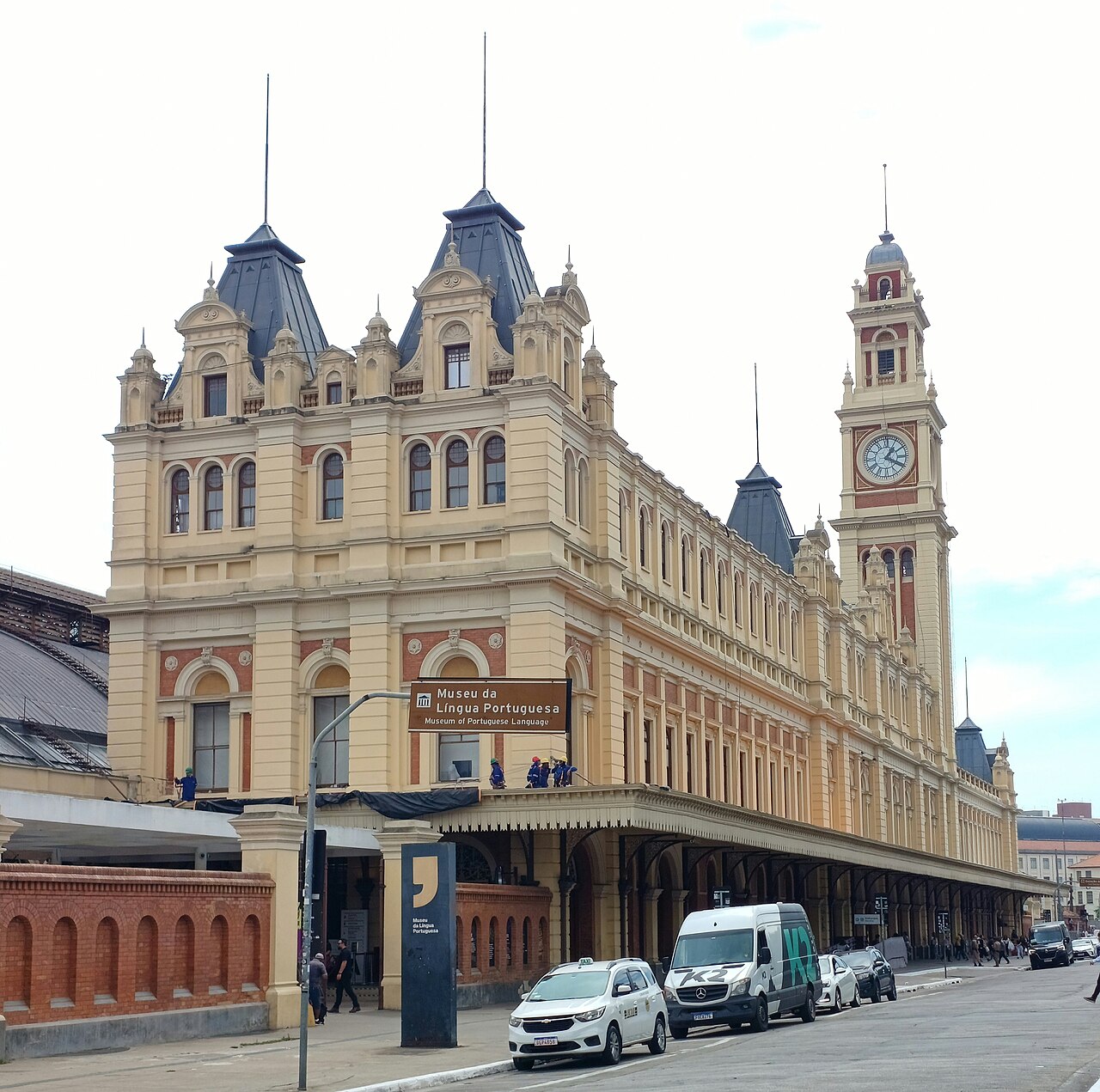
Estação da Luz
23.5405° S · 46.6428° W · Railway Station
Estação da Luz is a railway station in São Paulo, Brazil. Ornate Victorian railway station completed in 1901, designed by British engineers. Most visitors spend 30–45 min here. The free Lokali audio guide runs 5 minutes.
✓ Verified August 2026 · how we write these guides
Visitor facts
| Time needed | 30–45 min |
|---|---|
| Lokali audio guide | 5 min · free |
| Type | Railway Station |
| Best for | Photography |
| Location | São Paulo, Brazil |
| Coordinates | -23.5405, -46.6428 |
| Languages | 45, in the Lokali app |
The story
A tall clock tower rises over the rooftops. It is built of iron and brick, darkened by long years of weather. Below it, trains still slide in beneath a wide metal roof. People hurry along the platforms with bags and tickets in hand. Announcements echo off the iron above. This is Luz Station, one of the great gateways of Sao Paulo.
The station opened in 1901. At that time the city was growing fast on the wealth of coffee. The beans traveled by rail from the farms in the countryside down to the port of Santos on the coast. The railway carried the crop that made Sao Paulo rich. Trains like these helped turn a town into a great city. Wealth from those trains paid for grand streets and buildings across the center.
A British company, the Sao Paulo Railway, built the line and the station. Much of the iron came from England. The metal parts were cast there, shipped across the ocean, and put together on this very spot. In many ways the building is a piece of England set down in the middle of Brazil. Its style still shows that distant origin.
Look up at the clock tower above the entrance. For many years it served as a landmark for the whole district. People set their day by its face. The bells marked the passing hours over the rooftops. From far off across the low city, the tower told travelers that they were almost home.
The roof over the platforms is a wide span of iron and glass. Light falls softly through it onto the tracks below. In the early days, steam from the engines filled this space and rose into the metal frame. Today quiet electric trains come and go beneath the same old roof, but the great shelter remains. Pigeons nest in the high beams, far above the heads of the crowd.
The station has not always stood whole. In 1946 a serious fire damaged part of the building. It was repaired with care and went on serving the city as before. Like much of Sao Paulo, the station has been broken and rebuilt more than once. It carries its repairs without shame.
For more than a century the Luz district grew up around the station. Hotels, shops, and offices rose nearby. The wide garden of the Jardim da Luz spreads close at hand, full of old trees. The Pinacoteca art museum stands just across the way. The station gave the whole neighborhood its name and its center. Markets and street life still cluster close around its doors.
Inside one wing of the station lives the Museum of the Portuguese Language. It tells the story of the language spoken across Brazil and far beyond its borders. It uses screens, sound, and light to make ordinary words feel alive. Visitors of every age move slowly through its bright and playful rooms.
That museum has its own hard chapter. A fire struck it in 2015 and closed its doors for years. After long and patient repairs, it opened again in 2021. The station, it seems, has a long habit of rising again after damage. Fire has shaped its story more than once.
Stand on a platform and watch the daily flow of people. Workers head into the center each morning. Students cross the great hall with heavy bags on their shoulders. Families wait together near the gates. The station is not only a monument to the past. It is a living door that thousands pass through every single day. For many travelers from the countryside, this hall is their first sight of the city.
Step back outside for the full view of the front. The long brick face stretches beside the street. The tall tower climbs above it all, marking the spot from a distance. Old and useful at the same time, the station still does the very job it was built for more than a hundred years ago.
The platforms have a rhythm of their own. A train slows and stops. Doors open and a wave of people pours out. Moments later the platform empties and falls quiet again. Then the next train approaches in the distance. The cycle repeats from early morning until late at night.
Before you leave, stand still under the iron roof and listen. A train brakes with a long sigh. A voice calls out a platform number. Footsteps echo off the metal high above. For more than one hundred years this same sound has filled the air in this place, the steady rhythm of a city always on the move.
Key facts
What to look for
Practical tips
Common questions
How long do you need at Estação da Luz?
Plan 30–45 min. That is the time most visitors spend at Estação da Luz. The free Lokali audio guide adds about 5 minutes of narration you can listen to as you walk, so it fits inside your visit rather than adding to it.
Is there a free audio guide to Estação da Luz?
Yes — the Lokali app narrates Estação da Luz free of charge in 50+ languages. It covers the history, what to look for on site and practical tips, and it works offline once downloaded.
Where is Estação da Luz?
Estação da Luz is in São Paulo, Brazil, at -23.5405, -46.6428. Tap the map link on this page for directions from where you are.
What should you know before visiting Estação da Luz?
Begin your visit in the main station hall.
What is Estação da Luz known for?
Opened in 1901 during the coffee railway era.
What is the best time to visit Estação da Luz?
The main hall's soaring skylights cast dramatic shadows across the platform.
On the map
Opens directions to Estação da Luz from your location.
Reference
More to see in São Paulo



Hear Estação da Luz in your language
The full story, narrated, in 50+ languages. Download it before you go and it plays offline, at your own pace, with no ticket and no tour group.