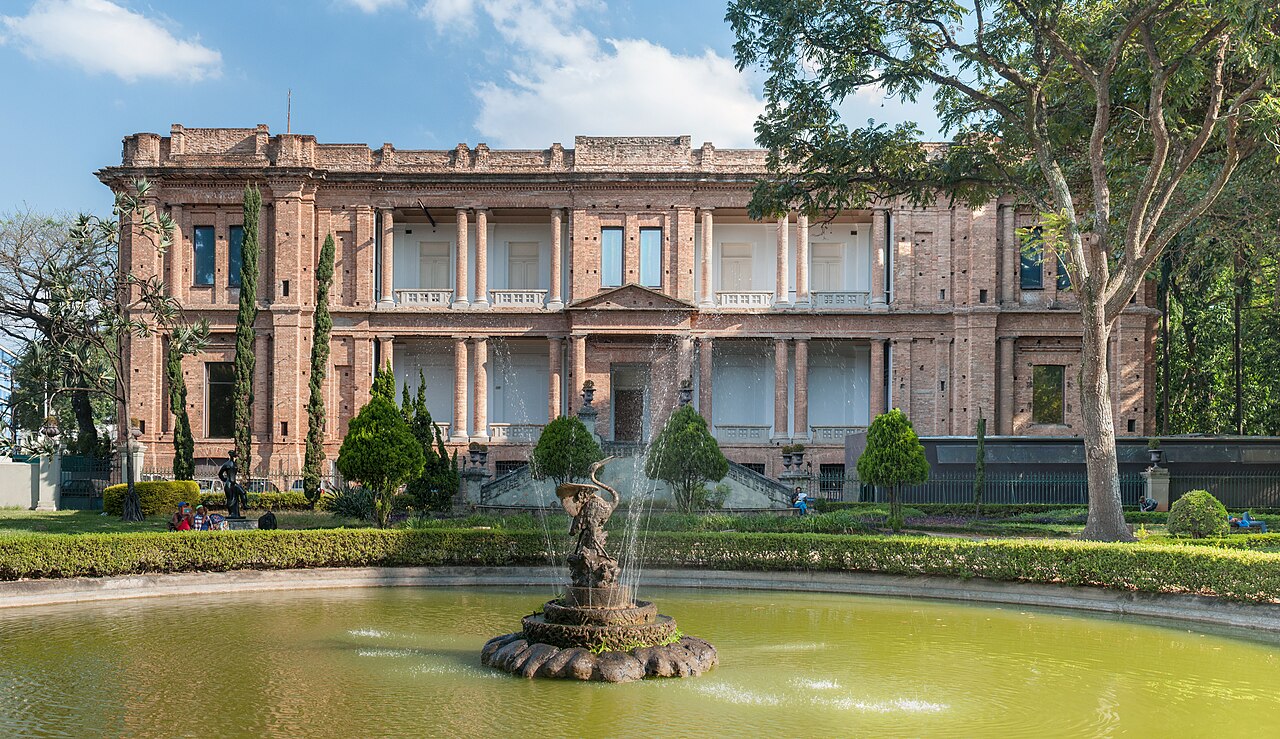
Pinacoteca do Estado is a museum in São Paulo, Brazil. Brazil's oldest art museum, opened in 1905, specialises in 19th and 20th-century Brazilian painting and sculpture. Most visitors spend 1–2 hours here. The free Lokali audio guide runs 5 minutes.
✓ Verified August 2026 · how we write these guides
Visitor facts
| Time needed | 1–2 hours |
|---|---|
| Lokali audio guide | 5 min · free |
| Type | Museum |
| Best for | History |
| Location | São Paulo, Brazil |
| Coordinates | -23.5386, -46.6417 |
| Languages | 45, in the Lokali app |
The story
A brick building faces a quiet park. The walls are old and warm in color, softened by more than a century of weather. Step through the door and the light changes at once. Steel walkways cross open courtyards under a roof of clear glass. This is the Pinacoteca, the oldest art museum in Sao Paulo, and one of the most loved in Brazil.
The museum was founded in 1905. That makes it the city's very first art museum. Over more than one hundred years it has grown into one of the most respected collections in the whole country. Its main focus is Brazilian art, gathered patiently across many decades. Few places tell the story of the nation's painters so well. Its rooms hold names that fill the country's art books, shown close to home at last.
The building is older than the museum inside it. It was first built for a school of arts and crafts, where young people learned trades like drawing, carving, and metalwork. The brick walls and the tall windows come from that early plan. You can still feel the shape of the old workshops in the rooms. High ceilings and broad doorways still speak of the work once done here.
For years the structure stood unfinished and worn. Plaster was missing and the brick lay bare. Then, in 1998, the architect Paulo Mendes da Rocha led a careful renovation. He did not hide the old brick or cover the scars. He left the marks of age in place and added something new beside them.
His idea was light and air. He opened the inner courtyards to the sky and covered them with sheets of glass. He hung narrow steel bridges across the open space high above the floor. Now visitors walk above the ground level and look down through the very heart of the building. The old shell holds a new world inside.
The result joins two times in one place. Old brick meets new steel. Rough surfaces meet clean straight lines. Nothing is hidden, and nothing pretends to be older or newer than it is. The renovation won wide praise and is still studied by architects who travel to the city to see it.
Inside the galleries, the art is mostly Brazilian. There are paintings and sculptures from the nineteenth century onward. Portraits, landscapes, and modern works share the quiet rooms. Faces and places from across the country line the walls. Walking through, you pass slowly through the nation's changing view of itself. Some rooms hold calm landscapes, while others turn to bold and restless modern forms.
Some sculptures stand in the bright courtyards under the glass roof. Sunlight moves across them through the day. The same statue can look soft in the morning and sharp at noon. Shadows shift hour by hour along the floor. The building itself becomes part of the display, never quite the same from one visit to the next.
Just outside lies the Jardim da Luz, one of the oldest public gardens in the city. Tall trees, ponds, and old shaded paths fill it. A few sculptures from the museum stand among the greenery. The garden and the museum belong to the same quiet corner, sharing the same slow and patient air.
The area around the Luz district has known hard times and slow change. The museum has stayed through all of it, never moving. It works closely with schools and with the people who live nearby. Its doors are meant to stay open to the whole city, not only to those who already love art. Free days and school programs bring in visitors who might never come otherwise.
Take your time on the steel walkways. Stop in the middle and look down at the floors below. From there you can see the old brick beneath and the glass sky above in the very same moment. Few buildings let you stand so clearly between the past and the present, with both held in plain view.
The light keeps changing as you move. A bright courtyard gives way to a dim gallery. A narrow stair opens onto a wide hall. The path is never quite straight, and small surprises wait around each corner. The building rewards the visitor who slows down and looks carefully at everything.
Before you go, sit for a while in one of the courtyards. Listen to the soft sounds of the rooms around you. Brick, steel, and light hold each other in balance here. The Pinacoteca shows that an old building can keep growing and changing without ever losing its past.
Key facts
What to look for
Practical tips
Common questions
How long do you need at Pinacoteca do Estado?
Plan 1–2 hours. That is the time most visitors spend at Pinacoteca do Estado. The free Lokali audio guide adds about 5 minutes of narration you can listen to as you walk, so it fits inside your visit rather than adding to it.
Is there a free audio guide to Pinacoteca do Estado?
Yes — the Lokali app narrates Pinacoteca do Estado free of charge in 50+ languages. It covers the history, what to look for on site and practical tips, and it works offline once downloaded.
Where is Pinacoteca do Estado?
Pinacoteca do Estado is in São Paulo, Brazil, at -23.5386, -46.6417. Tap the map link on this page for directions from where you are.
What should you know before visiting Pinacoteca do Estado?
Pause on the steel walkways to look down.
What is Pinacoteca do Estado known for?
Founded in 1905, the city's oldest art museum.
What is the best time to visit Pinacoteca do Estado?
The sculpture garden courtyard offers unexpected quiet in central São Paulo.
On the map
Opens directions to Pinacoteca do Estado from your location.
Reference
More to see in São Paulo



Hear Pinacoteca do Estado in your language
The full story, narrated, in 50+ languages. Download it before you go and it plays offline, at your own pace, with no ticket and no tour group.