Theatro Municipal
23.5527° S · 46.6389° W · Historic Building
Theatro Municipal is a Beaux-Arts masterpiece completed in 1911, modelled on the Paris Opéra. It is in São Paulo, Brazil. Most visitors spend 45–60 min here. The free Lokali audio guide runs 6 minutes.
✓ Verified August 2026 · how we write these guides
Visitor facts
| Time needed | 45–60 min |
|---|---|
| Lokali audio guide | 6 min · free |
| Type | Historic Building |
| Best for | History |
| Location | São Paulo, Brazil |
| Coordinates | -23.5527, -46.6389 |
| Languages | 45, in the Lokali app |
The story
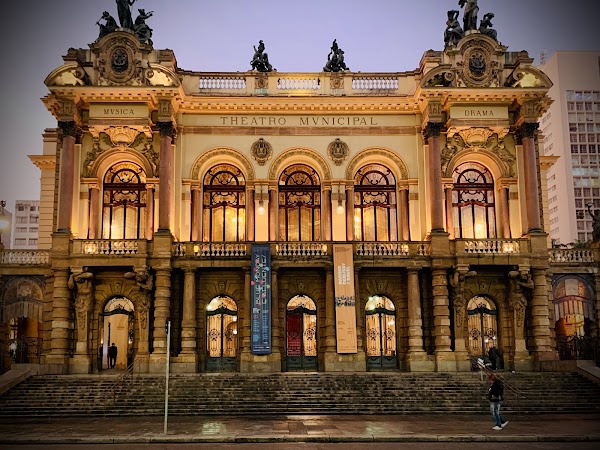
Stand in the square and look up. Pale stone rises above you, catching the light. Carved figures rest along the roofline, calm and still. A green dome sits at the very top. Traffic moves behind your back, and people cross the square in every direction. Yet the building holds its ground. This is the Theatro Municipal, the opera house of Sao Paulo, and for more than a century it has stood at the center of the city.
The theater opened in 1911. In those years, coffee had made the city rich. Money flowed in from the farms beyond the hills. Wealthy families wanted a stage to match the great houses of Europe. They wanted marble, velvet, and gold. They wanted a place to gather, to dress well, and to be seen. The opera house gave them all of it.
The design came from the office of Ramos de Azevedo, the leading architect of the city at the time. Italian artists shaped many of the details inside and out. The style is called eclectic. It borrows from many periods at once, mixing them into a single rich surface. Visitors often compare it to the opera house of Paris. The likeness is no accident. The builders wanted the world to take their young city seriously.
Look closely at the front of the building. Tall columns frame the entrance. Stone figures stand for music and for dance. Much of the material crossed the ocean by ship. Marble came from Italy. Bronze and colored glass came from other corners of Europe. The cost was enormous, and the city paid it without flinching. Every surface was meant to impress the eye at first glance.
If a tour or a concert lets you inside, take the chance. The lobby glows with warm light. A wide staircase climbs beneath a painted ceiling. Mirrors stretch the room in every direction and seem to double the crowd. Chandeliers hang above like frozen drops of water. Marble columns line the walls. The whole space was built so that simply arriving would feel like an event in itself.
The main hall seats around 1500 people. Red and gold wrap around the stage. Private boxes curve along the side walls in tiers. The room was shaped with great care for sound. A single trained voice can reach the back rows without a microphone. When the lights dim and the orchestra begins, the noise of the city outside falls completely away.
One week gave this building its deepest meaning. In February 1922, artists gathered here for the Week of Modern Art. They read new poems aloud. They hung paintings that looked nothing like the old style. They played music that broke familiar rules. For a few nights, the elegant hall became a place of open argument about the future of Brazilian culture.
The crowd did not always approve. Some people booed from their seats. Some laughed out loud. A few walked out in protest. Yet the week became a turning point. Brazilian art began to study its own land and its own people, instead of only copying Europe. The names from those nights are still taught in schools across the country today.
Around the theater, the city has changed many times over. New roads were cut through the valley below. Tall towers of glass and concrete rose on every side. Old buildings came down and new ones took their place. Through all of it, the opera house stayed exactly where it was. It became a fixed point in a restless and fast-moving city.
The building is home to an orchestra, a choir, and a ballet company. On many evenings the lights come up and music fills the hall. Some events cost little, and some cost nothing at all. The idea behind this was simple. Art should belong to the whole city, not only to the wealthy families who first paid for the walls.
During the day you can often join a guided visit. A guide leads you through the lobby and into the main hall. They point out the materials and the small touches that a quick glance would miss. They tell stories of famous nights and long-gone singers. The visit does not take long, but the details tend to stay in the memory.
The square outside has its own daily life. Vendors sell snacks and cold drinks. People sit on the steps to rest. Pigeons scatter and gather again. Just beyond runs the old viaduct and the green valley at the heart of the city. The theater watches over all of it, a quiet anchor in the constant rush.
Before you go, return to the center of the square and pause. Listen for a moment. You may catch a rehearsal drifting through an open door. More than one hundred years of voices have moved through these walls. Singers, dancers, and crowds have come and gone. Right now, you are simply the next person to stop and hear them.
Key facts
What to look for
Practical tips
Common questions
How long do you need at Theatro Municipal?
Plan 45–60 min. That is the time most visitors spend at Theatro Municipal. The free Lokali audio guide adds about 6 minutes of narration you can listen to as you walk, so it fits inside your visit rather than adding to it.
Is there a free audio guide to Theatro Municipal?
Yes — the Lokali app narrates Theatro Municipal free of charge in 50+ languages. It covers the history, what to look for on site and practical tips, and it works offline once downloaded.
Where is Theatro Municipal?
Theatro Municipal is in São Paulo, Brazil, at -23.5527, -46.6389. Tap the map link on this page for directions from where you are.
What should you know before visiting Theatro Municipal?
Join a daytime guided tour to see inside.
What is Theatro Municipal known for?
Opened in 1911 during Sao Paulo's coffee wealth boom.
What is the best time to visit Theatro Municipal?
Even without a performance ticket, you can often join a guided tour of the building's public spaces.
On the map
Opens directions to Theatro Municipal from your location.
Reference
More to see in São Paulo


Hear Theatro Municipal in your language
The full story, narrated, in 50+ languages. Download it before you go and it plays offline, at your own pace, with no ticket and no tour group.