
Pinacoteca do Estado de São Paulo
23.5344° S · 46.6339° W · Museum
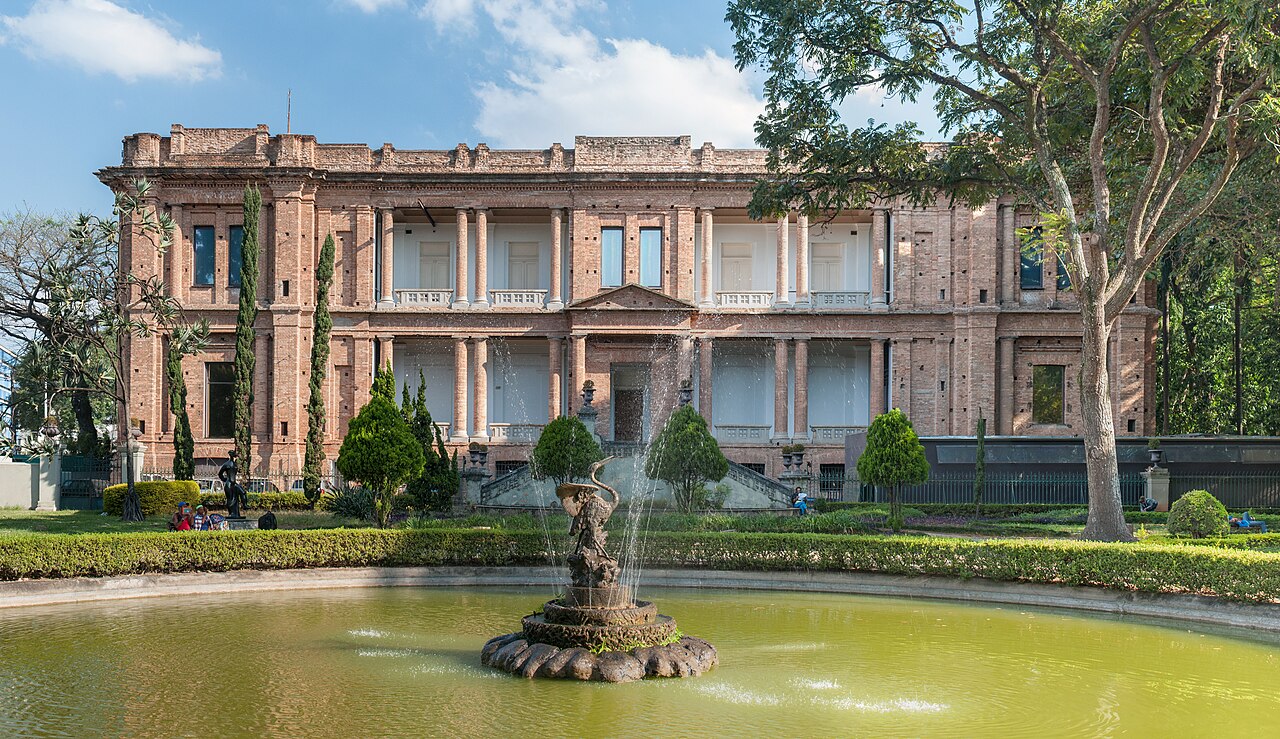
Photo: Wilfredor · CC BY-SA 4.0 · Wikimedia Commons
Pinacoteca do Estado de São Paulo is an art museum in São Paulo, Brazil. Opened in 1905, the oldest art museum in São Paulo. The free Lokali audio guide runs 7 minutes.
✓ Published October 2026 · how we write these guides
Visitor facts
| Lokali audio guide | 7 min · free |
|---|---|
| Type | Museum |
| Location | São Paulo, Brazil |
| Coordinates | -23.5344, -46.6339 |
| Official website | pinacoteca.org.br |
| Languages | 50+, in the Lokali app |
The story
Listen first. Step inside, and the noise of the city fades behind thick walls of bare brick. The air feels cooler here. Light falls from somewhere high above, soft and even, and it settles on a surface the colour of baked earth. Run your eyes along the wall nearest you. Every brick is visible. Nothing is painted over, and nothing is hidden. You are standing in the Pinacoteca do Estado de São Paulo, the oldest art museum in the city, and the building itself is the first thing it wants to show you.
The Pinacoteca opened as a museum in 1905. That makes it older than most of the skyscrapers you passed to get here. Its name comes from an old word for a picture gallery. From the start, its purpose was to collect and show art made in Brazil. Over more than a century, it has grown into one of the most important collections of Brazilian art anywhere. Many paintings here tell the story of how this country learned to look at itself.
But the building was not designed as a museum. It began in the late nineteenth century as the home of the Liceu de Artes e Ofícios, a school of arts and crafts. Students came here to learn practical trades and applied design. The plans came from the office of Ramos de Azevedo, an architect who shaped much of São Paulo's public face in that era. For a growing city full of new money and new workers, a school like this one was a statement about the future.
Here is the first surprise. The building was never fully finished. The original design called for a decorated, plastered facade, the kind of polished surface you see on grand civic buildings of that period. That final layer never arrived. So the brick stayed exposed, year after year. What began as an incomplete project became the building's character. Today, that raw brick is exactly what makes the place feel honest and warm.
In the 1990s, the building received a major renovation led by Paulo Mendes da Rocha. He was one of Brazil's most respected architects, and he later won the Pritzker Prize, often described as the highest honour in architecture. His approach was bold but simple. He did not try to complete the old decoration. He accepted the bare brick and worked with it. Instead of hiding the past, he made it the backdrop for everything new.
Look up now. Mendes da Rocha covered the inner courtyards with glass roofs. Rooms that once sat around open-air spaces now face bright, sheltered halls. Then look across. Slender metal walkways cross the empty space between the upper galleries, like small bridges. Walking over them, you can look down into the courtyards below. The old brick and the new steel and glass sit side by side, and neither one pretends to be the other.
The renovation also changed how you move through the building. Mendes da Rocha shifted the flow of visitors so that the journey feels like a walk through open, connected rooms rather than a march down corridors. Notice how often you can see from one space into another. A doorway frames a painting two rooms away. A window shows a slice of greenery outside. The building keeps inviting you to look further.
Now to the collection. The heart of it is Brazilian art from the nineteenth century onwards. One name to look for is Almeida Júnior, a painter from the São Paulo countryside. He is known for scenes of rural life, especially the caipira, the country people of the interior of the state. In his best-known works, ordinary people sit in plain light, doing ordinary things. For many Brazilians, these paintings were among the first to show their own world as worthy of a museum wall.
That is the second surprise. In the nineteenth century, much of the art made in Brazil looked toward Europe for its subjects and style. Painters trained in European academies and often painted European themes. As you walk the galleries, watch for the moment when that changes. The light becomes stronger and more tropical. The faces become local. The landscapes stop looking like Europe. You can follow a whole country slowly turning its gaze toward home.
The Pinacoteca is not only about the past. Contemporary artists regularly show work here, and some pieces are made for these spaces. Large installations often fill the open central areas, where the brick walls and the high glass roofs give art room to breathe. The contrast is part of the pleasure. A modern work sits against walls laid more than a century ago, and each makes the other look sharper.
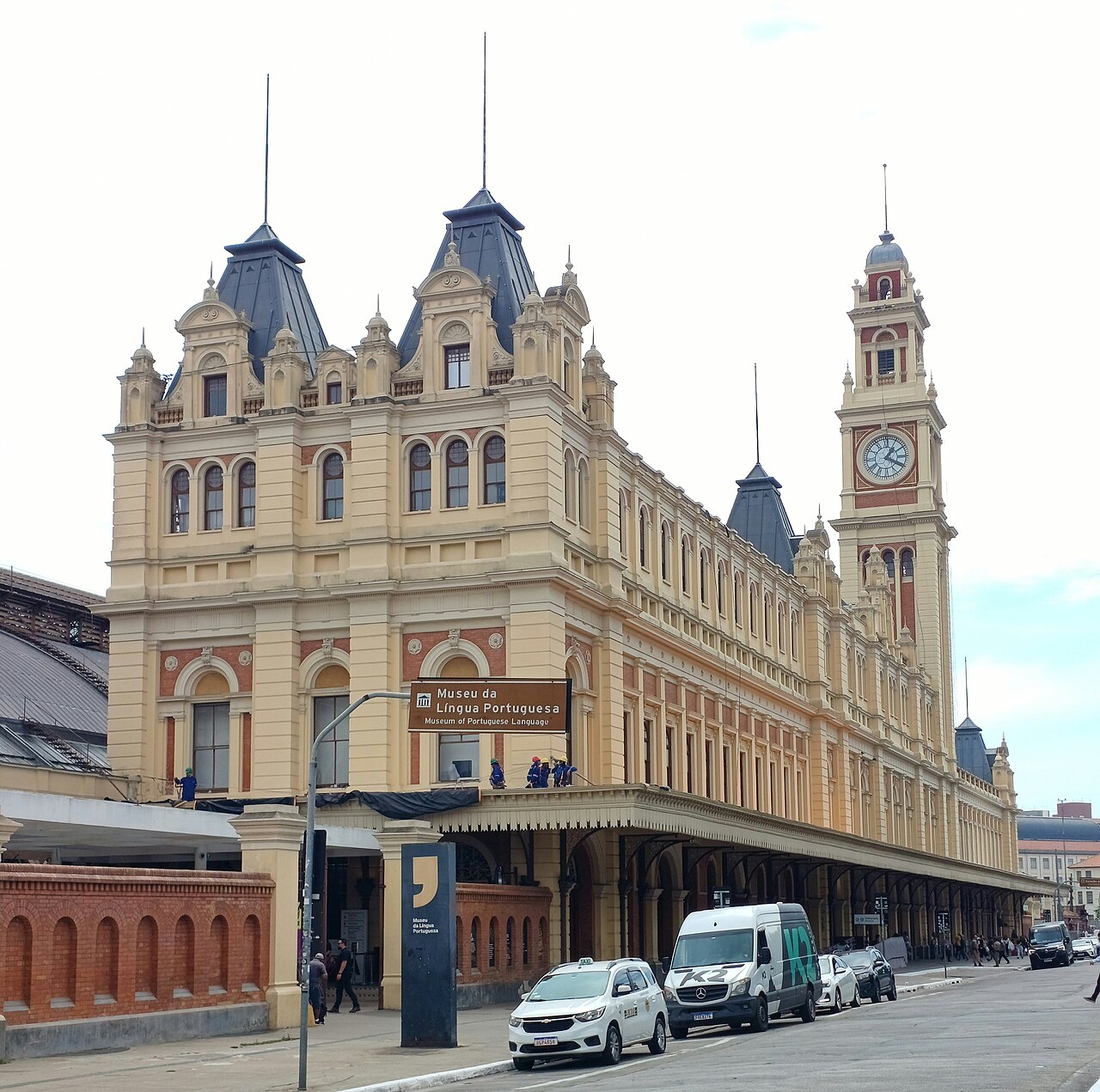
Step outside for a moment, and you will see that the museum sits in the Luz neighbourhood, beside the Jardim da Luz, one of the oldest public gardens in the city. Tall trees, paths, and benches stretch out next to the museum. Nearby stands the Luz railway station, with its own clock tower. This area was once a gateway to São Paulo. Trains brought coffee, goods, and newcomers through here as the city grew.
The museum has also spread beyond this single building. Nearby spaces, run as part of the Pinacoteca, host other exhibitions and parts of the collection. If you have time and energy, ask at the front desk what is showing in the other buildings today. Together, they turn this corner of the city into a small district for art, all within walking distance of the garden.
Before you leave, find a quiet spot under one of the glass roofs. Stand still for a minute. Notice how the daylight changes as clouds move across the sky. On a bright day, shadows from the roof frame cross the brick floor and walls. On a grey day, the whole hall turns soft and calm. The building feels different each hour, which is part of why people return.
As you walk back out toward the garden, take one last look at that bare brick. It was meant to be covered. It never was. And because of that, you can still see the hands that laid it, row by row. Listen again as the city sounds return around you... the traffic, the voices, the trains. Inside, the art waits for the next visitor, as it has for more than a century.
Key facts
What to look for
Practical tips
Common questions
Is there a free audio guide to Pinacoteca do Estado de São Paulo?
Yes — the Lokali app narrates Pinacoteca do Estado de São Paulo free of charge in 50+ languages. The guide runs about 7 minutes, covers the history, what to look for on site and practical tips, and works offline once downloaded.
Where is Pinacoteca do Estado de São Paulo?
Pinacoteca do Estado de São Paulo is in São Paulo, Brazil, at -23.5344, -46.6339. Tap the map link on this page for directions from where you are.
What is Pinacoteca do Estado de São Paulo known for?
Opened in 1905, the oldest art museum in São Paulo. Building first housed the Liceu de Artes e Ofícios school.
What should you look for at Pinacoteca do Estado de São Paulo?
Exposed brick walls that were never plastered over. Glass roofs covering the former open-air courtyards. Slender metal bridges crossing between upper galleries.
What should you know before visiting Pinacoteca do Estado de São Paulo?
Visit on a sunny morning for the best skylight effects. Pair your visit with a walk through Jardim da Luz.
When is the best time to visit Pinacoteca do Estado de São Paulo?
Visit on a sunny morning for the best skylight effects.
On the map
Opens directions to Pinacoteca do Estado de São Paulo from your location.
More to see in São Paulo

Hear Pinacoteca do Estado de São Paulo in your language
The full story, narrated, in 50+ languages. Download it before you go and it plays offline, at your own pace, with no ticket and no tour group.