Abanotubani (Sulphur Baths District)
41.7147° N · 44.8052° E · Neighborhood
Abanotubani (Sulphur Baths District) is a cluster of small traditional bathhouses in a valley below Narikala Fortress, fed by natural sulphur springs. It is in Tbilisi, Georgia. Most visitors spend 1–2 hours here. The free Lokali audio guide runs 5 minutes.
✓ Verified August 2026 · how we write these guides
Visitor facts
| Time needed | 1–2 hours |
|---|---|
| Lokali audio guide | 5 min · free |
| Type | Neighborhood |
| Best for | Local life |
| Location | Tbilisi, Georgia |
| Coordinates | 41.7147, 44.8052 |
| Languages | 45, in the Lokali app |
The story
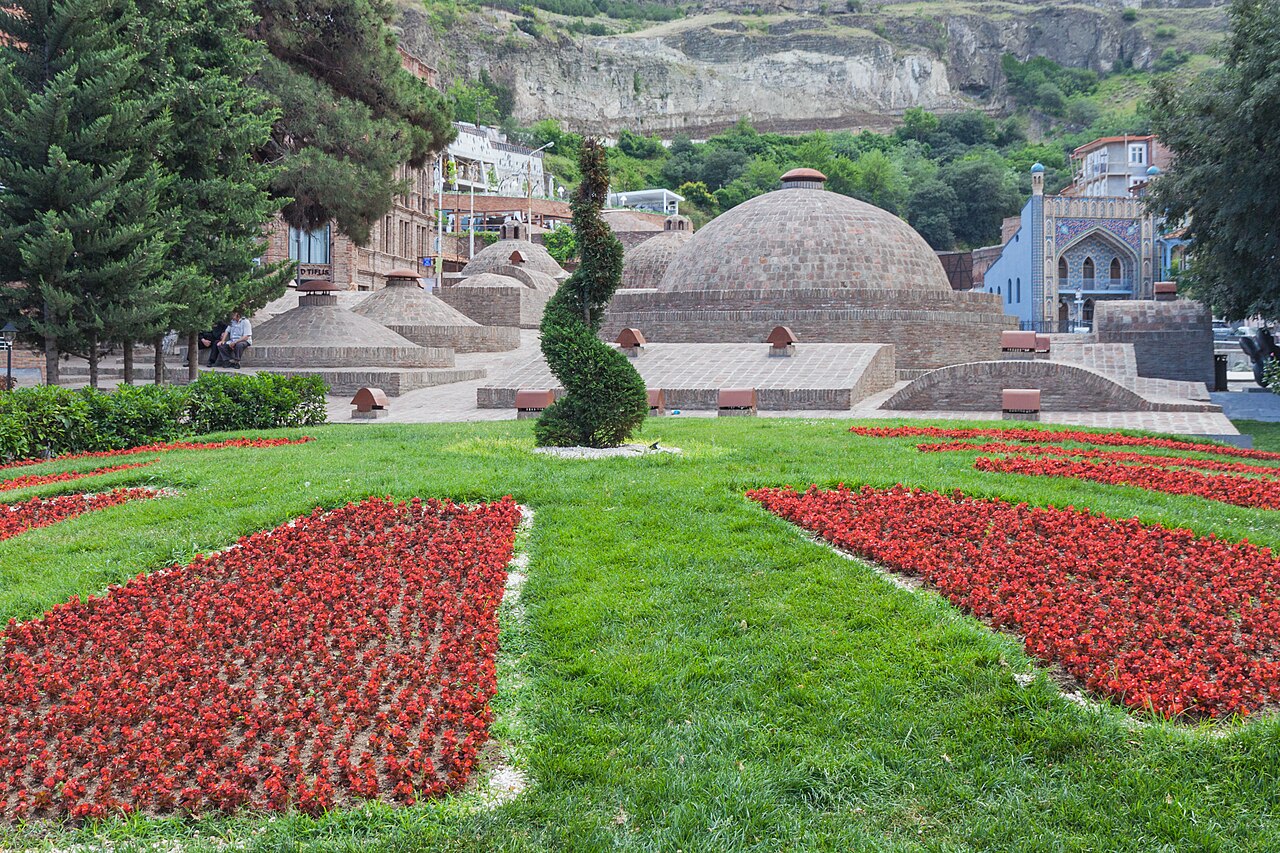
Steam drifts from rounded brick rooftops set into a shallow valley beneath the fortress, and the air carries a faint mineral tang. This is Abanotubani, the bath district that sits at the very origin of Tbilisi. If you want to understand the city, it helps to begin here, where the hot springs that started everything still rise from the ground.
The connection runs right into the city's name. The Georgian word tbili means warm, and Tbilisi grows directly out of it. The founding legend tells of King Vakhtang Gorgasali, hunting in this wooded valley in the fifth century, whose falcon dropped into a steaming spring. He read the warm water as a sign, founded his capital on the spot, and the city has carried the meaning ever since.
Abanotubani means, simply, the bath district, and for most of the city's history that was its practical and social heart. In an age before plumbing it was where people washed, but it was also where they met, arranged marriages, marked holidays, and settled business. The bathhouses were public institutions, not just places to clean up.
The architecture tells you how the baths work. At street level you see domes, each with a glass skylight, because the bathhouses are built down into the ground around the springs rather than up into the air. The most striking of them, the Orbeliani bathhouse, wears a blue-tiled facade and twin turrets in a Persian style that stands apart from the plain brick of its neighbours.
The water itself is the constant. It rises naturally hot and rich in sulfur, valued for centuries for its effect on skin and aching joints, and it still feeds the working baths today. You can rent a private room with its own pool or use the cheaper single-sex sections, and an attendant's vigorous scrub and foam wash remains the signature local ritual.
The district is more than its bathhouses, though. Steep lanes of old balconied houses climb toward the fortress, small courtyards hide behind street gates, and at the head of the gorge a waterfall falls over dark rock. Travellers and writers have wandered these lanes and praised the baths for two centuries, and the quarter still carries that long curiosity.
It also sits at the crossroads of the old town. The river is close, the cliffside churches and the founder's statue look down from above, and the lanes of the historic centre fan out just beyond. That position is no accident; everything else in Tbilisi arranged itself around this warm, low valley.
For a comfortable visit, come early in the day for quiet and clear views of the domes and the tiled facade. If you mean to bathe, bring a towel and flip-flops or rent them on the spot, and always ask about prices first, since they range widely from the plain public halls to the private rooms.
Season changes the experience more than you might expect. Winter is when the baths feel essential, the cold lanes giving way to heavy warmth; spring and autumn are mild and pleasant for wandering; high summer heats the valley, so early mornings are best. The steam, though, never stops rising.
Treat the district as the start of a walk rather than a single tick on a list. From here you can climb to the fortress for the view, follow the river, or thread into the old town past Sioni and the cliffside churches, with the baths as the warm anchor you keep returning toward.
The quarter sits at a meeting point of cultures as well as of streets. Over the centuries Georgians, Persians, Armenians, and others all used these baths, and the architecture and the rituals carry traces of each. It is a small, warm version of the wider mixing that shaped the whole old town.
Even a short visit pays off if you are not bathing. Walking the lanes, photographing the domes and the tiled facade, and climbing to the waterfall take well under an hour and give you the heart of the district without ever getting into the water.
Stand among the domes with the cliff and fortress rising behind you, and you are standing where the city chose to exist. Everything else in Tbilisi spread out from this warm valley, century by century. When you climb back up into the old town, you are leaving the precise spot where, in story and in fact, it all began.
Key facts
What to look for
Practical tips
Common questions
How long do you need at Abanotubani (Sulphur Baths District)?
Plan 1–2 hours. That is the time most visitors spend at Abanotubani (Sulphur Baths District). The free Lokali audio guide adds about 5 minutes of narration you can listen to as you walk, so it fits inside your visit rather than adding to it.
Is there a free audio guide to Abanotubani (Sulphur Baths District)?
Yes — the Lokali app narrates Abanotubani (Sulphur Baths District) free of charge in 50+ languages. It covers the history, what to look for on site and practical tips, and it works offline once downloaded.
Where is Abanotubani (Sulphur Baths District)?
Abanotubani (Sulphur Baths District) is in Tbilisi, Georgia, at 41.7147, 44.8052. Tap the map link on this page for directions from where you are.
What should you know before visiting Abanotubani (Sulphur Baths District)?
Start a walk through the old town here.
What is Abanotubani (Sulphur Baths District) known for?
The birthplace of Tbilisi in legend and fact.
What is the best time to visit Abanotubani (Sulphur Baths District)?
Choose a quieter bathhouse away from the main tourist strip.
On the map
Opens directions to Abanotubani (Sulphur Baths District) from your location.
More to see in Tbilisi


Hear Abanotubani (Sulphur Baths District) in your language
The full story, narrated, in 50+ languages. Download it before you go and it plays offline, at your own pace, with no ticket and no tour group.