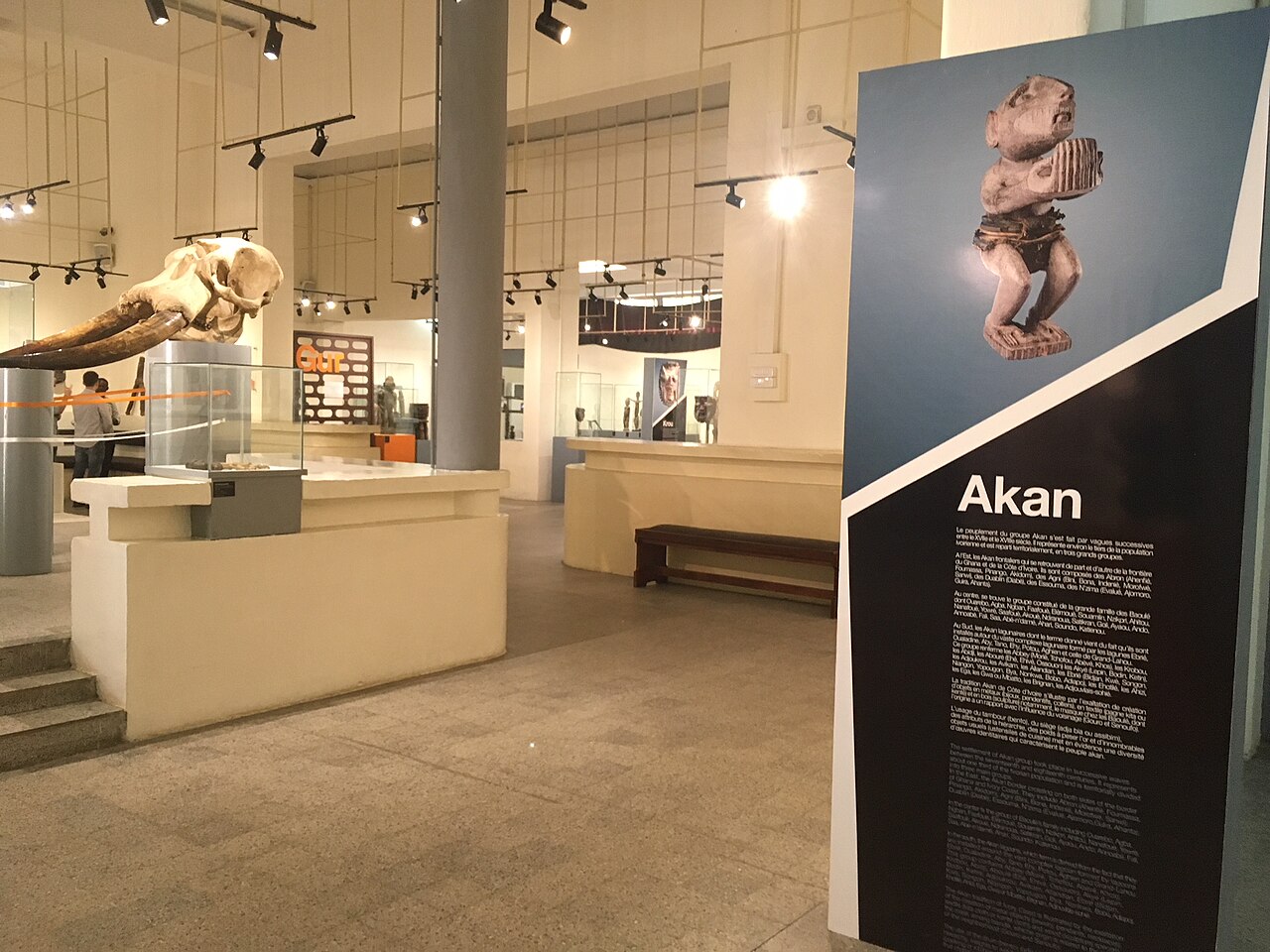
Musée des Civilisations de Côte d'Ivoire
4.0342° N · 5.5519° W · Museum
Musée des Civilisations de Côte d'Ivoire is a comprehensive museum showcasing Ivorian art, masks, sculptures, and cultural artefacts spanning multiple ethnic groups and historical periods. It is in unknown. Most visitors spend 1–2 hours here. The free Lokali audio guide runs 5 minutes.
✓ Verified August 2026 · how we write these guides
Visitor facts
| Time needed | 1–2 hours |
|---|---|
| Lokali audio guide | 5 min · free |
| Type | Museum |
| Best for | History |
| Location | unknown |
| Coordinates | 4.0342, -5.5519 |
| Languages | 45, in the Lokali app |
The story
A wooden mask watches you from its glass case. Its eyes are narrow slits. Its surface is dark and smooth from years of handling. Someone carved this face long ago, in a village far from here. Now it waits in the middle of Abidjan, and it seems to look back at you.
This is the Musée des Civilisations de Côte d'Ivoire, the national museum of the country. It stands in the Plateau district, the administrative heart of Abidjan, among ministries and office towers. Outside, traffic moves along wide avenues. Inside, the rooms are calm, and the light falls on wood, bronze, and cloth.
The museum compound is small and walled, a quiet pause in the concrete of the Plateau. The entrance is modest. Do not expect marble stairways or vast wings. This is a working museum, and its treasures are inside.
The museum began in 1942, while Côte d'Ivoire was still a French colony. It started as a research center, part of a network of institutes across French West Africa. Colonial researchers gathered masks, statues, and tools from across the territory. They wanted to study the peoples they governed. The collection grew year after year.
Côte d'Ivoire became independent in 1960. The young nation inherited the building and everything inside it. The museum slowly changed from a colonial research center into a national institution. Its purpose changed as well. It now keeps the heritage of the Ivorian people, in the name of the Ivorian people.
The collection holds thousands of objects. There are carved masks, wooden statues, bronze castings, drums, textiles, weapons, and everyday tools. Together they speak for the many cultures of this country. More than sixty ethnic groups live in Côte d'Ivoire. Their languages, beliefs, and art styles differ from region to region. This museum is one of the few places where they all meet.
Look closely at the masks. Dan masks from the west have smooth oval faces with high foreheads. Baoulé masks from the center often show calm, careful features and fine braided hair. Senufo masks from the north combine human faces with horns, teeth, and animal jaws. Each mask had work to do. Some danced at funerals. Some judged disputes. Some guarded the fields.
For the cultures that made them, a mask was never a simple decoration. A mask was a spirit with a body of wood. When a trained dancer put it on, the spirit walked into the village. The museum keeps these objects behind glass now. But many visitors lower their voices in these rooms. Old respect lasts.
Other cases hold small brass weights for measuring gold dust. Akan peoples, including the Baoulé, used them in trade for centuries. Some weights are shaped like crocodiles, birds, or seated figures. Some illustrate proverbs in miniature. Nearby you may find royal staffs, beaded ornaments, talking drums, and heavy jewelry of twisted metal. Gold made kingdoms in this region, and these small objects managed it.
The museum has lived through hard times. After the disputed election of 2010, fighting reached the streets of Abidjan. In 2011, looters broke into the museum. They took more than 100 objects, including gold ornaments and rare pieces of jewelry. Some stolen pieces have never been found. The staff repaired the building, improved security, and kept working.
Today the museum hosts school groups, temporary exhibitions, concerts, and cultural events. Curators also travel into the countryside to record dances, rituals, and crafts before they fade. On some days you may have whole rooms to yourself, with only a guard for company. The building itself is modest, and some rooms are simple. Let that go. The objects carry the meaning here, not the walls.
There is a larger story in these rooms as well. Many African artworks left the continent during the colonial period. European museums still hold thousands of pieces from Côte d'Ivoire. The country has asked for some of them to come home. Each object that returns will pass through doors like these. A museum like this one is also a promise about the future.
Take your time before you leave. Some labels are short, and many are only in French. Let the objects speak instead. Notice the tool marks left by the carver's blade. Notice how a drum skin shines where hands struck it for decades. Then find one piece that holds your eye, and stand with it a moment. Someone made it with skill and purpose, long before this city of towers existed. It was here first. It will remember you were here.
Key facts
What to look for
Practical tips
Common questions
How long do you need at Musée des Civilisations de Côte d'Ivoire?
Plan 1–2 hours. That is the time most visitors spend at Musée des Civilisations de Côte d'Ivoire. The free Lokali audio guide adds about 5 minutes of narration you can listen to as you walk, so it fits inside your visit rather than adding to it.
Is there a free audio guide to Musée des Civilisations de Côte d'Ivoire?
Yes — the Lokali app narrates Musée des Civilisations de Côte d'Ivoire free of charge in 50+ languages. It covers the history, what to look for on site and practical tips, and it works offline once downloaded.
Where is Musée des Civilisations de Côte d'Ivoire?
Musée des Civilisations de Côte d'Ivoire is in unknown, at 4.0342, -5.5519. Tap the map link on this page for directions from where you are.
What should you know before visiting Musée des Civilisations de Côte d'Ivoire?
Go in the morning, before the midday heat builds.
What is Musée des Civilisations de Côte d'Ivoire known for?
Founded in 1942 during the French colonial period.
What is the best time to visit Musée des Civilisations de Côte d'Ivoire?
The mask gallery is particularly powerful—ask a guard about the ceremonial significance of specific pieces.
On the map
Opens directions to Musée des Civilisations de Côte d'Ivoire from your location.
More to see in unknown


Hear Musée des Civilisations de Côte d'Ivoire in your language
The full story, narrated, in 50+ languages. Download it before you go and it plays offline, at your own pace, with no ticket and no tour group.