
Baltit Fort is a seven-storey wooden structure perched above Karimabad, rebuilt in the 1970s on medieval foundations. It is in Hunza, Pakistan. Most visitors spend 1–2 hours here. The free Lokali audio guide runs 5 minutes.
✓ Verified August 2026 · how we write these guides
Visitor facts
| Time needed | 1–2 hours |
|---|---|
| Lokali audio guide | 5 min · free |
| Type | Fort |
| Best for | History |
| Location | Hunza, Pakistan |
| Coordinates | 36.3411, 74.8789 |
| Languages | 45, in the Lokali app |
The story
The wind comes down from the mountains and finds you first. You stand below a building of stone and timber, its walls the color of dry earth. Above you, wooden balconies lean out over the slope. Behind the roofline, snow peaks hold the sky. This is Baltit Fort. For centuries it has watched over the town of Karimabad in the Hunza Valley.
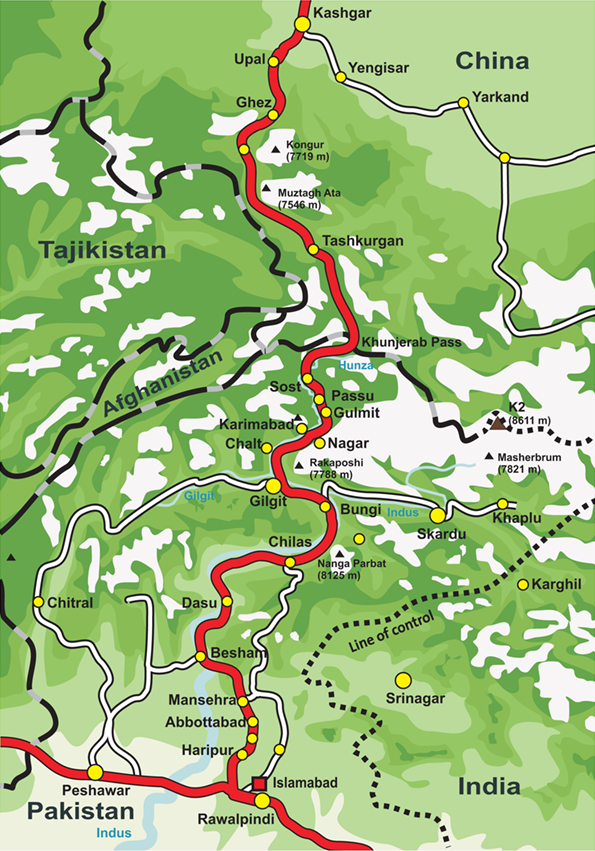
The fort sits on a high shelf of rock. Below it, the land falls away into terraced fields and apricot trees. The position was chosen with care. From these walls, the rulers of Hunza could see who entered the valley and who left. Few places offered such a clear view of the only road through the mountains.
Hunza lay along old trading paths. For hundreds of years, traders and travelers moved through these valleys between Central Asia and the lands to the south. Whoever held this high ground held the route. The fort was both a guard post and a throne. Its position gave the small kingdom of Hunza power far beyond its size.
People have built on this spot for about seven hundred years. The fort grew slowly, one section at a time. Each generation added rooms, walls, and towers. What you see today is not a single design. It is many smaller buildings, joined into one shape over many lifetimes of work.
Look closely at the way it is made. The walls are stone and packed mud. Heavy timbers run through them, laid flat inside the masonry. This is an old method used across these mountains. The wood lets the walls flex during an earthquake instead of cracking apart. In a land that shakes often, this is what kept the fort standing.
There is a story told here about how the fort took its shape. People say a princess came from Baltistan to marry a ruler of Hunza. As part of her dowry, she is said to have brought skilled craftsmen with her. Their hands, the story goes, gave the fort its Tibetan feeling. This is a local legend, passed down through the years.
For a long age this was the seat of power. The rulers of Hunza were called Mirs. They lived here, held court here, and governed the valley from these rooms. Guests were received in the upper halls. The fort was a home, a fortress, and the center of the kingdom all at the same time.
Walk through the lower floors and the air turns cool and dim. The rooms are small. The doorways are low, so you bow your head as you pass. You move from dark storerooms upward toward the light. The builders kept the working spaces below and the living spaces above, where the sun and the open views could reach.
In the 1940s, the ruling family left the fort. They built a more modern house nearby and moved out. The old fort was no longer needed. For decades it stood empty. Rain worked into the walls. Beams sagged and slipped. Slowly, season by season, the building began to fall apart.
Then came the rescue. The Aga Khan Trust for Culture took on the task of saving it. Workers studied the old methods and used them again, by hand. They replaced rotten timber and reset loose stone. The careful repair finished in 1996. The fort became a museum, open to anyone willing to climb the path.
Inside, the rooms now hold objects from daily life. There are old cooking pots, weapons, clothing, and carved furniture. Each room explains a piece of how people lived here. You can stand in the same kitchen that once served the rulers and see the blackened hearth where their food was cooked. Old photographs on the walls show the faces of the family who ruled from these rooms.
Climb to the open roof and the whole valley spreads out below. Across the gorge stands the peak of Rakaposhi, white and immense. Behind the fort rises Ultar, sharp and very close. The terraced fields fall in green steps toward the river. From this height, the shape of life in Hunza becomes clear at a glance, from the fields to the high snow.
Stand for a moment at the wooden railing. The same wind still moves through the valley. The same mountains still hold their snow. The fort has watched over this place for seven centuries, and it watches still. When you turn to leave, the quiet of old stone seems to follow you down the hill.
Key facts
What to look for
Practical tips
Common questions
How long do you need at Baltit Fort?
Plan 1–2 hours. That is the time most visitors spend at Baltit Fort. The free Lokali audio guide adds about 5 minutes of narration you can listen to as you walk, so it fits inside your visit rather than adding to it.
Is there a free audio guide to Baltit Fort?
Yes — the Lokali app narrates Baltit Fort free of charge in 50+ languages. It covers the history, what to look for on site and practical tips, and it works offline once downloaded.
Where is Baltit Fort?
Baltit Fort is in Hunza, Pakistan, at 36.3411, 74.8789. Tap the map link on this page for directions from where you are.
What should you know before visiting Baltit Fort?
Climb to the rooftop for the widest valley views.
What is Baltit Fort known for?
Built on this site over roughly seven hundred years.
What is the best time to visit Baltit Fort?
Climb to the top floor at late afternoon when light softens the valley.
On the map
Opens directions to Baltit Fort from your location.
More to see in Hunza



Hear Baltit Fort in your language
The full story, narrated, in 50+ languages. Download it before you go and it plays offline, at your own pace, with no ticket and no tour group.