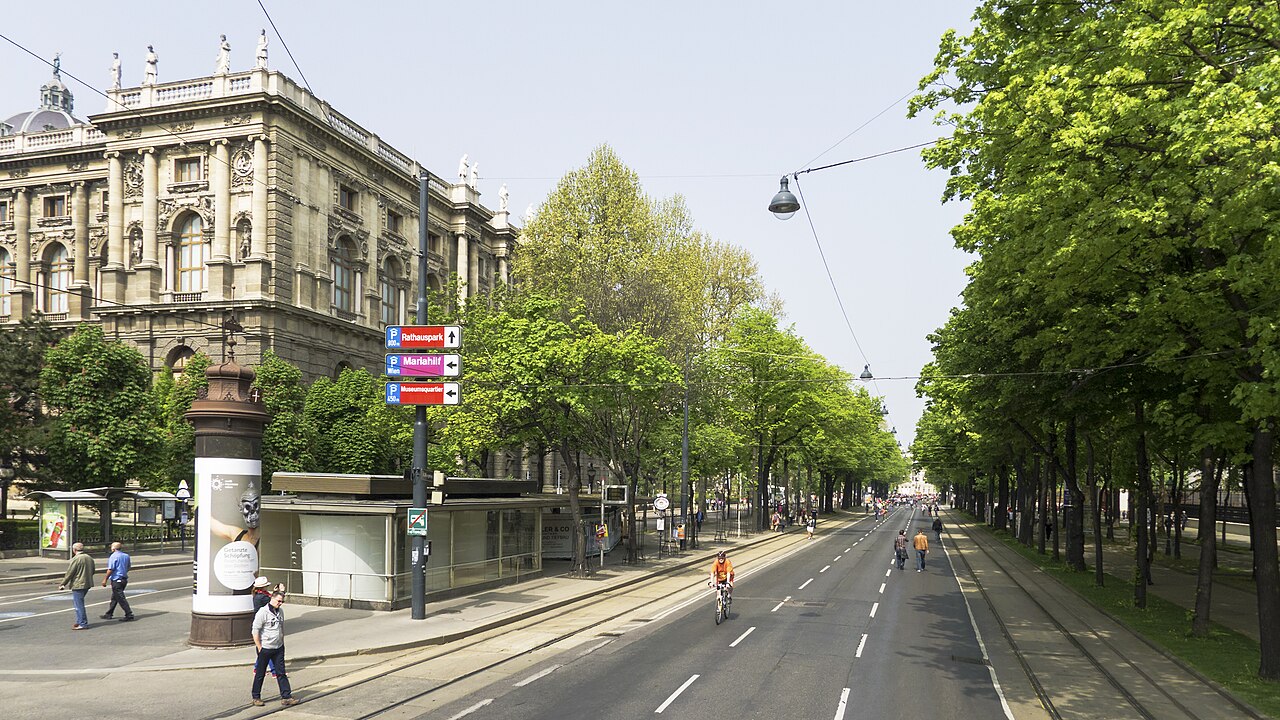
Ringstrasse is a boulevard in Vienna, Austria. Built after Emperor Franz Joseph demolished medieval walls in 1857. Four kilometres of boulevard encircling Vienna's old town. Most visitors spend 2-3 hours here. The free Lokali audio guide runs 6 minutes.
✓ Verified October 2026 · how we write these guides
Visitor facts
| Time needed | 2-3 hours |
|---|---|
| Lokali audio guide | 6 min · free |
| Type | Boulevard |
| Best for | Editors’ pick |
| Location | Vienna, Austria |
| Languages | 45, in the Lokali app |
The story
Stand on any corner of the Ringstrasse and you will feel the weight of stone underfoot — wide granite cobbles worn smooth by a century and a half of trams, carriages, and hurrying Viennese. The boulevard curves around the old city in a grand loop, four kilometres of broad pavement lined with chestnut trees and monuments so dense they almost jostle one another for attention. The air here carries a particular quality — exhaust and linden blossoms in summer, the metallic bite of tram brakes, the faint echo of bells from a dozen spires just beyond the buildings.
This ring road is the product of a single imperial decree. In 1857, Emperor Franz Joseph ordered the medieval city walls demolished and replaced with a modern boulevard. For centuries those walls had defended Vienna from Ottoman sieges and rival armies, but by the mid-nineteenth century they were obsolete — a crumbling barrier choking the city's growth. The emperor wanted grandeur, a showcase for the Habsburg dynasty's enduring power. What rose in place of the fortifications was not just a street but a stage set for an empire.
The architects who designed the Ringstrasse buildings worked in a deliberate historical pastiche. The Parliament building echoes ancient Athens, all white marble columns and pediments. The neo-Gothic Rathaus — the city hall — bristles with pointed arches and a soaring central tower that could belong to a medieval Flemish town. The Burgtheater wears Renaissance dress, the Opera House channels early French baroque. Walk the full circuit and you move through two thousand years of European architectural memory, compressed into a single afternoon.
This eclecticism was intentional. The Ringstrasse was built during the reign of Historicism, a movement that believed each building type had an ideal historical style. Theatres should look Renaissance because the Renaissance celebrated human drama. Parliaments should look Greek because Greece invented democracy. Churches should be Gothic because the Middle Ages were the age of faith. The logic feels forced now, but the visual effect remains startling — every hundred metres the skyline shifts costume.
The boulevard also carved new social geography into Vienna. The old aristocracy had lived inside the walls; the rising bourgeoisie — bankers, industrialists, professionals — built their mansions along the Ring. The wide sidewalks became a promenade where the wealthy could see and be seen, a daily theatre of status. Cafés spilled onto the pavement. The Opera drew crowds in evening dress. The Ring was less a traffic artery than a salon without walls.
Not everyone celebrated the transformation. The writer Karl Kraus called the Ringstrasse a 'Potemkin city,' all façade and no soul. The urban critic Camillo Sitte argued the boulevard destroyed the intimate scale of old Vienna, replacing medieval charm with bombastic monuments and empty ceremonial space. By the early twentieth century, younger architects like Adolf Loos were rejecting the whole Historicist project, calling for plain surfaces and honest materials. The Ringstrasse began to look like the last gasp of an empire that would soon collapse.
And collapse it did. The First World War dismantled the Habsburg realm, and the Ringstrasse suddenly belonged to a much smaller country. The grand buildings remained, but their original purpose — to project imperial confidence — evaporated. The Opera House was bombed in the Second World War and painstakingly rebuilt. The Parliament saw the birth of the Austrian Republic. The monuments along the Ring shifted meaning with each political upheaval, their stone façades outlasting the ideologies that commissioned them.
Today the Ringstrasse is a working boulevard, not a museum piece. Trams rattle past every few minutes — lines one, two, and D trace the full loop. Commuters cut through the Volksgarten on their way to offices. Tourists queue outside the Opera. Skateboarders use the steps of the Burgtheater as a practice run. The chestnut trees drop their conkers in autumn, and the street sweepers curse them. The buildings still impress, but they no longer dominate the city's imagination the way they did in 1870.
If you walk the entire Ring, start at the Urania observatory on the Danube Canal and follow the curve counterclockwise. You will pass the MAK museum, the Stadtpark with its gilded Strauss monument, the Opera, the Natural History Museum, the Hofburg palace complex, the Volksgarten, the Parliament, the Rathaus, the Burgtheater, and the Votivkirche before looping back to the canal. The full circuit takes about ninety minutes at a steady pace, longer if you stop to look up at the roof sculptures and carved lintels that crowd every cornice.
Pay attention to the small details as you go. Notice how the street lamps change style every few blocks — some cast iron and ornate, others plain steel replacements from postwar reconstruction. Look for the brass plaques on building façades marking where writers and composers once lived. Watch how the light shifts as the sun moves behind the spires — the Rathaus tower casts a long shadow across the park in late afternoon, and the Votivkirche glows pale grey in the hour before dusk.
The Ringstrasse is not subtle. It was never meant to be. But beneath the imperial bluster there is a strange honesty — a city that built its modern identity by dressing up in historical costumes, and somehow made it work. The boulevard remains what it always was: a monument to ambition, a place where architecture argues with itself, a loop of stone and memory wrapped around a medieval core.
Stand still for a moment and let the trams pass. The Ringstrasse will outlast the noise, the traffic, the shifting politics. It has before. The stone underfoot is the same stone Franz Joseph walked on when the boulevard was new. The chestnut trees are younger, the buildings patched and cleaned, but the curve of the road holds. This is Vienna's grand gesture, frozen in limestone and marble, still turning in its long, slow circle around the old town.
Key facts
What to look for
Practical tips
Common questions
How long do you need at Ringstrasse?
Plan 2-3 hours. That is the time most visitors spend at Ringstrasse. The free Lokali audio guide runs 6 minutes and is made to listen to while you walk.
Is there a free audio guide to Ringstrasse?
Yes — the Lokali app narrates Ringstrasse free of charge in 50+ languages. No ticket, tour group or subscription, and it works offline once downloaded.
What should you know before visiting Ringstrasse?
Walk the full circuit counterclockwise starting at Urania observatory
What is Ringstrasse known for?
Built after Emperor Franz Joseph demolished medieval walls in 1857
What is the best time to visit Ringstrasse?
Visit late afternoon when shadows stretch across the parks
More to see in Vienna


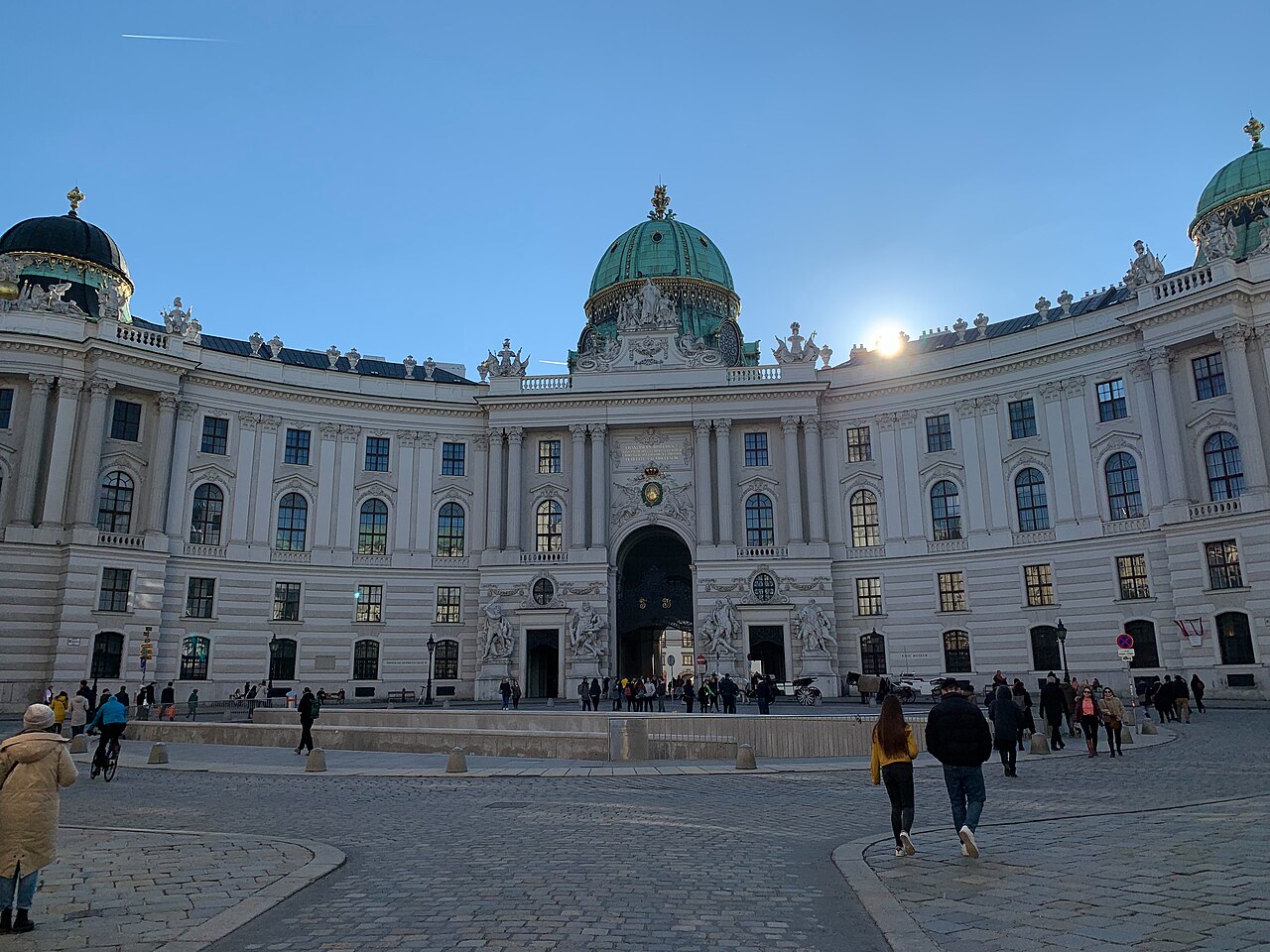


Hear Ringstrasse in your language
The full story, narrated, in 50+ languages. Download it before you go and it plays offline, at your own pace, with no ticket and no tour group.