
Pyramid of Neferefre
29.8938° N · 31.2017° E · Archaeological Site
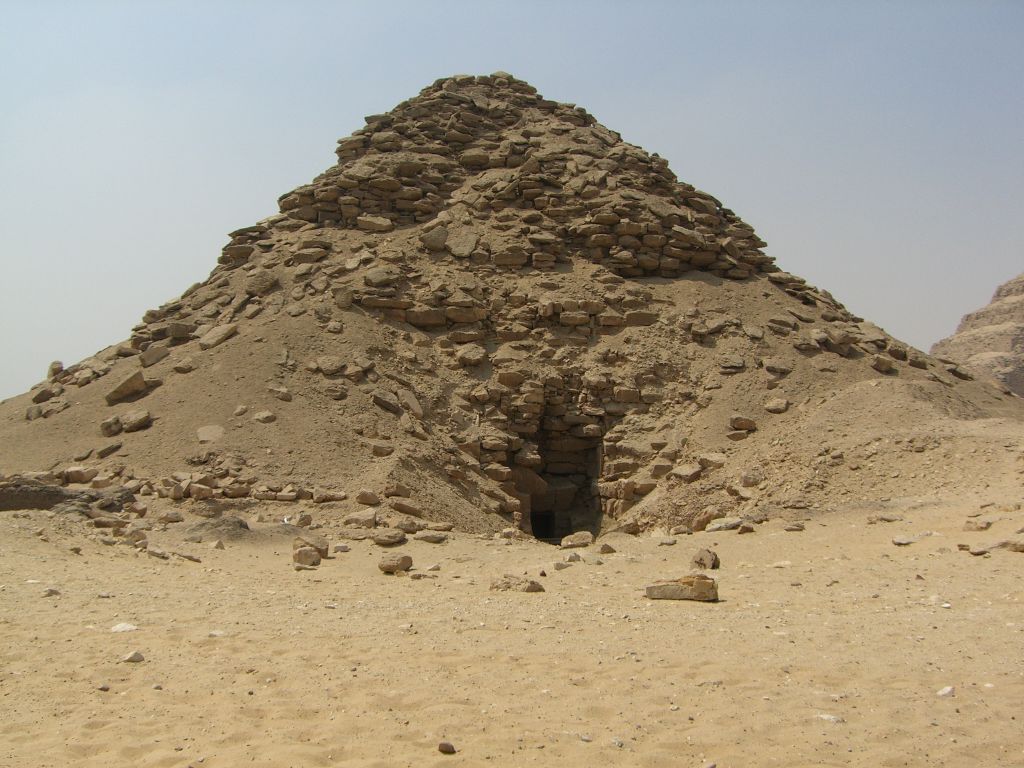
Photo: Wannabe Egyptologist · CC BY-SA 3.0 · Wikimedia Commons
Pyramid of Neferefre is a smooth-sided pyramid. It is near Abusir, Egypt. Neferefre was a Fifth Dynasty king with a short reign. The free Lokali audio guide runs 8 minutes.
✓ Published October 2026 · how we write these guides
Visitor facts
| Lokali audio guide | 8 min · free |
|---|---|
| Type | Archaeological Site |
| Location | Abusir, Egypt |
| Coordinates | 29.8938, 31.2017 |
| Languages | 50+, in the Lokali app |
The story
Listen first. Out here, on the edge of the desert at Abusir, the wind moves fine sand across the ground with a dry, steady hiss. The light is flat and wide, and the low mound in front of you is almost the same colour as the desert around it. It does not look like a pyramid at all. That is the first surprise. The second takes longer to tell, so walk with me for a few minutes.
Abusir sits between Giza to the north and Saqqara to the south. It was a royal cemetery of the Fifth Dynasty, a line of kings who ruled Egypt in the middle of the third millennium before Christ. Several of these kings built their pyramids here, close together, on a low desert ridge above the Nile valley. Of all of them, the monument you are facing lies furthest out into the desert. It sits to the southwest of the larger pyramid of Neferirkare, who was probably this king's father.
Neferefre, whose name you may also see written as Raneferef, was a young king. Egyptologists generally believe his reign was very short, perhaps only a few years. His mother is thought to have been Queen Khentkaus the Second, whose own smaller pyramid stands nearby. His brother, or close relative, was Nyuserre, who ruled after him for much longer. That family story shapes almost everything you see here.
When a king came to the throne, work on his tomb began quickly. The builders cut into the bedrock, laid out the burial chambers, and started the core of a stepped structure in limestone. Then, it seems, Neferefre died. The work had reached only the lowest level. The great pointed shape that the plan intended was never built. What remained was a broad, square platform of stone with a flat top — a beginning, frozen in place.
The builders did not simply walk away. Instead, they finished what they had as a different kind of monument. They squared off the unfinished core and gave it a sloping outer face and a flat roof. The result looked less like a pyramid and more like a large, low mound. Some scholars think this shape was chosen on purpose, because it echoed the primeval mound of Egyptian belief, the first dry land that rose from the waters at the creation of the world. That idea is an interpretation, not a certainty, but it helps to explain why the platform was finished so carefully.
For a long time, this site attracted little attention. It looked like a heap of rubble, and earlier explorers focused on the better-preserved pyramids nearby. The real story came out of the ground much later. In the late twentieth century, an expedition from the Czech Institute of Egyptology, part of Charles University in Prague, began systematic excavations here. The team was led by the Egyptologist Miroslav Verner, and their work at Abusir continued over many seasons.
What they found changed how this unfinished tomb is understood. On the east side of the platform lay the remains of a mortuary temple, the building where priests made offerings to the dead king. Because the king died early, this temple was first built quickly and modestly. Later, during the reign of Nyuserre, it was enlarged, much of it in mudbrick rather than fine stone. Mudbrick is humble, sun-dried earth, but here it preserved something remarkable.
Inside the temple storerooms, the excavators found fragments of papyrus. These were administrative documents — records kept by the priests who served the king's cult. They belong to a group now known as the Abusir papyri. Earlier finds of this kind had come from the nearby temple of Neferirkare, and the discoveries here added much more. Papyrus this old is extremely rare. These scraps show daily life inside a royal temple: lists of offerings, duty rosters for priests, inventories of equipment, and notes on deliveries of goods.
Here is a detail that many visitors miss. The papyri from this temple mention a structure connected to the cult that scholars often call a slaughterhouse, sometimes translated as the sanctuary of the knife. Archaeologists identified remains near the temple that may match it. Cattle were brought here and slaughtered so that fresh meat could be offered to the king. Imagine it for a moment — the dust, the animals, the smell of blood and smoke, in a place that today feels so silent.
The temple also held statues of the king. The Czech team recovered fragments of several sculptures, in more than one kind of stone. One small statue shows the king seated, with a falcon representing the god Horus spreading its wings behind his head, protecting him. Images like this connected the living king to the god of kingship. Today such finds are kept in museums, not on site, so what you see here is the ground they came from.
There is one more discovery, and it is quieter. Deep inside the platform, in the damaged burial chamber, the excavators found human remains. Ancient tomb robbers had broken in long ago and left the chamber in pieces. Studies of the bones suggested a young adult man, which fits what is known about a short reign. Scholars are careful here, and so should we be. The remains may be those of Neferefre himself, but certainty across so many centuries is difficult.
Now look again at the mound in front of you. Notice how low it is compared with the pyramids on the skyline nearby. Notice the colour of the stone, and where the edges have softened under wind and sand. Much of what made this place important — the temple, the papyri, the statues — was made of fragile material or was carried away for study. What survives on the surface is modest. But this modest site gave historians one of their clearest views of how an Old Kingdom royal cult actually worked.
As you stand here, turn slowly and look around. To the northeast, you can see the other pyramids of Abusir, larger and steeper, built by kings who lived long enough to finish them. Behind you, the desert opens out toward the west, the direction the Egyptians linked with the dead. Between those two views sits this platform — a tomb that was cut short, then finished another way, and then remembered by priests who wrote their small daily notes on papyrus.
Before you walk away, pause for a moment and listen to the sand again. The king who was buried here barely had time to rule. His builders barely had time to begin. And yet the people who served him left behind some of the oldest written records of ordinary working life in Egypt. Take one last look at that low, flat outline against the sky. It is unfinished, and that is exactly why it tells us so much.
Key facts
What to look for
Practical tips
Common questions
Is there a free audio guide to Pyramid of Neferefre?
Yes — the Lokali app narrates Pyramid of Neferefre free of charge in 50+ languages. The guide runs about 8 minutes, covers the history, what to look for on site and practical tips, and works offline once downloaded.
Where is Pyramid of Neferefre?
Pyramid of Neferefre is near Abusir, Egypt, at 29.8938, 31.2017. Tap the map link on this page for directions from where you are.
What is Pyramid of Neferefre known for?
Neferefre was a Fifth Dynasty king with a short reign. Only the lowest level of the pyramid was built.
What should you look for at Pyramid of Neferefre?
The flat top where a pointed pyramid was planned. Softened stone edges worn down by wind and sand. Traces of the mudbrick temple on the east side.
What should you know before visiting Pyramid of Neferefre?
Bring water and sun protection; there is little shade here. Wear closed shoes for uneven sand and broken stone.
On the map
Opens directions to Pyramid of Neferefre from your location.
More to see in Abusir


Hear Pyramid of Neferefre in your language
The full story, narrated, in 50+ languages. Download it before you go and it plays offline, at your own pace, with no ticket and no tour group.