European Parliament Building
50.8434° N · 4.4378° E · Landmark
European Parliament Building is the striking glass and steel hemicycle of the European Parliament's main chamber, visible from the Parlamentarium visitor centre, where guided tours and exhibitions explain EU…. It is in Brussels, Belgium. Most visitors spend 1–1.5 hours here. The free Lokali audio guide runs 9 minutes.
✓ Verified August 2026 · how we write these guides
Visitor facts
| Time needed | 1–1.5 hours |
|---|---|
| Lokali audio guide | 9 min · free |
| Type | Landmark |
| Best for | Editors' pick |
| Location | Brussels, Belgium |
| Coordinates | 50.8434, 4.4378 |
| Languages | 45, in the Lokali app |
The story
Stand at the base of the Louise Weiss Building and tilt your head back. The glass facade rises in front of you like a frozen waterfall, each pane catching the Strasbourg sky in a different shade of grey or silver. On overcast days, the entire structure seems to dissolve into the clouds. On bright afternoons, the reflections are so sharp you can lose track of where the building ends and the atmosphere begins.
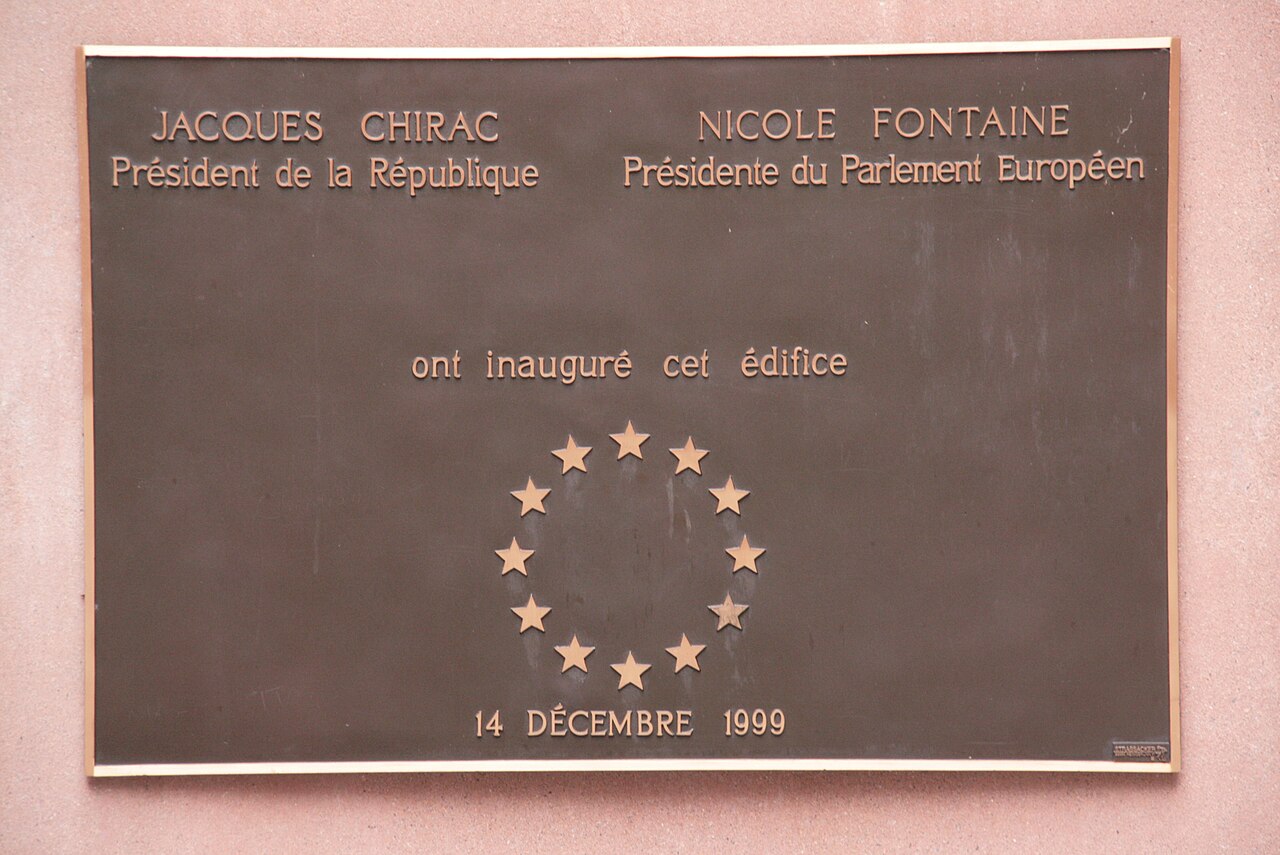
This is the official seat of the European Parliament, completed in 1999 after years of debate about where to anchor the institutions of a unifying continent. The architects — a French firm called Architecture Studio — designed the building to look deliberately unfinished. The eastern side, the one you see from the canal, rises in a smooth curve of glass and steel. But the western side, facing the city, appears as if construction stopped mid-pour. Exposed concrete, raw steel beams, scaffolding that never came down. It is intentional. The design is meant to suggest that European democracy is a work in progress, never complete, always under construction.
The building holds a hemicycle chamber large enough for seven hundred and five members of parliament, each representing one of the twenty-seven member states. When the chamber is in session, interpreters work in glass booths suspended above the floor, translating speeches simultaneously into twenty-four official languages. The logistics are staggering. Every document produced here is printed in every language. Every debate is rendered in real time so that a representative from Malta and a representative from Finland can argue policy without ever speaking the same tongue.
Walk around to the northern entrance and you will see the flags. Twenty-seven national banners hang in a long row, each one the same height, the same width, arranged alphabetically by country name in the local language. The order shifts every time a nation joins or leaves. The flags snap in the wind off the Rhine, a constant flutter of color against the steel and glass. On still days, they drape like curtains.
The building sits on a plot that was once marshland, then a rail yard, then a zone of light industry. After the Second World War, Strasbourg became a symbol of reconciliation between France and Germany, two nations that had fought three wars in seventy years. The choice to locate the Parliament here was as much about memory as geography. The city straddles the Rhine, the river that for centuries marked the border between empires. Now it marks the center of a project trying to erase borders altogether.
Inside, the public galleries wrap around the hemicycle in a steep arc. Visitors sit behind thick glass, watching debates unfold on the floor below. The acoustics are strange. Voices echo off the curved walls, and the simultaneous translation feeds create a low hum, a constant background static of twenty-four languages layered over one another. It sounds like a beehive, or a data center, or a train station just before an announcement.
The building is not universally loved. Critics call it a monument to bureaucracy, too large, too expensive, too remote from the lives of ordinary Europeans. The unfinished aesthetic, meant to signal openness and evolution, can also read as neglect or indecision. The glass walls, which flood the interior with natural light, also turn the building into a greenhouse in summer. The air conditioning runs constantly, a mechanical hum beneath the hum of translation.
But there is something undeniably compelling about standing here, at the edge of the canal, watching the light shift across the facade. The building does not try to comfort you with symmetry or classical proportions. It does not pretend to be a temple or a palace. It looks exactly like what it is: a machine for negotiation, a structure built to hold argument and compromise, a place where seven hundred voices try to find common ground.
As you walk away, notice the smaller details. The bike racks along the perimeter, always full. The food trucks parked near the tram stop, selling crepes and kebabs to staffers on lunch break. The joggers on the canal path, passing the building without a glance, as if it were just another piece of the city. In a way, that is the point. Democracy is not supposed to be a monument you visit once and forget. It is supposed to be part of the landscape, ordinary and ongoing, unfinished by design.
Key facts
What to look for
Practical tips
Common questions
How long do you need at European Parliament Building?
Plan 1–1.5 hours. That is the time most visitors spend at European Parliament Building. The free Lokali audio guide adds about 9 minutes of narration you can listen to as you walk, so it fits inside your visit rather than adding to it.
Is there a free audio guide to European Parliament Building?
Yes — the Lokali app narrates European Parliament Building free of charge in 50+ languages. It covers the history, what to look for on site and practical tips, and it works offline once downloaded.
Where is European Parliament Building?
European Parliament Building is in Brussels, Belgium, at 50.8434, 4.4378. Tap the map link on this page for directions from where you are.
What should you know before visiting European Parliament Building?
Public gallery visits require advance booking online.
What is European Parliament Building known for?
Completed in 1999 by French firm Architecture Studio.
What is the best time to visit European Parliament Building?
The building's architecture deliberately expresses openness and transparency.
On the map
Opens directions to European Parliament Building from your location.
More to see in Brussels


Hear European Parliament Building in your language
The full story, narrated, in 50+ languages. Download it before you go and it plays offline, at your own pace, with no ticket and no tour group.