
Actun Tunichil Muknal
17.1141° N · 88.8624° W · Archaeological Site
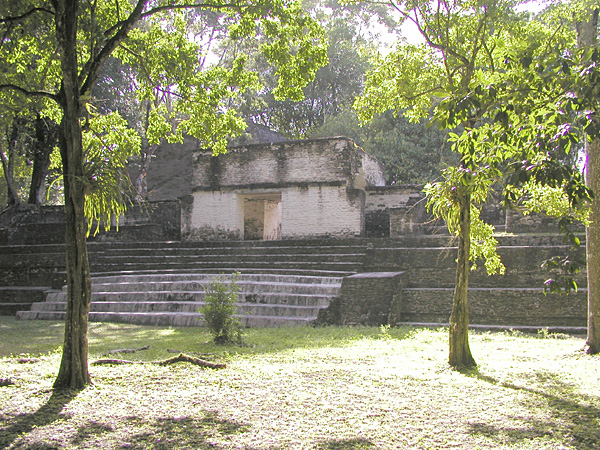
Photo: Peter Andersen · CC BY-SA 3.0 · Wikimedia Commons
Actun Tunichil Muknal is a cave in Belize. Name translates as Cave of the Stone Sepulchre. The free Lokali audio guide runs 7 minutes.
✓ Published October 2026 · how we write these guides
Visitor facts
| Lokali audio guide | 7 min · free |
|---|---|
| Type | Archaeological Site |
| Location | Cayo, Belize |
| Coordinates | 17.1141, -88.8624 |
| Languages | 50+, in the Lokali app |
The story
Cold water closes around your shoulders. The jungle sounds fall away behind you: the insects, the birds, the drip of leaves. Ahead there is only a dark mouth in the limestone and the steady sound of a river leaving the earth. To enter Actun Tunichil Muknal, you have to swim. That first stroke into the shadows is the start of one of the most unusual journeys in Central America.
The name comes from the Yucatec Maya language. It is usually translated as the Cave of the Stone Sepulchre, and most guides simply call it ATM. The cave sits in the foothills of western Belize, in the Cayo District, inside a protected forest reserve. To reach it, you walk through humid jungle and wade across a clear river several times. By the time you reach the entrance, you are already wet. That is fine. You will be much wetter soon.
Inside, the passage narrows and widens like a throat. Your headlamp catches pale walls, ribbons of stone, and water so clear that you can count the pebbles under your feet. In places you squeeze sideways between two rock faces. In other places the ceiling rises out of reach of your light. The river is your path. It is cool, loud in some places and silent in others, and it has shaped this space for a very long time.
To the ancient Maya, caves like this were not simply holes in the ground. They were openings into Xibalba, the underworld. Xibalba is the realm of the dead and of powerful gods in Maya belief. Caves were also linked to rain, water, and fertility. The gods who controlled the rain were thought to live in these dark places. So entering a cave was a serious act. It meant crossing a border between the human world and something much older and more dangerous.
Archaeologists believe the Maya used this cave most intensively during the Late Classic period, roughly the eighth and ninth centuries. That was a hard time across the Maya lowlands. Many researchers link the period to drought, political stress, and the slow decline of large cities. As the rain failed, people seem to have gone deeper into caves. They carried offerings further from daylight. Here, you are following their route, step by step, through the same river.
After a long stretch of wading and climbing, your guide will lead you up onto a ledge and into a dry upper chamber. Here comes a moment many visitors do not expect. You take off your shoes. From this point, you walk in socks only. The reason is simple: the floor is covered with fragile ancient objects, and soft socks do far less damage than rubber soles. Suddenly the cave feels less like an adventure and more like a sacred room.
The main chamber is often called the Cathedral. Your lamp moves across huge columns of flowstone, formed over many thousands of years by mineral-rich water. Then you begin to see the pottery. Hundreds of ceramic vessels lie on the floor, many where they were left more than a thousand years ago. Some are whole. Some are broken. Many are partly fused into the cave floor, because the dripping water has slowly coated them in a shiny skin of calcite.
Look closely at some of the pots and you may notice a small, neat hole punched through the base or side. Archaeologists often call these kill holes. One common interpretation is that breaking the vessel in this way released its spirit, or ended its use in the living world. It is a small detail that is easy to miss. But it shows a deliberate act. Someone stood here, in this darkness, and chose to make that hole.
Then there are the human remains. Researchers have recorded the skeletons of more than a dozen individuals in the cave, including young children and infants. Several show signs that suggest violent death. Many archaeologists interpret them as sacrifices, offered during a time of crisis. It is quiet in this chamber. Most people stop talking here without being asked. The bones lie close to the path, and the calcite has made some of them part of the floor itself.
At the far end, up a ladder, lies the most famous figure in the cave. Guides call her the Crystal Maiden. She is a complete skeleton, stretched out on the rock. Over centuries, mineral deposits have coated the bones until they sparkle in the light of your lamp. Here is a surprise: despite the name, study of the remains suggests a young person in their late teens, and some researchers question whether this person was female at all. The legend and the science do not fully agree.
Another surprise is that you can see any of this up close. Very few archaeological sites allow visitors to walk among original remains in their original places. That openness comes with strict rules. Cameras and phones have been banned inside the cave since the early 2010s. Guides explain that a visitor once dropped a camera onto a skull and damaged it. The ban means you must carry these images in memory only, and many visitors say this makes the experience stronger.
The cave was explored and documented by archaeologists in the late twentieth century. Since then, Belize has protected it closely. You can only enter with a licensed guide, and groups are kept small. This system protects the site, but it also protects you. The river can rise quickly after heavy rain, and the cave sometimes closes for safety. The guides know every turn of the passage. Many of them grew up nearby, in the villages of the Cayo District.
When you finally swim back out through the entrance pool, the light feels almost too bright. The jungle noise returns all at once. Your clothes are heavy with water, your legs are tired, and your socks are probably ruined. Take a moment before you walk on. Look back at that dark opening in the hillside. For the Maya, it was a doorway to the underworld. For you, it was a long walk through cold water... and a quiet meeting with the past.
Key facts
What to look for
Practical tips
Common questions
Is there a free audio guide to Actun Tunichil Muknal?
Yes — the Lokali app narrates Actun Tunichil Muknal free of charge in 50+ languages. The guide runs about 7 minutes, covers the history, what to look for on site and practical tips, and works offline once downloaded.
Where is Actun Tunichil Muknal?
Actun Tunichil Muknal is near Cayo, Belize, at 17.1141, -88.8624. Tap the map link on this page for directions from where you are.
What is Actun Tunichil Muknal known for?
Name translates as Cave of the Stone Sepulchre. Main Maya use dates to the Late Classic period.
What should you look for at Actun Tunichil Muknal?
Small kill holes punched through the ancient pottery. Calcite coating that fuses pots into the floor. Sparkling mineral crust on the Crystal Maiden's bones.
What should you know before visiting Actun Tunichil Muknal?
Book with a licensed guide; independent entry is not allowed. Wear sturdy water shoes that you can tie tightly.
On the map
Opens directions to Actun Tunichil Muknal from your location.
More to see in Cayo


Hear Actun Tunichil Muknal in your language
The full story, narrated, in 50+ languages. Download it before you go and it plays offline, at your own pace, with no ticket and no tour group.