
London Coliseum
51.5097° N · 0.1264° W · Opera House
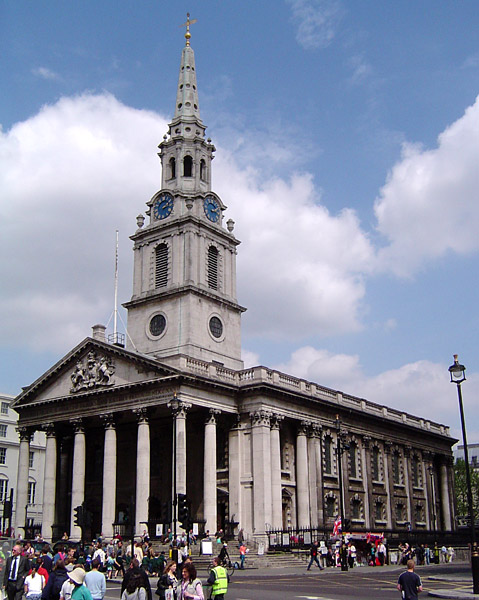
Photo: Photograph by Mike Peel (www.mikepeel.net). · CC BY-SA 4.0 · Wikimedia Commons
London Coliseum is a theatre in London, home to the English National Opera. It is in Westminster, United Kingdom. Opened in 1904 as a grand variety theatre. The free Lokali audio guide runs 6 minutes.
✓ Published October 2026 · how we write these guides
Visitor facts
| Lokali audio guide | 6 min · free |
|---|---|
| Type | Opera House |
| Location | Westminster, United Kingdom |
| Coordinates | 51.5097, -0.1264 |
| Official website | londoncoliseum.org |
| Languages | 50+, in the Lokali app |
The story
Stand on the pavement of Saint Martin's Lane and look up. Above the rooftops, a tall tower rises from the theatre's front. On top sits a globe. After dark it glows, and the lights around it seem to move. Down here, the street is narrow and loud. Taxis squeeze past, people talk at the stage doors, and the smell of coffee drifts from the cafés. This is the London Coliseum, the largest theatre in the West End.
The Coliseum opened in 1904. It was built for Oswald Stoll, a theatre owner who ran a chain of variety halls across Britain. Variety was the popular entertainment of the age. One evening's bill could hold singers, comedians, acrobats, animal acts, short plays and dancers, one after another. Stoll wanted a theatre on a grand scale for this kind of show. He also wanted it to feel respectable, a place where families could come without worry.
To design it, Stoll chose Frank Matcham. Matcham was the most prolific theatre architect of his time. He designed or rebuilt many of the theatres in Britain in the decades around 1900. The London Palladium and the Hackney Empire are among his other works. He had a reputation for two things. His theatres were rich with decoration. And they were practical, with good sightlines and clever planning for crowds.
Look at the front of the building. The facade is made of pale terracotta, a kind of fired clay that can be moulded into detailed shapes. Terracotta was popular in this period because it resists the soot and rain of a city. The style is often called Edwardian Baroque. That means curved forms, heavy ornament and a sense of drama, all borrowed from the grand buildings of seventeenth-century Europe. The tower and its globe were designed to be seen from far away, almost like an advertisement.
Here is a detail many visitors miss. When the theatre opened, it had features that were remarkable for a playhouse. The stage was built with a large revolving section, so scenes could turn and change in front of the audience. This was the first revolving stage of its kind in London. Stoll and Matcham liked machinery. They wanted the building itself to impress people before the show even began.
The early years brought famous names. Variety in that era often mixed popular acts with stars from the serious stage. Great actors of the period appeared here in short scenes, sharing the bill with jugglers and comedians. In the years around the First World War, the Coliseum also hosted Sergei Diaghilev's Ballets Russes, the Russian ballet company that changed modern dance. So from the start, this building held both light entertainment and high art.
Tastes changed over the twentieth century. Variety slowly faded. Musicals filled the Coliseum for some years, and for a period in the 1960s the building worked as a cinema, showing films on a wide curved screen. Then came the change that defines it today. In 1968, Sadler's Wells Opera moved here from its old home in north London. A few years later, the company took a new name, English National Opera.
English National Opera has a clear idea behind it. Traditionally, the company performs operas in English, whatever language they were first written in. Verdi, Mozart, Puccini... all sung so the audience can follow the words directly. The idea fits the building. Stoll built the Coliseum as a theatre for ordinary people. Opera in English carries a similar spirit, an art form opened up to a wider public. English National Ballet also performs here, often in the winter season.
Now think about the size. The auditorium seats more than two thousand people, across stalls and several levels of balconies. That makes it larger than any other theatre in the West End. Yet Matcham designed it to feel connected. The balconies curve around in a deep horseshoe, so faces in the upper seats still turn towards the stage. Inside, the colours are deep red and gold, with plasterwork, columns and a domed ceiling above the audience.
In the early 2000s, the building went through a major restoration. Workers repaired the plaster, renewed the colours and returned many original features. They also made changes for modern visitors, including improved public spaces and better access. Today the building is listed, which is the British system for protecting buildings of special historic interest. That status means its character must be preserved in any future work.
If you go inside for a performance, look at the details between the acts. Matcham filled his theatres with sculpted figures, gilded frames and carved boxes beside the stage. The boxes were meant to be seen as much as to see from. In the Edwardian era, part of the evening's entertainment was watching other people arrive in their best clothes. Even the staircases and bars were planned for that slow, social movement of a crowd.
Step back outside and notice where you are. Trafalgar Square is only a short walk to the south. Leicester Square and Covent Garden are close by in other directions. The Coliseum stands among dozens of other theatres, so on show nights the whole area fills with audiences. Many of them pass this building without knowing that it is the biggest of them all, or that it was built for jugglers before it was built for opera.
Before you move on, look up at the globe one more time. It has stood above this street for more than a century. Below it, the programme has changed many times, from comedians to ballet, from films to Wagner. The building has stayed. Listen to the street around you, the footsteps and the traffic and the voices. In a few hours, perhaps, two thousand people will sit quietly inside these walls and wait for the music to begin.
Key facts
What to look for
Practical tips
Common questions
Is there a free audio guide to London Coliseum?
Yes — the Lokali app narrates London Coliseum free of charge in 50+ languages. The guide runs about 6 minutes, covers the history, what to look for on site and practical tips, and works offline once downloaded.
Where is London Coliseum?
London Coliseum is in Westminster, United Kingdom, at 51.5097, -0.1264. Tap the map link on this page for directions from where you are.
What is London Coliseum known for?
Opened in 1904 as a grand variety theatre. Designed by theatre architect Frank Matcham.
What should you look for at London Coliseum?
The glowing globe on top of the tower. Pale terracotta carvings across the main facade. Deep horseshoe curve of the stacked balconies.
What should you know before visiting London Coliseum?
Come after dark to see the globe lit up. Book a performance to see the interior properly.
When is the best time to visit London Coliseum?
Arrive early to explore the bars and staircases.
On the map
Opens directions to London Coliseum from your location.
More to see in Westminster


Hear London Coliseum in your language
The full story, narrated, in 50+ languages. Download it before you go and it plays offline, at your own pace, with no ticket and no tour group.