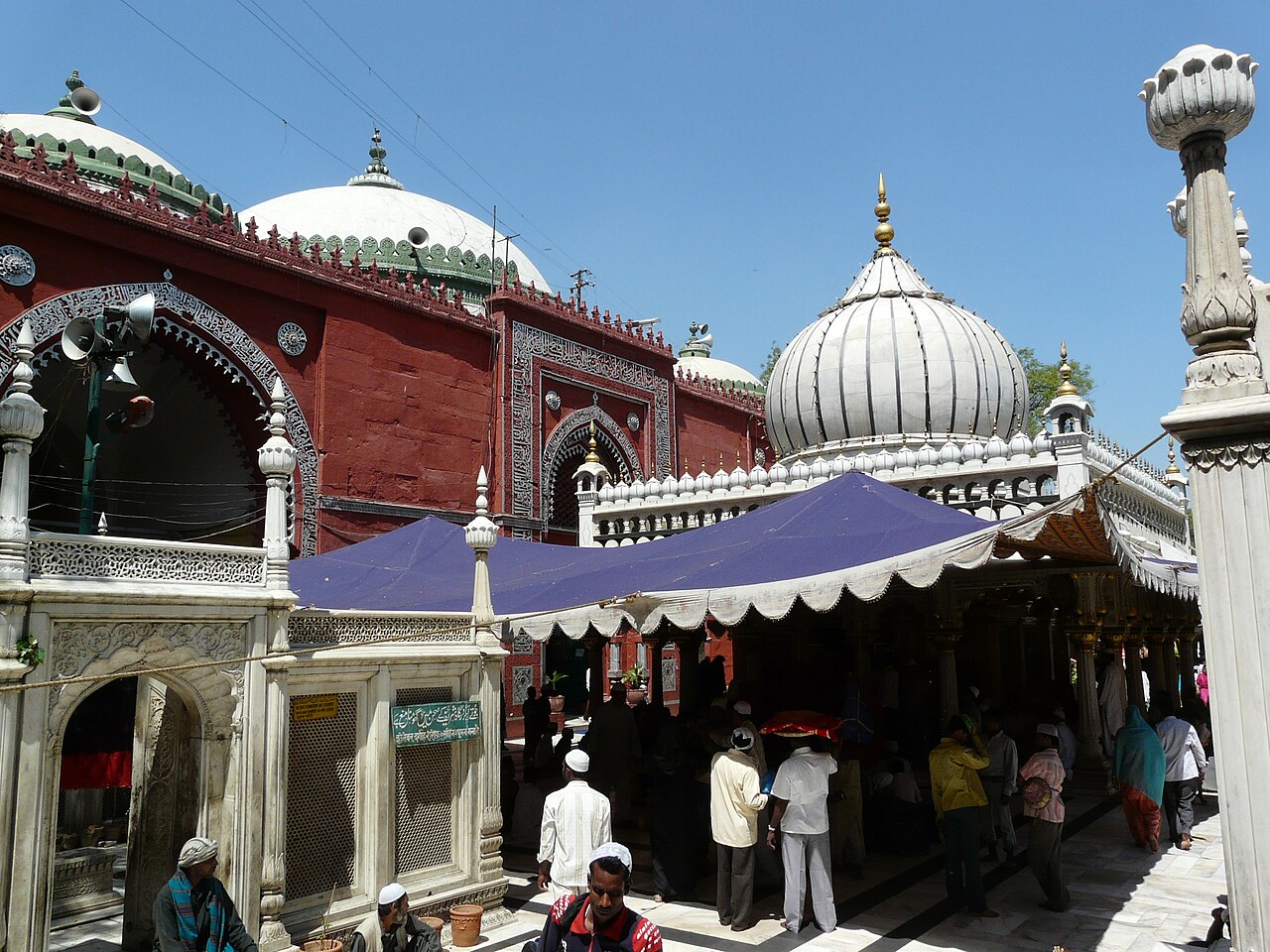
Nizamuddin Dargah is a shrine in Delhi, India. Tomb of Nizamuddin Auliya, Sufi saint who died 1325. Amir Khusro buried beside him, invented sitar and tabla. Most visitors spend 45-75 min here. The free Lokali audio guide runs 4 minutes.
✓ Verified October 2026 · how we write these guides
Visitor facts
| Time needed | 45-75 min |
|---|---|
| Lokali audio guide | 4 min · free |
| Type | Shrine |
| Best for | Authentic finds |
| Location | Delhi, India |
| Coordinates | 28.5917, 77.2507 |
| Languages | 45, in the Lokali app |
The story
The air thickens with rosewater and incense as you step through the narrow lanes leading to this shrine. Marble underfoot, worn smooth by seven centuries of pilgrims. The scent of jasmine garlands hangs heavy, mixing with the low hum of qawwali devotional songs drifting from the inner courtyard.
This is the tomb of Hazrat Nizamuddin Auliya, a thirteenth-century Sufi saint who became one of Delhi's most beloved spiritual figures. He died in 1325, but his teachings — rooted in love, tolerance, and service to humanity — still draw thousands daily. Muslims, Hindus, Sikhs, Christians, people of no faith at all — the dargah welcomes everyone without distinction.
Nizamuddin Auliya belonged to the Chishti order of Sufism, a mystical branch of Islam that emphasizes direct personal experience of the divine through music, poetry, and compassion for the poor. He famously clashed with the Delhi Sultanate's rulers, refusing to bow to temporal power. When Sultan Ghiyasuddin Tughlaq ordered him to leave Delhi, Nizamuddin replied that Delhi was still far from him — meaning the sultan would die before reaching the city. The sultan did die in a collapsing pavilion on his return journey, and Nizamuddin's spiritual authority only grew.
The tomb itself sits beneath a bulbous white dome, latticed screens filtering the light into soft geometric patterns across the marble floor. Pilgrims press their foreheads to the silver railing surrounding the grave, tying red threads to the screen as they whisper prayers. The grave is draped in green silk embroidered with Quranic verses, replaced regularly by devotees.
Just beside Nizamuddin's tomb lies the grave of Amir Khusro, the great poet and musician who was the saint's closest disciple. Khusro is credited with inventing the sitar and tabla, blending Persian and Indian musical traditions into what became the foundation of classical Hindustani music. Every Thursday evening, the courtyard fills with qawwali singers performing in the tradition Khusro established seven hundred years ago — ecstatic, rhythmic devotional songs that build in intensity until the audience sways as one.
The dargah complex sprawls across several courtyards and smaller shrines. You will pass through a bazaar selling prayer caps, attar perfumes in tiny glass vials, rose petals by the kilo, and recordings of famous qawwals. Beggars line the pathways — giving to them is considered an act of devotion here, continuing Nizamuddin's emphasis on feeding the hungry. The saint ran a free kitchen that served thousands daily, a tradition maintained by the dargah to this day.
Look closely at the walls and you will see patches of older stonework — some sections date back to the original fourteenth-century construction, though the shrine has been rebuilt and expanded many times. The Mughal emperor Muhammad Shah added the marble courtyard in the eighteenth century. British colonial records show the dargah remained a site of resistance, a place where Delhi's identity persisted despite imperial rule.
The best time to visit is late afternoon, as the light softens and the evening prayers begin. Women cover their heads with scarves provided at the entrance. Everyone removes their shoes before entering the inner sanctum. Photography is prohibited inside the main tomb chamber, and the atmosphere asks for quiet respect — this is a living place of worship, not a monument frozen in time.
As you leave, notice the small doorways leading off the main lanes. Many lead to the graves of other Sufi saints, poets, and scholars who wanted to be buried near Nizamuddin. The entire neighbourhood is a necropolis of devotion, layer upon layer of Delhi's spiritual history pressed into a few acres of old stone and newer marble, still breathing, still singing, still offering solace to anyone who walks through its gates.
Key facts
What to look for
Practical tips
Common questions
How long do you need at Nizamuddin Dargah?
Plan 45-75 min. That is the time most visitors spend at Nizamuddin Dargah. The free Lokali audio guide runs 4 minutes and is made to listen to while you walk.
Is there a free audio guide to Nizamuddin Dargah?
Yes — the Lokali app narrates Nizamuddin Dargah free of charge in 50+ languages. No ticket, tour group or subscription, and it works offline once downloaded.
Where is Nizamuddin Dargah?
Nizamuddin Dargah is in Delhi, India, at 28.5917, 77.2507. Tap the map link on this page for directions.
What should you know before visiting Nizamuddin Dargah?
Visit late afternoon for softer light and evening prayers
What is Nizamuddin Dargah known for?
Tomb of Nizamuddin Auliya, Sufi saint who died 1325
What is the best time to visit Nizamuddin Dargah?
Visit late afternoon for softer light and evening prayers
On the map
Opens directions to Nizamuddin Dargah from your location.
More to see in Delhi




Hear Nizamuddin Dargah in your language
The full story, narrated, in 50+ languages. Download it before you go and it plays offline, at your own pace, with no ticket and no tour group.