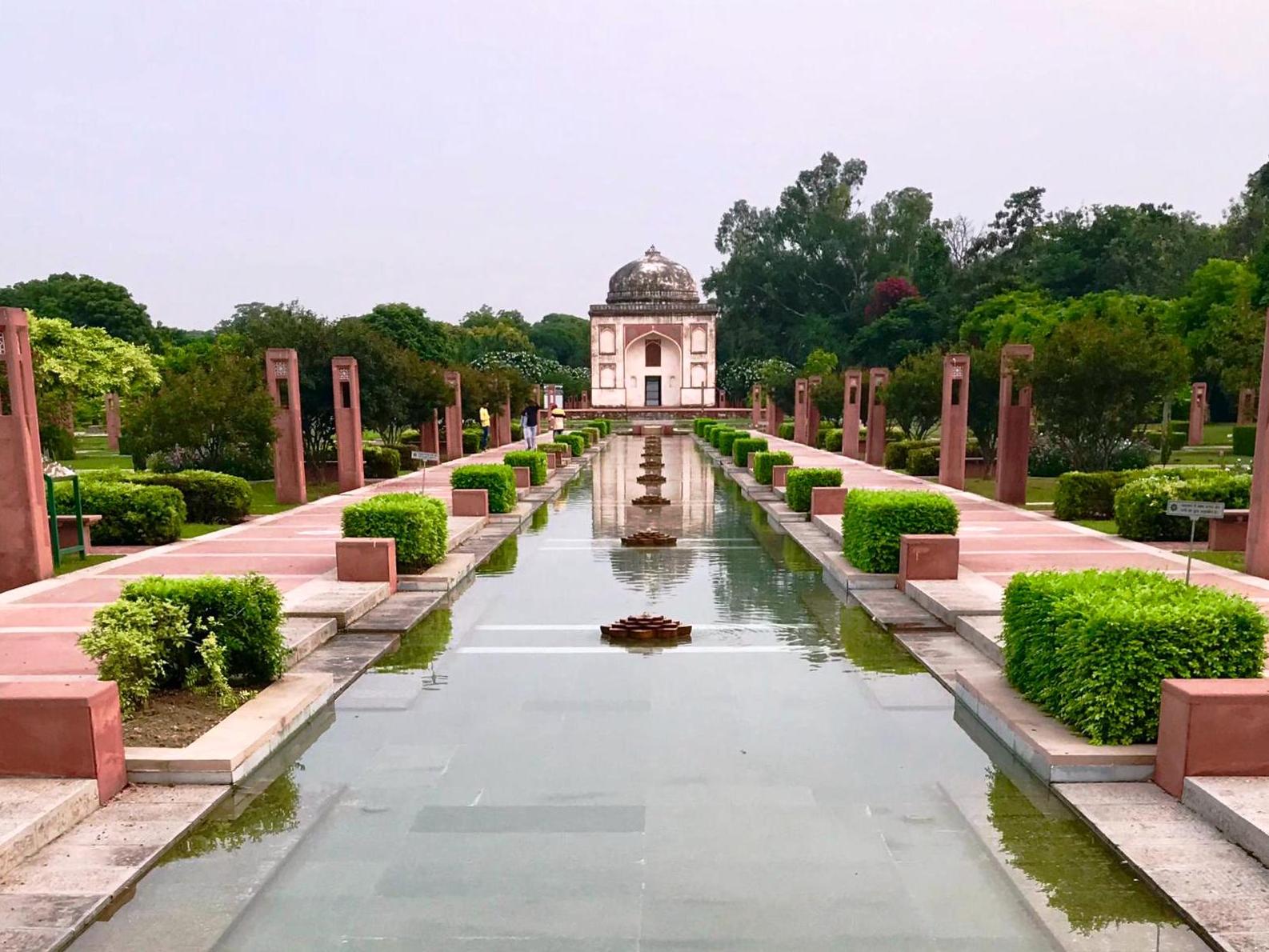
Sunder Nursery is a park in Delhi, India. Reopened in 2018 after fifteen years of restoration. Ninety acres connecting to Humayun's Tomb complex. Most visitors spend 1-2 hours here. The free Lokali audio guide runs 4 minutes.
✓ Verified October 2026 · how we write these guides
Visitor facts
| Time needed | 1-2 hours |
|---|---|
| Lokali audio guide | 4 min · free |
| Type | Park |
| Best for | Romantic |
| Location | Delhi, India |
| Coordinates | 28.5933, 77.2507 |
| Languages | 45, in the Lokali app |
The story
The air here is different. Cooler, softer, threaded with the scent of jasmine and wet earth. You are standing in ninety acres of gardens that were once the hunting grounds of Mughal emperors, now a heritage park where sixteenth-century tombs rise from manicured lawns like stone ships anchored in green.
Sunder Nursery sits just east of Humayun's Tomb, separated by a busy road but part of the same sprawling complex. For decades this was a working plant nursery, closed to the public, its monuments crumbling quietly among the saplings. The Aga Khan Trust for Culture spent fifteen years restoring it, reopening the site in 2018. What they uncovered was a chain of Mughal-era structures—tombs, pavilions, gateways—each one a footnote to Delhi's layered past.
The largest monument is Sunder Burj, a double-storey octagonal tomb near the park's center. No one is certain who lies inside. The structure dates to the mid-sixteenth century, likely built for a nobleman in the court of Humayun or his son Akbar. The sandstone has weathered to a warm ochre, and the arches frame views of the garden in every direction. Climb the interior staircase and you reach the upper terrace, where the roofline once supported a dome. It collapsed long ago, leaving the tomb open to the sky.
Scattered across the park are smaller tombs and pavilions, each with its own quiet story. Sunderwala Burj is a three-storey octagonal tower, probably a garden retreat rather than a burial site. The Batashewala complex includes a tomb and a stepped well, both from the late sixteenth century. The well is dry now, its stone steps descending into shadow. These structures were never grand imperial commissions—they belonged to courtiers, administrators, favored servants—but they share the Mughal obsession with geometry and light.
The gardens themselves are a modern reimagining of Mughal design. Water channels run in straight lines between flowerbeds, mimicking the chahar bagh layout—four-part gardens meant to evoke paradise. The plant collection includes over three hundred species, many native to the region. In spring the silk cotton trees erupt in orange blossoms. In autumn the gulmohar sheds its feathery leaves and the lawns turn rust-colored.
Birdwatchers come early, before the heat sets in. The park is a stopover for migratory species—hoopoes, bee-eaters, warblers—and home to resident populations of parakeets and mynas. The ponds attract herons and kingfishers. If you walk the perimeter path at dawn, you will see locals doing yoga on the grass, children chasing peacocks, photographers crouched beside the tombs waiting for the light to soften.
The restoration was meticulous. Craftsmen trained in traditional methods rebuilt collapsed arches, re-laid sandstone floors, cleared centuries of rubble from the monuments. They planted trees using historical records as a guide, aiming to recreate the species mix of a Mughal garden. The project won the UNESCO Award of Excellence for Cultural Heritage Conservation in 2017, a year before the park opened.
One detail most visitors miss: the brick patterns in the tomb walls. Look closely at Sunder Burj and you will see sections where the bricks are laid in diagonal herringbone, a technique the Mughals borrowed from Persian architecture. It is a small flourish, easy to overlook, but it speaks to the care that went into these buildings—even the ones meant for minor nobles.
The nursery still functions, quietly, in the park's eastern corner. Saplings grow in neat rows, destined for Delhi's streets and public gardens. It is a strange doubling—a working nursery inside a heritage park, the past and present rooted in the same soil.
Stand near the central lake as the afternoon light slants through the trees. The water reflects the tombs, the sky, the slow movement of visitors along the pathways. This place was designed for rest, for contemplation, for the pleasure of shade and running water in a hot city. It still works. You can feel it in the temperature drop, the quiet, the way time seems to slow as you walk between the monuments.
Key facts
What to look for
Practical tips
Common questions
How long do you need at Sunder Nursery?
Plan 1-2 hours. That is the time most visitors spend at Sunder Nursery. The free Lokali audio guide runs 4 minutes and is made to listen to while you walk.
Is there a free audio guide to Sunder Nursery?
Yes — the Lokali app narrates Sunder Nursery free of charge in 50+ languages. No ticket, tour group or subscription, and it works offline once downloaded.
Where is Sunder Nursery?
Sunder Nursery is in Delhi, India, at 28.5933, 77.2507. Tap the map link on this page for directions.
What should you know before visiting Sunder Nursery?
Visit early morning for birdwatching and cooler temperatures
What is Sunder Nursery known for?
Reopened in 2018 after fifteen years of restoration
What is the best time to visit Sunder Nursery?
Visit early morning for birdwatching and cooler temperatures
On the map
Opens directions to Sunder Nursery from your location.
More to see in Delhi





Hear Sunder Nursery in your language
The full story, narrated, in 50+ languages. Download it before you go and it plays offline, at your own pace, with no ticket and no tour group.